
Googlebooks Bring Android, Gemini and AI to Google’s Laptop Strategy
Google’s premium laptops arrive with Android-based ChromeOS and built-in AI
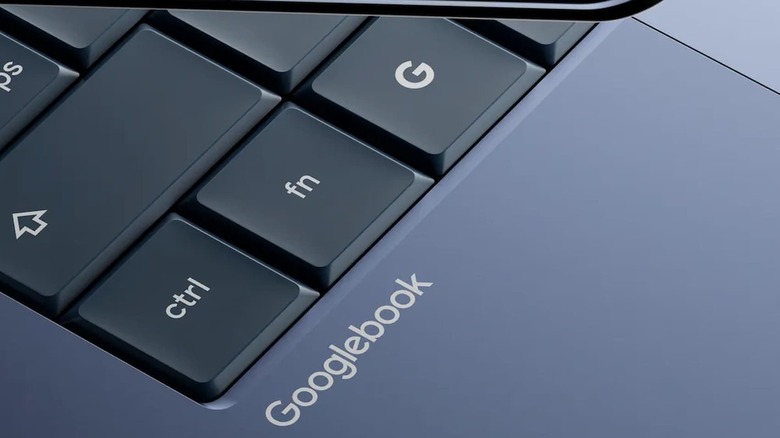
SAN FRANCISCO — Pre-orders for Googlebooks, Google’s upcoming premium laptop line, will open on Sept. 21 at 9:00 a.m. Eastern Time. Notifications were sent to users who registered for updates, and the date was confirmed on the official Googlebook portal. The upcoming availability was first reported by 9to5Google.
Google first entered the personal computer market in 2011 with low-cost Chromebooks manufactured by Samsung and Acer. Those devices primarily targeted the K-12 education sector and web-centric consumers.
The company unveiled the Googlebook concept in May. Unlike traditional Chromebooks, which run on a lightweight operating system centered around the Chrome web browser, Googlebooks use a customized version of ChromeOS built directly on an Android foundation.


The first Googlebook models will be produced by Acer, Asus, Dell, HP, and Lenovo. These are the same primary manufacturing partners that helped establish the Chromebook platform over the past decade.
At the center of the platform is Gemini, Google’s multimodal artificial intelligence system. Gemini serves as a core component of the operating system rather than a standalone application or cloud add-on.
Google’s laptop strategy has also included high-end first-party experiments. The company released the Chromebook Pixel in 2013, the Pixelbook in 2017, and the Pixelbook Go in 2019, before dissolving its internal laptop hardware development team in 2022 to consolidate its focus on software platforms and mobile hardware.
One built-in feature is “Magic Pointer.” When a user rapidly wiggles the laptop cursor, the tool becomes an interactive selector that analyzes elements on the screen and offers real-time contextual actions. Googlebooks also support automated custom widget generation.
Google introduced the “Chromebook Plus” standard in October 2023 to raise quality across third-party devices. The standard established baseline hardware criteria covering minimum memory, storage, display quality, and processor performance requirements for partner devices.
The new laptops add deeper cross-device synchronization with Android smartphones and an exterior “glowbar” light strip mounted on the display lid to signal system activity. The Googlebook platform combines higher hardware specifications with a unified Android-based software architecture designed to accelerate on-device AI functionality.
The deployment positions Google to compete more directly in the rapidly expanding “AI PC” category against Microsoft and Apple. Microsoft began shipping its Copilot+ PC category in mid-2024, using dedicated Neural Processing Units (NPUs) and ARM-based silicon to run system-level AI features. Apple has similarly integrated its Apple Intelligence framework across its Mac lineup through recent macOS updates.