Gina Hinojosa Elon Musk and the File Texas Kept Blacked Out
The lawsuit asked only to inspect 1,374 pages. The court that froze the order has changed, and so has the office holding the file.
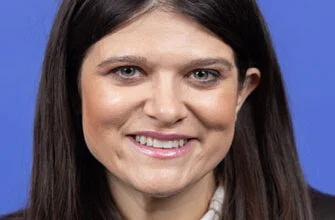
The file is Cause No. D-1-GN-26-010394, in the 126th Judicial District Court in Travis County. Gina Hinojosa sued Greg Abbott in her official capacity as a member of the Texas House, and the relief she asked for was narrow: inspection, under Texas Government Code section 552.008, of documented communications between the governor’s office and Elon Musk. The statute, as quoted in her petition, says a governmental body shall provide public information, including confidential information, to a legislator who requests it for legislative purposes. Hinojosa did not ask the court to make the communications public. Texas law bars her from disclosing confidential material she inspects under that section, and the petition says she seeks only to read the file for legislative work.
On 20 April 2025 an individual associated with The Texas Newsroom requested the governor’s communications with Musk and representatives of his companies. The governor’s office sought an attorney general ruling to withhold them. It argued competitive business interests, attorney-client privilege, deliberative-process privilege and commercial confidentiality, and it notified Musk and SpaceX so they could assert confidentiality claims of their own, which the petition says they did. Abbott also argued, according to the petition, that communications with Musk contained information that was intimate and embarrassing. A public-information expert quoted by the Texas Tribune called that use of the common-law privacy exception appalling in a case about communications between an elected official and a businessman. Attorney General Ken Paxton ruled on 11 August 2025, sustaining many of the objections and directing the release of some material. In September 2025 the governor’s office produced 1,374 pages to The Texas Newsroom. All but about 200 of them were redacted or completely blacked out. Hinojosa’s letter of 29 September 2026 asked to inspect those same records, with the redactions removed, by 13 October. She asked for a draft confidentiality agreement by 8 October if Abbott wanted one signed. On 13 October the governor’s office wrote back that it had reviewed its files and located the documents responsive to her request. It still refused to let her inspect the unredacted versions. She filed suit on 19 October, the first day of early voting.
A Travis County judge, Catherine Mauzy, ordered the governor’s office to give Hinojosa access by 10 a.m. on 29 October. The order was a temporary restraining order. It required a $1,000 bond and was set to expire on 9 November, with a hearing on a longer injunction scheduled for 2 November. Abbott appealed at once, arguing that only the Texas Supreme Court may issue mandatory orders against the governor, and the Fifteenth Court of Appeals stayed the order. That court, which hears cases involving the state government, had three justices, all appointed by Abbott. The stay remained in place through the election. On 3 November, voters flipped all three seats on that court to Democrats, along with four seats on the Texas Supreme Court. The results were still unofficial and being canvassed when the statewide sweep was reported. Hinojosa was projected to defeat Abbott and to take office as governor in January 2027. Her petition had told the court that her present House term ends on 12 January 2027, and that the time left to use the material for legislation was shortening daily. The appeal over a file assembled in the governor’s office now runs toward a reconstituted bench, and the plaintiff is about to hold the office that holds the file.


The petition’s account of the Abbott-Musk relationship is pleaded, not adjudicated, and it is footnoted throughout to named reporting and official releases. It says Abbott stated as long ago as September 2021 that he spoke with Musk frequently. Abbott’s own telling, given at the University of Texas School of Law in April 2025, concerned a Valentine’s Day 2024 call. Musk interrupted a private dinner, the petition says, to ask whether Abbott would have his back if he moved his corporate operations to Texas. Abbott said he answered that he would, in full. Musk filed paperwork to reincorporate SpaceX in Texas the following day. In March 2026, the petition says, Abbott told Fort Worth business leaders that he had directed state appointees to accelerate permitting for Tesla’s Texas factory in 2020 and to waive some permitting requirements. The two men appeared together at the May 2023 groundbreaking for Tesla’s lithium refinery in Robstown, where Abbott presented a proclamation calling Musk a fast friend of Texas, and at Musk’s Terafab chip announcement in Austin in March 2026. In April 2025 Abbott signed Senate Bill 14, creating the Texas Regulatory Efficiency Office, which he described as the state’s own version of Musk’s Department of Government Efficiency. During the 2025 legislative session, the petition says, Musk’s businesses successfully advocated for a set of measures. The list included drone operations over spaceports, spaceports as critical infrastructure, and restrictions on road and beach access near launch facilities. It also included energy-storage rules and changes to Texas corporate governance law answering Musk’s complaints about Delaware.
Abbott announced the grants himself, one at a time, and the petition collects them. The Texas Space Commission announced a $7.5 million grant for SpaceX’s Starbase operations in February 2025. Abbott announced a $17.3 million grant for SpaceX in Bastrop in March 2025. A $30 million grant for a SpaceX semiconductor facility in Grimes County followed in August 2026. The three grants total $54.8 million. In the summer of 2026, the petition says, Abbott agreed to $1.7 billion in school tax breaks for Musk’s Terafab project. On the political side, the petition records a $10,000 Elon Musk Revocable Trust contribution in 2014 and a $500,000 contribution on 12 May 2026. It also records $4 million from the trust to the Texans for Lawsuit Reform PAC. That PAC contributed $200,000 to Abbott in 2025 and 2026. The Texas Tribune later reported that Musk accounted for nearly a fifth of the $26 million Abbott raised between 25 September and 24 October, roughly $5.2 million on the desk’s arithmetic from the Tribune’s figures. The petition, filed on 19 October and citing a New York Times report of 12 October, put Musk’s contributions to Republicans and Republican-supported political action committees in the cycle at approximately $366 million. Later tallies put the cycle total higher: CNBC’s analysis, reported after the election, put it at $474 million, with $224 million of it in Texas. The figures come from different dates and different scopes, and they are not added together here.
Musk gave $75 million to the Senate Leadership Fund on 9 September and $83 million on 23 September, $158 million in all. That was about 58 percent of the fund’s $272.9 million in receipts for the quarter. Texas PAC, the main outside group backing Ken Paxton’s Senate campaign against James Talarico, recorded receipts from the Senate Leadership Fund of $75 million on 10 September and $83 million on 24 September, one day after each Musk donation and for the same amounts. The filings identify the Senate Leadership Fund, not Musk, as Texas PAC’s contributor, and the timing alone does not establish that Musk’s dollars were the dollars transferred. The same quarterly filings show eight cash contributions from Musk to America PAC between July and September totalling $82.8 million. They also show a $10 million contribution from the Elon Musk Revocable Trust to Lone Star Liberty PAC in August, and a $20 million contribution to the Congressional Leadership Fund in September. A CNBC analysis of the filings, reported after the election, found America PAC spent nearly $87 million across 44 federal contests. The Republicans it backed lost 29 races, won three and 12 were still uncalled. More than $80 million, about 93 percent of its federal disbursements, went toward losing candidates. Paxton lost to Talarico, and Abbott lost to Hinojosa.
Andy Diaz, posting on Facebook on 15 October, put the grievance that carried the data-centre fight in the form Texas voters had been hearing it all autumn. “They told you to turn your thermostat up to save the grid. Then they approved a data center that uses more power than 35 states. Make it make sense.” The audit Abbott ordered on 3 August did not answer that contrast in those terms. His letter to the Public Utility Commission of Texas and the Electric Reliability Council of Texas directed a comprehensive verification and audit of every data centre advancing through ERCOT’s interconnection process before any additional project moved forward. Non-compliant projects would be denied a grid connection. Each project was required to disclose its public financial assistance, its reliance on the grid and its own generation, its water use and cooling technology, its measures for neighbouring communities, and its ownership. ERCOT was then considering about 474 gigawatts of connection requests, about 90 percent of them data centres, more than five times the record peak demand of 91.1 gigawatts recorded that July. The pause widened in September to environmental permits, developers of data centres of 25 megawatts or more were required to answer a request for information by 12 October, and the regulators’ report was expected by 10 December. Hinojosa’s campaign page called for an immediate moratorium until the legislature could put protections in place. It said Abbott should issue an executive order and call a special session to end the tax breaks. It called a temporary moratorium a scam. Abbott would likely lift it the day after the election, it said. The audit ordered in August is the machinery she now inherits, and its report is due before she takes office. Jake Dollarhide of Longbow Asset Management, quoted by Reuters, read the election differently. Musk’s infusion of cash could not overcome higher utility bills, grocery prices and petrol prices, he said. That reading puts household costs, not the audit’s five questions, at the centre of the result.
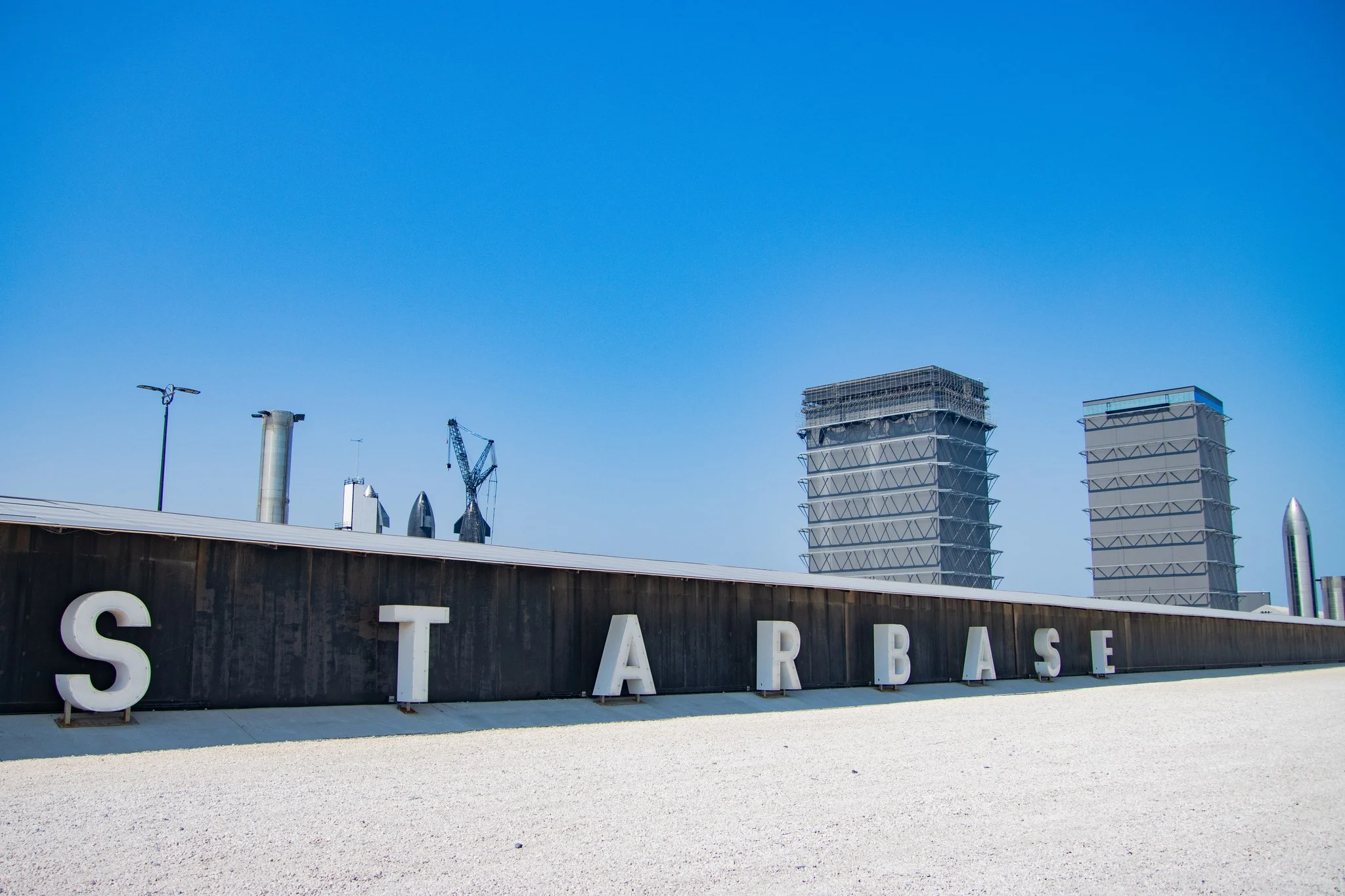
Boca Chica State Park enters the petition in a footnote. Texas Monthly reported on 16 October that the Texas Parks and Wildlife Commission had been discussing the sale of the beachfront park beside SpaceX’s Starbase site near Brownsville. A draft agenda put the sale of 1,300 acres in Cameron County before a closed-door executive session of the commission on 5 November, two days after the election, with two sources naming SpaceX as the prospective buyer. The agency answered with one sentence, that the commission was not considering the sale of the Boca Chica property at its November meeting. It did not answer follow-up questions about the earlier discussions, Musk’s involvement, why the agenda had changed, or whether the sale had been shelved. The Texas Tribune, which independently reviewed the drafted agenda language, reported that the department asked the attorney general’s office to block release of the draft agenda as deliberative-process material. Starbase, the city established by SpaceX employees, had recently completed the annexation of more than 7,100 acres encompassing a large portion of the park. Annexation is not ownership. It puts the land under a city mostly led by SpaceX employees. The park was acquired by the state in 1994. In 2024 the commission agreed to give SpaceX 43 acres of the park in exchange for 477 acres near the Laguna Atascosa refuge. SpaceX later pulled out of that deal. In 2026 the U.S. Fish and Wildlife Service signed off on a separate exchange giving SpaceX 715 acres of the Lower Rio Grande Valley refuge for 683 acres of company land, after a federal judge declined to block it. The petition cites the Texas Monthly report in a footnote and lists public beach access among the subjects the blacked-out emails bear on.
Eric Gipson, posting a photograph of the beach on Threads on 17 October, wrote that the park was under siege. “It seems all of our state and national parks are under siege. and are being taken from us by a minority of billionaires.” Morgan Buxton, replying to a news post on 1 November, called the beach a sensitive nursery for wildlife at the mouth of the Rio Grande. “Save Boca Chica Beach from the wealthy powers that control our world and wild areas. It’s a sensitive nursery for all sorts of wildlife there at the mouth of the Rio Grande river.” John H Caro had said it earlier, and from personal experience. On 6 September, before any sale had been reported, he posted a photograph of the launch structures at the beach. “Elons money turned my once beautiful BOCA CHICA BEACH into this nightmare that’s destroying the wildlife and SOUTH BAY where I used to fish .” The officials’ answers address the meeting and the vote. The agency said the sale was not on the November agenda. Abbott said at a news conference on 19 October that it would not come up for a vote anytime soon. The department has not answered whether a sale could happen in the future. None of those answers accounts for the discussions the draft agenda recorded, or for the annexation that already put much of the park inside Starbase’s city limits.
Robert Garcia, the next chair of the House Oversight Committee, answered the Republican defeat on Tuesday evening with two words: “Lawyer up.” Reuters reported that Democrats had been considering probes into Musk’s companies. The subjects included restrictions on satellite communications used by Ukraine’s military, the federal job cuts under his Department of Government Efficiency, and the contracts and subsidies flowing to his companies. Musk threatened retaliation on his own platform last month after a report about possible probes, urged his followers on X to vote Republican on election day, and later deleted that appeal. “Data centers in space looking pretty appealing right now,” he posted, pointing to SpaceX’s plan for orbital data centres. The plan is not a footnote in the company’s public offering documents. SpaceX’s registration statement, filed on 20 May 2026, put its total addressable market at $28.5 trillion. Of that, $26.5 trillion was attributed to artificial intelligence. Within the AI figure, $22.7 trillion was enterprise applications, and $2.4 trillion was AI infrastructure, the category that includes data-centre compute. The filing reported 2025 revenue of $18.67 billion and a net loss of $4.94 billion. Colossus and Colossus II stood at about one gigawatt of nameplate compute at the time of filing. An Anthropic agreement paid $1.25 billion a month for compute through May 2029. Reuters reported SpaceX shares down 3.8 percent and Tesla down 3.6 percent in premarket trading on the morning after the election, lagging the broader market.
The legislature that would have to pass the protections Hinojosa wants remains under Republican control. The claims in the petition await a court test. The stay that froze her inspection order remained in place, and the election results were still unofficial when the sweep was reported. The file she sued to inspect sits assembled in the office she is about to hold, and her suit asked only to read it, not to publish it.