Elder Scrolls VI Sentinel Is a City With Three Decades on the Series’ Maps
Bethesda gave the game a name, a logo and one invented priest. The city already had the rest.
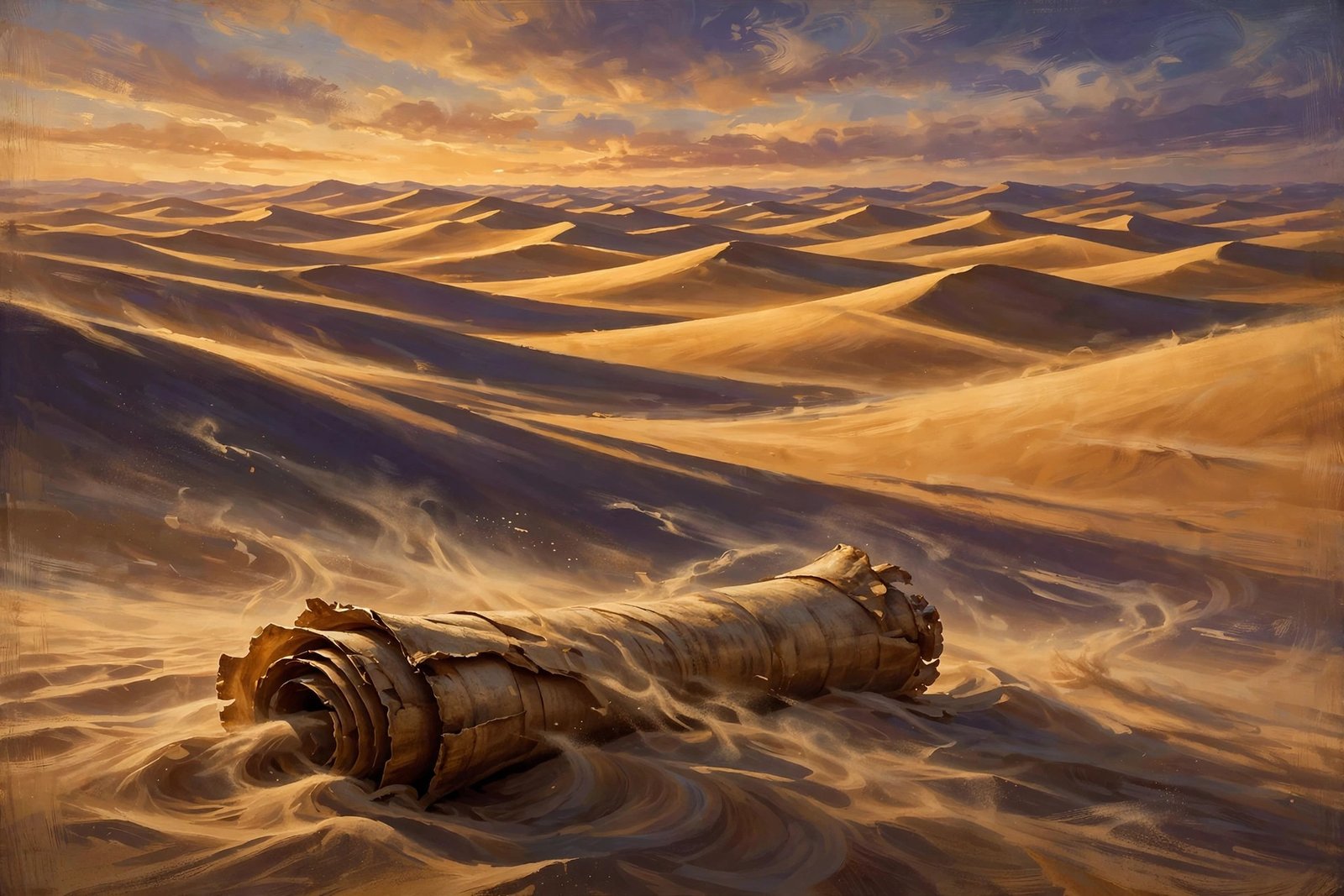
Todd Howard spent most of a video under ten minutes long looking back over forty years of Bethesda games. At the end of it, sand parted to show a scroll, and the next Elder Scrolls game had a name at last. The game is called The Elder Scrolls VI Sentinel, and Howard called the studio’s fortieth anniversary the perfect time to say so, more than eight years after Bethesda first announced that a sixth game existed.
The logo came in the series’ familiar lettering, with a short clip of the scroll coming out of the sand and the quotation shown after it. No gameplay, no release date, no platforms. The Xbox Wire release on the name was, in The Verge’s account, only a picture of the logo. Bethesda said in a follow-up post that development continues and that it will be some time before the studio is ready to share more, adding that it felt great to finally reveal the name and location with players.
The quotation read: “The scroll offered only a shimmer, a veil thinly lifted to my eyes. A future lost. A victory undone. Sands of time scattered by fate.” It was attributed to Yazar, Moth Priest of High Queen Iradne of Hammerfell, and dated 4E 206 in the series’ calendar. That is five years after the events of Skyrim, which is set in 4E 201.


In the games’ own history, the site was first an outpost built by elves, and later by the Manmeri, to protect fisherfolk and merchants from raiders out of the desert. The Redguards came by sea. After the Ra Gada landed at Hegathe, the warrior-sailors of Grandee Yaghoub sailed north around Cape Shira, and a watchman on board spotted a harborage. Yaghoub named the city he built there Sentinel, after the watchman, and set the locals to building his palace, Samaruik. The crescent moon on Yaghoub’s banner became the city’s banner, and by the late Second Era Sentinel handled a third of the trade of the Iliac Bay.
Daggerfall, across the bay, was the rival through all of it. The two kingdoms fought repeatedly for supremacy of the bay, and the War of Betony, fought around 3E 402 over the island of Betony, pitted King Camaron of Sentinel against King Lysandus of Daggerfall. Sentinel surrendered its claim after the Battle of Cryngaine Field, and a fragile peace followed when Daggerfall’s King Gothryd married Sentinel’s Queen Aubk-i, whom many in Sentinel saw as an unwilling hostage. In the Warp in the West of 3E 417, Sentinel gained more territory than any other Iliac Bay power and came to span much of the bay’s southern coast. King Lhotun, the son of Queen Akorithi, was counted among the most powerful kings in Tamriel, and Sentinel became the centre of his movement to reconcile the Crown and Forebear factions of the Redguards.
In 4E 173, a Forebear army from Sentinel broke the Aldmeri Dominion’s siege of Hegathe, a Crown city, and the two factions came together. Two years later the White-Gold Concordat ended the war by ceding much of southern Hammerfell to the Dominion. The Redguards rejected the terms, the Empire renounced Hammerfell as a province to preserve the peace, and the Redguards fought on alone until the Second Treaty of Stros M’Kai in 4E 180, when the Dominion withdrew. Hammerfell came out of it independent and devastated.
The Thalmor had already come for Sentinel once, 131 years before the siege of Hegathe. In 4E 42 they attacked Altmer dissidents who had fled persecution in Alinor and were living in the city’s refugee quarter. The dissidents fought back with magic of their own, and a Legion officer who reached the scene with other soldiers found the quarter a smoking ruin. Everyone in it had been slaughtered. The night is recorded in the series as the Night of Green Fire.
The Moth Priests are the order that reads the Elder Scrolls. The Cult of the Ancestor Moth has by tradition the sole privilege of reading them, and the readings bring flashes of insight at a price: over a lifetime of readings, a priest is struck blind. The order kept the Imperial Library in the White-Gold Tower in the Imperial City. After the city was sacked and the Concordat signed in 4E 175, the scrolls scattered from their usual home in the Imperial Library, and the order’s priests were left searching for them.
Yazar’s “veil thinly lifted” is the language of a reader who sees in glimpses, and “a victory undone” lands on ground the record has already walked twice over: the victory at Hegathe, undone by the Concordat’s cession, and the Dominion’s expulsion, bought with five more years of war in a devastated province. Neither Yazar nor High Queen Iradne appears anywhere in the series’ record before today. The title is new in another way too: the record’s rulers of Hammerfell are kings and high kings, and Sentinel’s regent was a queen, but no High Queen sits in the lists. The date in the attribution does not fix the game’s own date either. A priest’s reading from 4E 206 can describe a later time, and Bethesda has confirmed no date for the game itself.
Fans had the name in August. On 11 August, Xbox chief executive Asha Sharma posted on X that she had watched a live playthrough, with the subtitle hidden behind eight asterisks. “The scale and grandeur are incredible. The story is even greater,” she wrote. Fans counted the eight asterisks and settled on Sentinel, the Hammerfell city, within hours. The Verge reported on 29 October, citing sources familiar with Bethesda’s plans, that the game would be called Sentinel and set in Hammerfell. The same report said its story would concern the history of the Elder Scrolls themselves, and that only a name reveal was expected in November.
The teaser that started it ran on 10 June 2018. Eight years, four months and twenty-four days passed between that teaser and the name. In a note to fans on 17 July 2026, Bethesda said the game was the studio’s primary development focus, that most of the team was building it on Creation Engine 3, and that the team was where it had planned to be and playing the game every day. It gave no date, no platforms and no public gameplay. Skyrim’s fifteenth anniversary falls on 11 November, eight days after the reveal, and the name arrived just ahead of it rather than on it.
The thread under the announcement in the Elder Scrolls community on Reddit filled within the hour, and the first readers of the quotation were already asking what Bethesda had left out. Business-Ship-7592 wrote: “Why would the queen of Hammerfell hire a moth priest, and why have him read an elder scroll?” The same commenter guessed at what the priest saw: “I imagine he’s seeing an apocalyptic scenario within the scroll showing the fall of hammerfell.” In the same thread, grog23 counted what eight years had added up to: “So for the game they teased 8 years ago the only thing we’ve learned since is that it’s called Sentinel. Nice”
FetusGoesYeetus put the announcement and the fans’ count in one line: “Yeah all this gave us was that it’s about the Elder Scrolls themselves and it’s set in Hammerfell. Leaks aside it’s basically just confirmed speculation.” The_sad_zebra had run to a bigger screen for the reveal, “only for it to just be the name that I was already confident in it being.” Howard called the moment the perfect time, Sharma praised the scale and the story, and Bethesda promised more in some time to come. The players counted one word learned and a guess confirmed, and the one reader who went furthest with the quotation reached for the fall of Hammerfell, a reading the record allows and no official statement has made.
The city appears in Daggerfall as a kingdom region, one of the Iliac Bay’s three great powers with Daggerfall and Wayrest. In Elder Scrolls Online, set in an earlier era, it is the capital of the Alik’r under King Fahara’jad.