New York Times Sues Brave. Brave’s Own Words Wrote the Complaint.
Two complaints, five counts each, and a paper trail that starts in Brave's own blog posts.
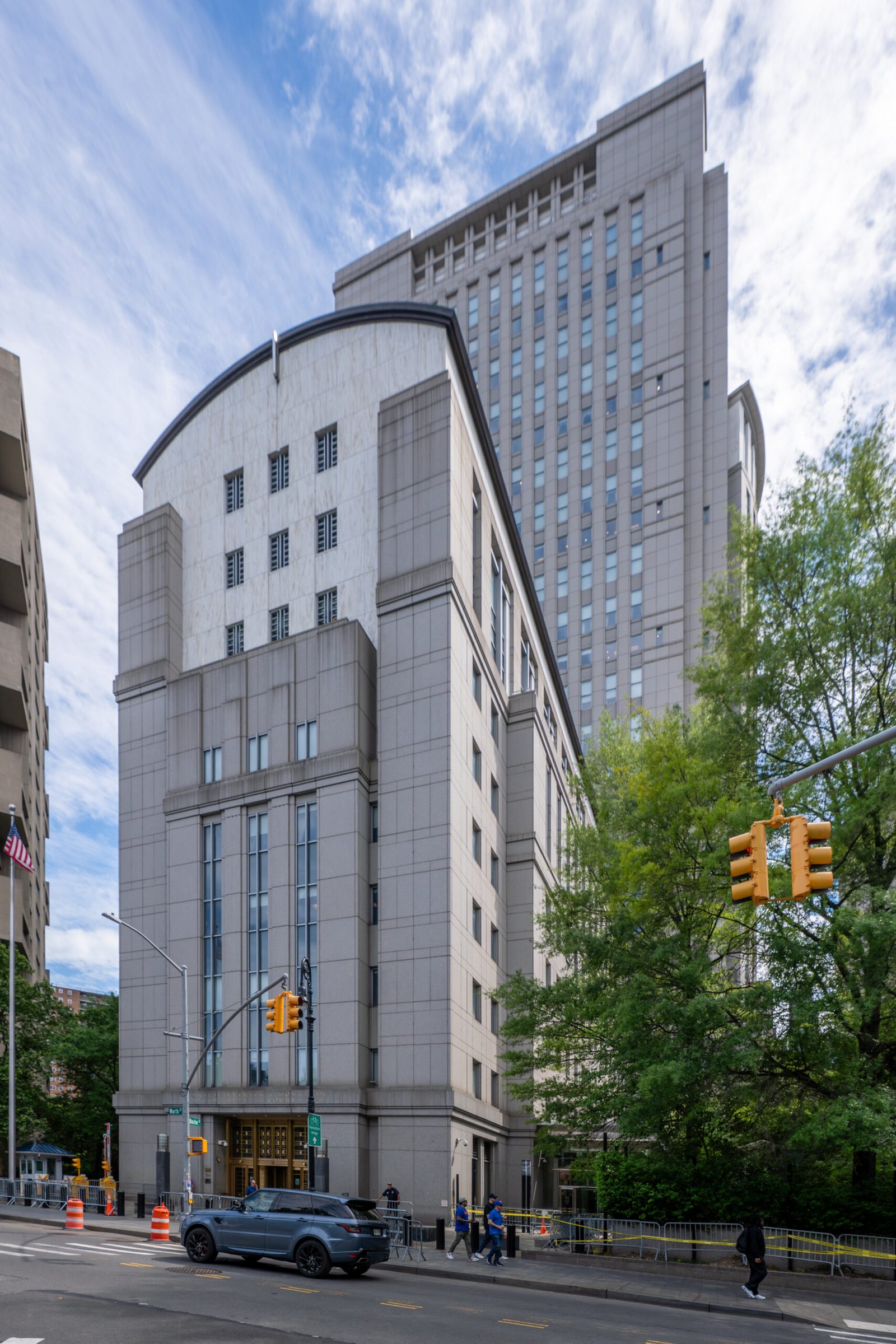
The New York Times sues Brave Software in the first; the Daily News, the Chicago Tribune and the Orlando Sentinel sue it in the second. Both complaints were filed on November 2 in the United States District Court for the Southern District of New York, both name Brave Software as the only defendant, both demand a jury trial, and both plead the same five counts. The plaintiffs seek damages, restitution of profits and a permanent injunction, and neither complaint names a dollar figure.
Anthropic, Perplexity, Mistral, xAI and Cohere appear in the first paragraph of each complaint as companies that received content through Brave. None of the five is a defendant. The complaints describe three Brave products built on one asset, the Brave Index: Ask Brave, which answers questions from pages in the index; the Brave Search API, which sells other companies paid access to the index; and the Brave browser, which the complaints say delivers paywalled articles and strips publishers’ advertising while showing Brave’s own.
Brave wrote the first exhibit itself, three years before the filing. On November 2, 2023, announcing its Leo assistant for desktop users, Brave said Anthropic had used the Brave Search API to train Claude 2 on high-quality data to optimise its outputs for retrieval-augmented generation queries. Six weeks earlier, in a guide dated September 22, 2023, Brave had described the API’s most common uses as training and grounding large language models. The complaints quote both passages, and add a third from Meta’s July 2024 paper on Llama 3, which describes the model calling Brave’s API to answer questions about recent events.


Brave’s help page on its search crawler gives the plaintiffs their next passage. The crawler, the page says, does not advertise a differentiated user agent, because Brave must avoid discrimination from websites that allow only Google to crawl them. A page Googlebot cannot crawl, Brave’s bot will not crawl either. And robots.txt, the page says, is not used to keep a page out of the index at all: a site owner removes a page with a noindex directive and asks for a re-fetch. The complaints read that page as a design for evasion. Brave presents it as protection against being shut out while Google is let in.
The company’s own growth post, dated February 24, 2026, puts a larger number on the index than the complaints use. Where the complaints cite Brave’s AI page for “over 30 billion” webpages, the February post says 40 billion, with billions of API calls each week, pricing from $5 per 1,000 requests, and 22 million Ask Brave answers a day. It says the index is refreshed with more than 100 million pages a day, fed in part by users who opt in to the Web Discovery Project, and it carries the lines “We don’t scrape” and “the only legitimate option”. The project is opt-in. The complaints do not mention the Web Discovery Project. They allege the index was built by a crawler Brave never named, leaving site owners no way to block it by name.
The tests in the second complaint, No. 1:26-cv-09554, were run by the plaintiffs, and the complaint shows its working. Asked to list the day’s Daily News articles and offer the full text of any of them, Ask Brave listed 35 titles, then produced nearly 600 words of the article about banning Central Park horse carriages. Asked for Tribune articles, it produced more than 1,200 words of a report on data centres near O’Hare and more than 1,000 words of a report on an alleged sexual assault near the University of Chicago. Through the API, the complaint says, the LLM Context endpoint returned the entire text of an Orlando Sentinel article about a Florida school-tax amendment, and the News Search endpoint returned nearly 350 words verbatim of a Daily News article on taxi drivers’ health benefits. The plaintiffs wrote the prompts, and several of them ask for the full text before it is produced. What the tests show is what the products return when asked that way. They do not show how often ordinary users ask, or how often the API returns article text for a query that is not a headline.
The Times complaint describes the same pattern at its own papers. Given only the web address of a paywalled Times article, Ask Brave offered to pull up the full article and then reproduced more than 400 words of it verbatim, according to the complaint. Given only a headline, the API’s LLM Context endpoint returned 1,291 of the article’s 1,295 words verbatim. The complaints call Brave “the supplier, dealer, and distributor of stolen copyrighted content”, acting “like a burglar” toward publishers and an “AI ‘fence'” toward the companies it supplies. Those are the plaintiffs’ words. No judge has adopted them. Brave had not answered them in court, and had not publicly responded to the suits, when the coverage of the filing appeared.
A publisher that wants Brave’s crawler out faces the bind the help page creates. Blocking the crawler by name is impossible, the complaints say, because Brave never disclosed the name. Blocking it by robots.txt is unavailable, because Brave says robots.txt does not keep a page out of its index. The remaining route the page offers is a noindex directive. It removes the page from Brave’s results and from Google’s too. The complaints use the unnamed crawler to support willfulness, alongside the paywall bypass. Brave’s stated reason is different: sites that admit only Google should not be able to single its crawler out. A New York jury may be asked to choose between those two readings, and the complaints do not invoke New York’s Stealth Crawler Prohibition Act, passed in June 2026.
The fifth count is the one that does not need a copied word. It alleges unjust enrichment under New York law, and by its own terms it “does not depend on any copying, reproduction, or distribution” of the newspapers’ content. The claim is about advertising positions: the browser blocks the publishers’ ads, including prompts to subscribe, and Brave sells its own advertising in their place, sharing revenue with users through Brave Rewards. The comparisons attached to the complaints show a Times subscription banner in another browser and an empty space where it stood in Brave. Neither comparison shows a Brave advertisement appearing on a newspaper page. The relief sought is disgorgement of the revenue and profits from what the complaints call the ad-substitution scheme, with interest.
Publishers opened this fight in 2016 and never got it into court. On April 7, 2016, the Newspaper Association of America wrote to Brave’s chief executive, Brendan Eich, for 17 members including the Times, the Washington Post and the Wall Street Journal, calling the plan to replace publishers’ advertising with Brave’s own “blatantly illegal” and “indistinguishable from a plan to steal our content to publish on your own website”. The letter threatened damages of up to $150,000 per work. Brave at the time offered publishers 55 percent of the replacement advertising revenue, and Eich replied that Brave was “the solution, not the enemy”. No suit followed. The same $150,000 figure returns in the Times’ second warning letter of April 13, 2026, this time as enhanced statutory damages for willful infringement, and the ad-swap theory returns as Count V.
In March 2025, Brave went to court first against a different publisher. After a cease-and-desist letter from News Corp, which owns the Wall Street Journal and the New York Post, Brave asked a federal judge in San Francisco to declare that indexing News Corp content and providing snippets and high-level summaries was fair use, arguing that decades of precedent confirmed indexing a search engine was not infringement. News Corp counterclaimed in July 2026 in Oakland, calling the scraping “flagrant theft” that fell “nowhere near the bounds” of fair use, and seeking up to $150,000 per infringement. That case was still pending in California when the New York complaints were filed. The Times, for its part, had already sued OpenAI and Microsoft in December 2023 and Perplexity in December 2025, with the Tribune joining the Perplexity suit, while the Brave complaints name Brave alone as defendant.
The complaints put a dollar figure on Brave in two different places, and only one of them is sourced. Each complaint states that Brave “has made more than $100 million by copying and reselling publishers’ work without consent or permission, publishers have received nothing”. The filings elsewhere cite third-party reports putting Brave’s total 2025 revenue above $100 million, up from about $52 million in 2024, a figure that covers advertising, search ads, subscriptions and the API together. No breakdown by product is given. The share from selling index access is not established in the filings. The complaints also do not say which of the five named companies use the API now, which endpoints they use, or whether any of them received these newspapers’ articles. Brave is privately held and does not publish its financial results.
FabianN, writing on Reddit’s technology forum on November 3, put the cost case the complaints make in plainer terms: “It’s cheap to just make up shit, but expensive to do actual investigation. But most people don’t want to pay for it, and then are shocked that local news is getting eaten up by Sinclair and that so many people are propagandized… Actions, meet consequences 🤷” Times spokesperson Graham James, in a statement carried by several outlets, said Brave had “flouted established copyright law and ignored repeated requests by The Times to stop its infringing conduct”. Perplexity’s chief communications officer, Jesse Dwyer, answered for one of the named customers, saying the Times was “overpaying its attorneys and underpaying its journalists”. Wheatleytron, in the browsers forum the same day, answered from the other side: “News companies are dying. They were already slowly on their way out due to social media, but AI has further accelerated their demise. Nobody wants to pay money to read the news when you can just get it for free.”
Blandscreen, in the same thread, read the paywall count as a complaint about readers rather than about the index: “So basically NYT is mad that a browser company doesn’t want to pay to view a digital article? With this logic they should be suing everyone who accesses their site with an ad or popup blocker.” AlessandroJeyz put it shorter: “Crying because it bypasses their paywalls.” Neither comment, and neither of the other two, mentions the API sale to AI companies, which is the centre of both complaints. The four describe the reader’s side of the case, free reading and blocked ads, and the filings price exactly that behaviour as lost subscription, advertising, licensing and affiliate revenue. The complaints also say the Times wrote twice, in August 2025 and April 2026, and received no reply. The second complaint describes no letters, and rests its willfulness case on the paywall bypass and the unnamed crawler alone.
Brave had not publicly responded to the two complaints. No judge had ruled on any of the counts in either case.