

Googlebook Brings Gemini AI to an Android Desktop
Google’s $899 Googlebook combines Android, Chrome, and Gemini AI
Google officially opened preorders Monday for the Googlebook, an $899 laptop built around a major change in the company’s personal computing strategy. The device places generative artificial intelligence directly into an Android-based desktop operating system.
The laptop is scheduled to reach stores in the United States on Oct. 4. Its Oct. 5 launch will cover Canada, the United Kingdom, Ireland, France, Germany, and Australia, while commercial availability begins early next month in North America and select international markets. Preorders are live through the Google Store, Best Buy, and other major retailers.


Google first previewed the Googlebook in May as part of its plan to move millions of cloud-focused computing users toward its proprietary Gemini AI ecosystem. Instead of the traditional ChromeOS foundation, the laptop uses Android beneath a full desktop version of the Google Chrome browser and familiar ChromeOS interface elements.
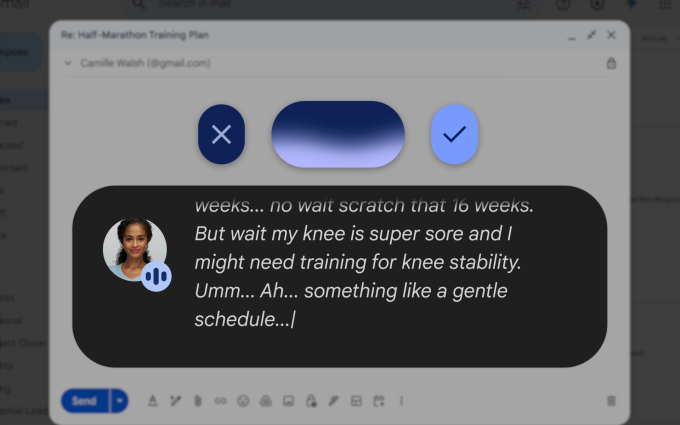
The platform’s software includes built-in desktop widgets, Gemini Spark, and Gemini Live integration for real-time voice interactions and automated workflows across desktop tasks. Another tool, Rambler, uses AI to clean up unorganized, rambling spoken audio and transcribe it into clear, structured text.
Google is supplying 12 months of its Google AI Pro tier with every purchase. The subscription includes 5TB of cloud storage and access to higher-tier Gemini Advanced features, along with three-month trial subscriptions to Adobe Photoshop and YouTube Premium.
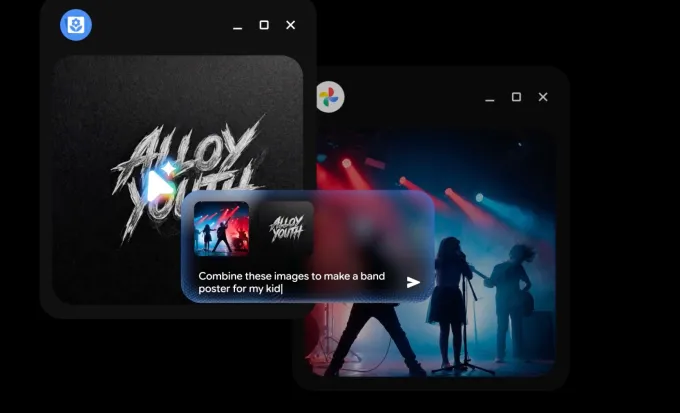
Magic Cursor serves as an AI-enhanced pointer and an interactive gateway to Gemini. Users can highlight text on web pages for instant analysis, hover over incoming emails to check for security or phishing risks, or select several image files at once and ask Gemini to generate combined visualizations. The interaction model builds on the mobile “Circle to Search” gesture framework introduced on Android smartphones.
The Googlebook hardware is being developed through a broad network of Original Equipment Manufacturer (OEM) partners. Acer, ASUS, Dell, HP, and Lenovo are producing flagship models with premium chassis materials that include aluminum, magnesium alloy, and carbon fiber.
Google also committed to providing up to 10 years of software and security updates for the hardware series, extending a long-term support policy it previously established across its desktop portfolio. The laptops are rated for up to 14 hours of battery life on a single charge.

System configurations include display options reaching 2.8K OLED panels, haptic glass trackpads, and backlit keyboards. Intel and Qualcomm processors power the laptops, paired with dedicated Neural Processing Units (NPUs).
The NPUs are designed to run AI algorithms directly on the device rather than sending every command through external cloud servers, following a broader PC industry trend toward localized AI processing.
The Android foundation brings together Google’s long-standing platform divisions. When Google introduced Chromebooks in 2011, ChromeOS was a lightweight, web-centric platform centered on the Chrome browser. Over the following decade, Google added support for Android applications through the Google Play Store on ChromeOS.
The Googlebook formalizes that alignment by making Android the base system architecture while retaining a desktop-class browser experience. Existing Chromebooks will continue receiving support under their current software cycles.
Google is also planning a transition pathway that will allow eligible existing hardware to adopt the new Googlebook software environment over time. The company estimates that about 50 million Chromebooks are actively used by students and educators worldwide.
That education market position was built over the past decade through low-cost hardware and cloud management capabilities. The transition pathway provides a direct channel for bringing millions of educational users into the Gemini AI ecosystem.




