Googlebook Brings Android to Premium Laptops With 10 Years of Updates
Google’s Android-powered Googlebook lineup starts at $899
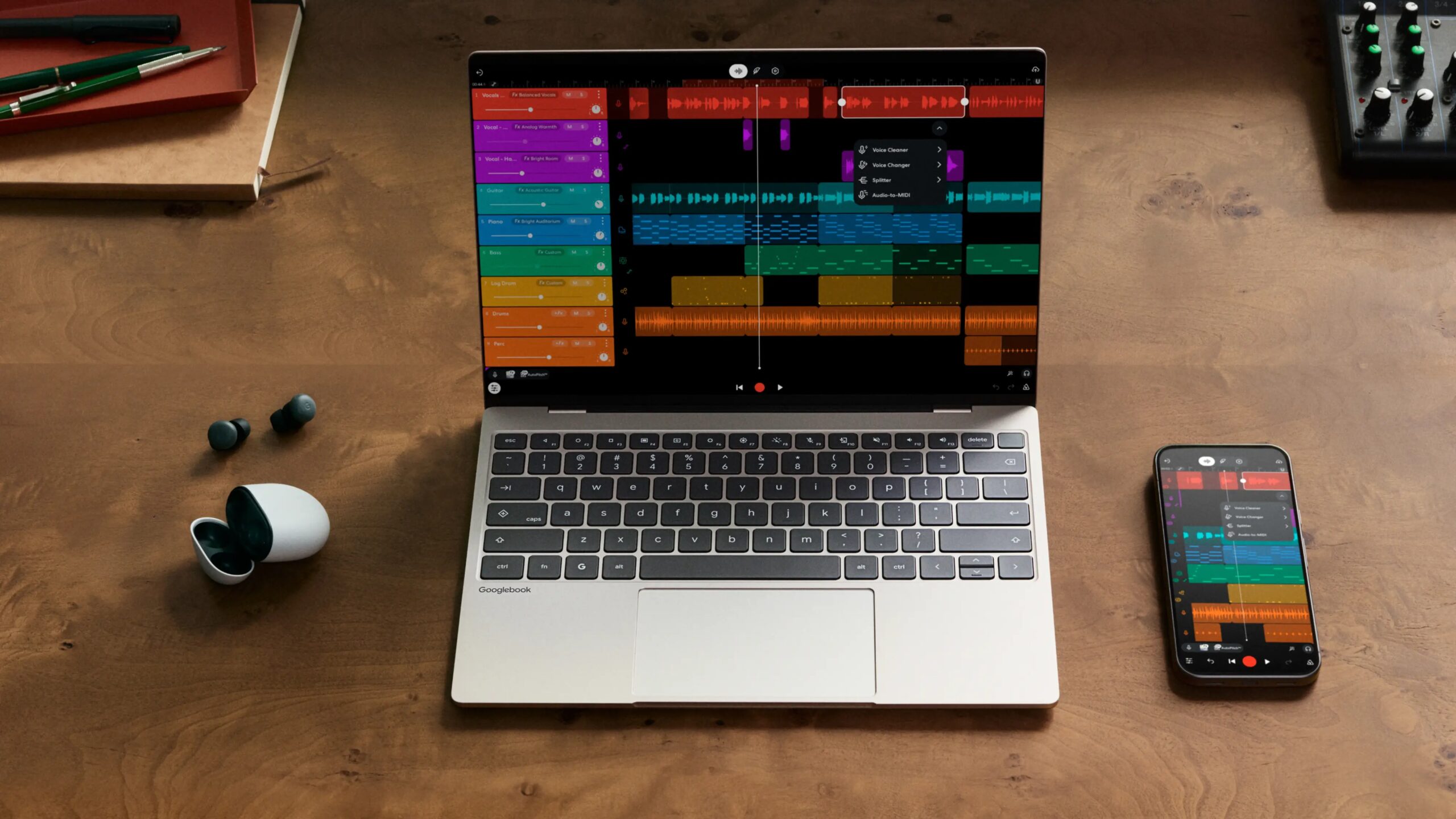
Google and Acer, Asus, Dell, HP, and Lenovo have opened pre-orders for the Googlebook, marking Google’s transition to a full-scale Android operating system strategy for desktop and laptop computers built on both Arm and x86 hardware.
The operating system combines native Android mobile application compatibility with a desktop-class Google Chrome browser that retains full support for web extensions. During setup, users can import credentials, saved Wi-Fi networks, and device settings directly from an Android smartphone. The platform also supports file transfers, messaging access, and cross-platform application handoffs between phones and laptops.



Pre-orders cover premium laptops priced from $899 to $1,299. Retail availability begins Oct. 4 in the United States, followed by an Oct. 5 rollout in Canada, the United Kingdom, Ireland, France, Germany, and Australia. Google’s launch partners are Acer, Asus, Dell, HP, and Lenovo.
Dell and HP use Qualcomm’s Snapdragon X Elite platform with Arm-based processors, while Acer, Asus, and Lenovo use Intel Core Ultra 5 processors as their baseline x86 configuration. Every model includes a dedicated neural processing unit capable of reaching up to 45 trillion operations per second (TOPS) for local machine learning workloads.
The base configuration from each manufacturer includes 16 gigabytes of unified memory and 512 gigabytes of solid-state storage. Selected configurations can be upgraded to as much as 32 gigabytes of memory, and software maintenance, security patches, and operating system feature updates are covered for up to 10 years per device.
Google’s Gemini assistant can be invoked with gestures including shaking or wiggling the mouse cursor. A physical button called “Rambler” records and transcribes voice audio into structured text, summaries, formatted headers, and actionable task checklists. The system also includes “Antigravity,” an agent-based developer framework for generating software widgets and functional applications through natural language prompts.
Display designs differ across the lineup. Dell’s XPS Googlebook is the most compact model, with a 13.4-inch 2.5K liquid crystal display (LCD) touchscreen. Acer, Asus, and HP use 14-inch 2.8K organic light-emitting diode (OLED) screens, while Lenovo’s model has a 15.3-inch display.
The laptops use aluminum, magnesium alloy, and carbon fiber chassis materials. Shared hardware features include backlit keyboards, haptic trackpads, and Google’s “Glowbar,” an integrated light strip that signals system power states, battery charging levels, and active artificial intelligence processes.
Security is handled by Google’s dedicated Titan C2 security coprocessor, with biometric fingerprint sensors standard across all models. HP and Lenovo add infrared facial recognition cameras for further biometric authentication.
Each laptop purchase includes one year of Google AI Pro, three months of YouTube Premium, and three months of Adobe Photoshop.