Airbnb AI Toilet Photo: The Claim Failed Three Checks, and the Watermark Was Only One
The guest checked the photo and the invoices himself. Airbnb's rulebook had the answer months earlier.
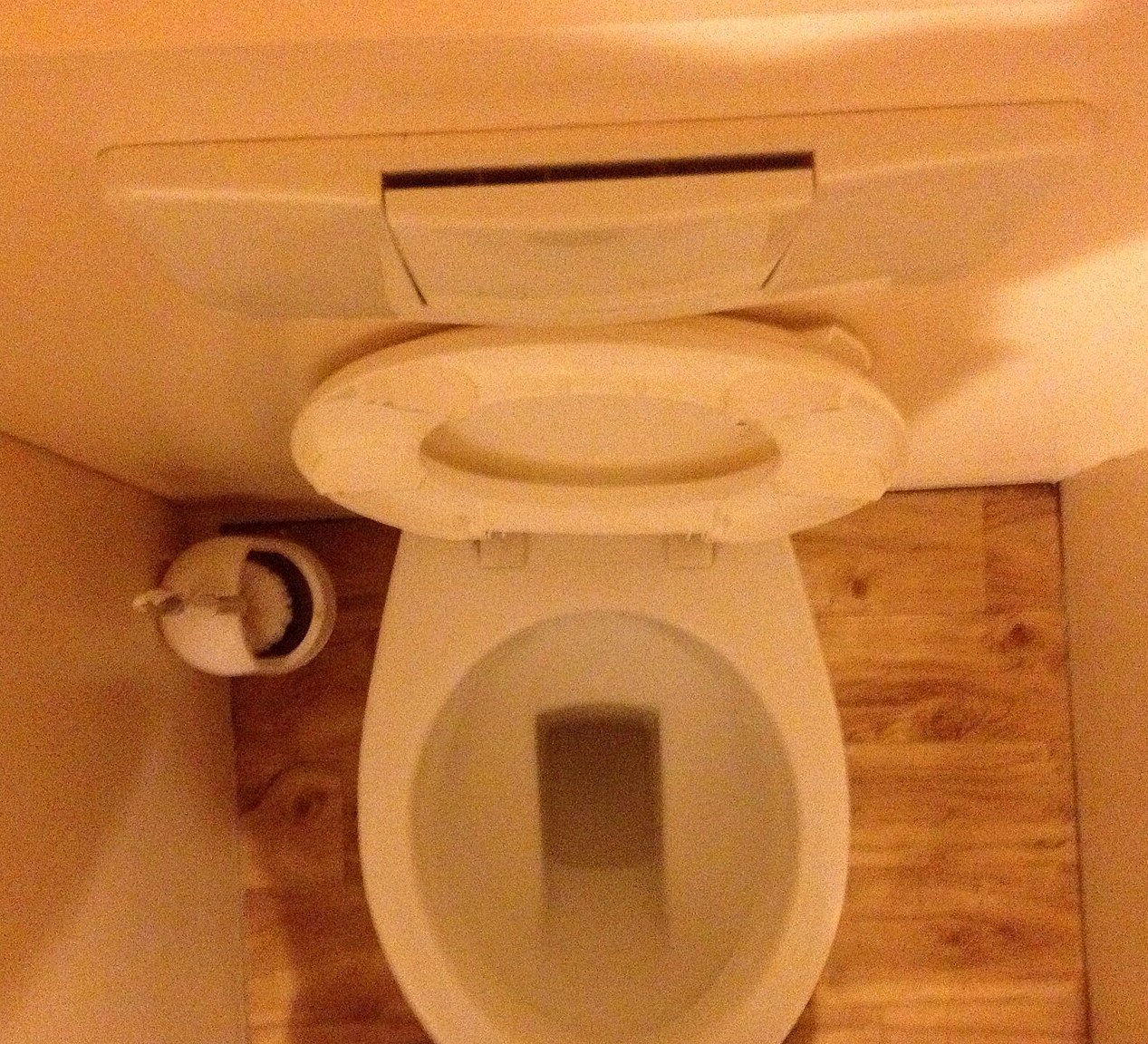
The invoice listed one job, “foreign object extraction”, and one price: A$1,500. A second invoice added A$255 for cleaning described as “extraordinary soilage”. Together they made the A$1,755 that The A Family, a Hobart host with 12 listings across Tasmania and Victoria, asked a French tourist named Alban to pay through the Airbnb Resolution Center. Alban had stayed about two weeks in August and September. He had left a one-star review two days after checking out, following a disagreement over checkout arrangements. The host submitted the request after that review. The photograph attached to the first invoice showed a toilet blocked and overflowing, water running onto the bathroom floor.
Alban told the ABC he suspected the photograph was fake and had posted it on social media to see whether anyone else thought so. A post carrying it, on Reddit’s r/isthisAI forum under the username FurinaDeFontaine, put the demand at $1,700 and laid out the doubt in the title itself. The water dripping from the toilet left no splashes, the whole house should have flooded, and the door handle sat at eye level. The thread gathered 31K upvotes and 893 comments. One commenter, u/ToxZec, ran the image through a checker and reported back in a single line: “It contains Google SynthID, so OpenAI’s verifier won’t find it, but the SynthID tool in Gemini detected it”. Another, u/Kitchen_Vanilla2152, worked from the water: “100% ai, water doesn’t pool like that on the ground unless it’s been running for hours. They would have way more damage for that amount of water”. A third commenter had worked as a Servpro water technician for two to three years. The claim looked too small for the flood in the picture. “If this was real they are asking a light amount.”
The ABC ran the Airbnb AI toilet photo through Google’s SynthID Detector itself and got the same answer the thread had: the image had been made or edited using Google AI. The ABC’s reporters then went after the companies named on the invoices. Neither matched an existing business. The Australian Business Numbers on the invoices were invalid, emails to the addresses given bounced, and no business of the stated kind operated at either address.

The host disputed Alban’s account. The A Family accused him of bringing unapproved guests and leaving the toilet in a poor state, and shared screenshots of messages from another person in the house. Alban denied both claims. In a message to Alban reported by the ABC, the host said the claim would not have been submitted but for his “crazy retaliatory review”, and that it had “let many charges go … for guests who are straight with us”. The host’s own public review of Alban, which the ABC also read, called him repeatedly inattentive to house rules, excessively messy and aggressive and demanding in his messages, with no mention of a blocked toilet.
The company’s Host Damage Protection Terms, last updated on 5 February 2026, define “Legitimate and Verifiable Evidence” as documents that must be true and accurate and “not be doctored or falsified in any way, including by the use of artificial intelligence”. The same terms set the procedure. A host must pursue the guest within 14 days of checkout. The damage-protection form, with an inventory, estimates and receipts, must be filed within 30 days. Airbnb reserves the right, but not the obligation, to investigate on its own. The terms go further for dishonesty. Fraud, misrepresentation or any other dishonest or deceptive act in a payment request “will result in” denial of all pending payment requests. The terms for that host end immediately. Where fraud is identified, Airbnb will also recover costs or payments and pass details to fraud prevention and law enforcement agencies.
Airbnb investigated Alban’s complaint and rejected the damage claim. A spokesman for Airbnb Australia and New Zealand told the ABC: “We take reports like this seriously … the guest has been fully refunded and will not be charged.” Alban said he was refunded almost A$2,000 for both stays and for tours he missed while he was on the phone disputing the claims. The company said hosts who provide false or misleading information can have their accounts suspended or banned. It did not confirm whether it would take any action against The A Family. The person behind the Reddit post had put the imbalance in plain words while the case was still open. “Whether or not I have to pay for these fake damages is entirely up to Airbnb,” the poster wrote. “They said results by Friday.” The poster added, about the water in the picture, that “there is a floor underneath this one so if there are a few inches of water on the ground the entire first floor should be an aquarium!”
A year earlier, Guardian Money reported a London-based academic who booked a one-bedroom apartment in Manhattan for two and a half months and left after seven weeks because she felt unsafe in the area. The host, listed as a superhost, then claimed more than £12,000 in damage, including a cracked coffee table, a urine-stained mattress and a broken robot vacuum, sofa, microwave, television and air conditioner. Two photographs of the coffee table showed the crack in different places, and the guest argued the images had been digitally manipulated, likely with AI. Airbnb, after what it described as a thorough investigation, told her to pay £5,314. She appealed. Five days after Guardian Money questioned Airbnb about the case, the company accepted the appeal, credited her account with £500, and after she said she would not use the service again, refunded the full £4,269 cost of her stay and removed the host’s negative review from her profile. The host was warned that he would be removed if there was another similar report, Airbnb said it could not verify the images he had submitted, and it launched an internal review of how the case had been handled. The Hobart claim arrived a year later, with Airbnb’s rule against AI-generated evidence already in the terms and a public detector anyone could use.
In May 2026 a Lyft driver in Boca Raton, Florida, charged a father, Bert Gor, $75 for damage his two teenage daughters were said to have caused in the back seat. The girls had come from the beach in towels with no food or drinks, and Gor’s daughter spotted the Gemini logo in the corner of the photograph Lyft had sent as evidence. Lyft permanently removed the driver and reimbursed the charge.
The detector that exposed the Hobart photograph has limits the coverage mostly skipped. Google opened its SynthID Detector to everyone in October 2026, and it checks for one thing only: an invisible SynthID watermark, from Google and its partners OpenAI, NVIDIA and Kakao, with Apple to follow. Google DeepMind says the watermark is added when the content is created and is designed to survive cropping, filters and compression. A watermark found means all or part of the image was created or edited using Google AI. It does not say who prompted the tool or when, it does not say whether anything in the picture really happened, and finding no watermark proves nothing, because a tool outside the partnership leaves no mark to find. The next photograph in the next dispute may come from one of those tools, and then the watermark check will come back empty and the guest will be back to the water, the invoices and the rulebook.
Alban paid for the dispute in time as well as money. He told the ABC the repeated demands, in amounts of hundreds of dollars, left him afraid he would not have enough to get home to France, and he brought his return flight forward by 10 days. “If I had to pay those fees, I’d rather be in a place where I had some support,” he said. He also said he was unlikely to book through Airbnb again: “I’ll heavily lean towards a hotel.” The person who posted the photograph on Reddit had a history with the same operator before the toilet claim ever arrived. In a comment on the thread, the poster said the company had previously tried to charge $300 for leaving late, and that Google Maps GPS Timeline had proved the departure was on time and Airbnb had sided with the guest. The poster called the operator one of the biggest Airbnb companies in its state and crossposted the thread to the Hobart and Tasmania forums as a warning to others. The ABC said it reviewed photographs, invoices and correspondence between the host and Alban that supported his timeline, and that it contacted The A Family for comment without receiving a response before publication. The Battery Point property where Alban stayed is no longer active on Airbnb.