After the CVS Health Split, Who Decides What the Pharmacy Gets Paid?
Caremark stays with Aetna. The pharmacy keeps the counter, the filling work and a contract to negotiate with its former sibling.
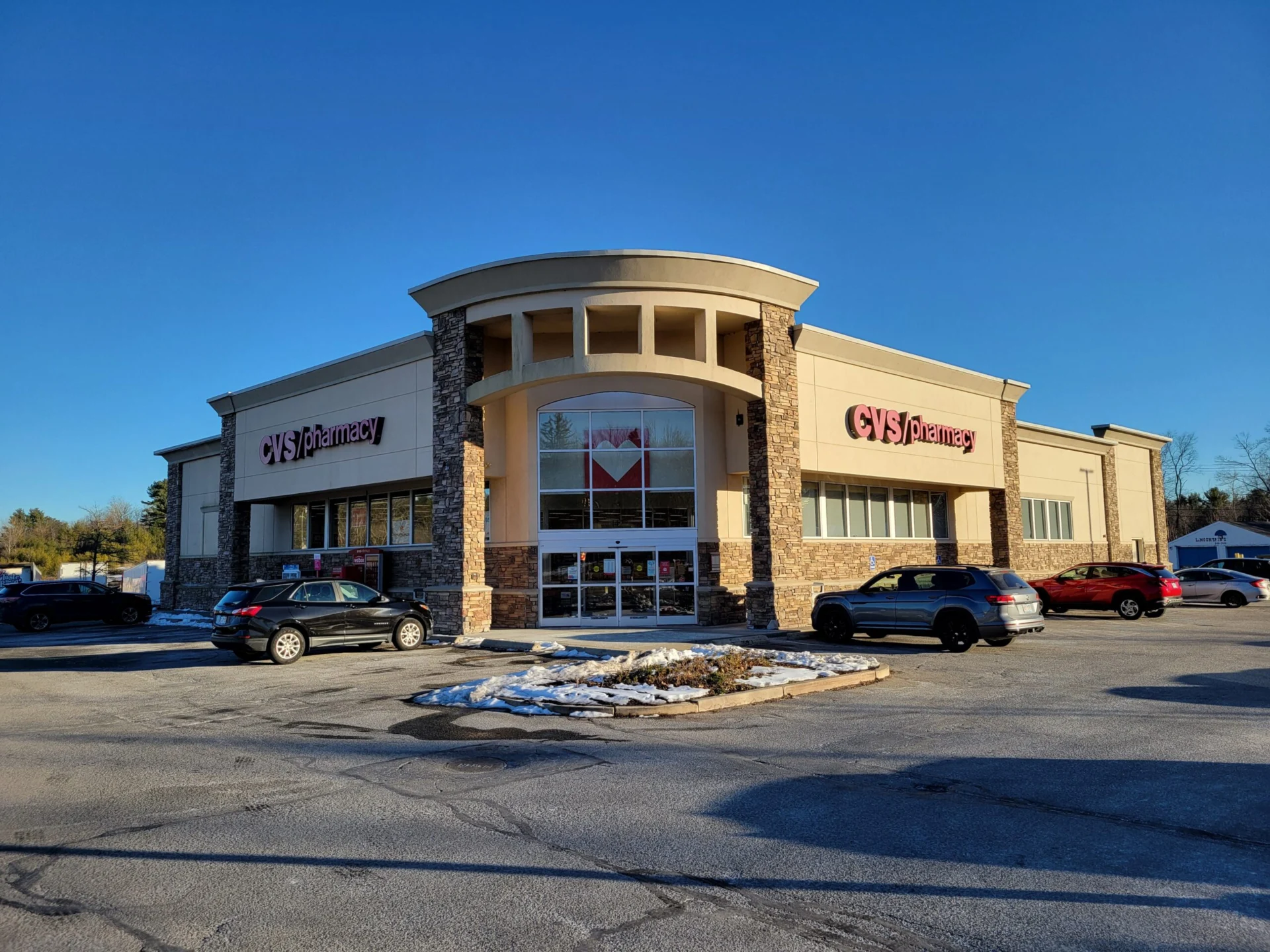
In the second quarter of 2026, the part of CVS that runs the pharmacies recorded $10,762 million of revenue from inside the company, against $23,054 million from customers outside it. The segment’s total was $33,816 million. The filing that carries those figures, the Form 10-Q for the quarter ended 30 June 2026, calls the internal amount intersegment revenue and removes it when the group total is struck. A little under a third of what the pharmacy segment booked never left CVS. The separation announced on 4 November turns that internal line into something else: a price that two separate listed companies will have to agree, in writing, for work that used to be charged inside one set of accounts.
The CVS Health split will divide the group into two independent publicly traded companies, with completion expected in the first half of 2028. Shareholders will own shares in both. CVS said the separation was intended to be tax-free for the company and its shareholders, subject to final board approval, an effective Form 10 registration statement and confirmation of the tax treatment. One company, keeping the CVS Health name for now and led by chairman and chief executive David Joyner, will hold Aetna, the CVS Caremark pharmacy benefit manager, CVS Specialty, Oak Street Health and Signify Health. The other, CVS Pharmacy, led by Prem Shah, will hold about 9,000 pharmacies, the mail pharmacy, MinuteClinic including virtual care, and the Health100 technology services business, with nearly 30,000 pharmacists. The announcement gave no allocation of assets, debt, costs or dividends between the two.
A pharmacy benefit manager stands between the health plan, the drug manufacturer and the pharmacy counter: it negotiates prices and rebates and sets the reimbursement the pharmacy receives for filling a prescription. Under the plan announced, the business that does that setting, Caremark, remains in the same company as Aetna, the insurer whose members fill prescriptions at CVS counters. The pharmacy company, on its own, will have to deal with Caremark as a counterparty. Its own announcement language says as much, in the company’s phrasing, promising a wider set of partnerships including with payers, pharmacy benefit managers and manufacturers. The specialty business, which handles the expensive drugs dispensed for complex conditions, stays on Caremark’s side of the divide. The mail pharmacy goes the other way, to a company whose promised partnerships will include the pharmacy benefit managers it must now bargain with.


The third-quarter release describes the Pharmacy & Consumer Wellness segment as dispensing in retail pharmacies and providing, in its words, pharmacy fulfilment services to support the Health Services segment’s specialty and mail order pharmacy offerings. The filling work and the specialty business are therefore separated by the split while remaining operationally joined: one company keeps the work of preparing and supplying the medicines, the other keeps the specialty operation that the work supports. What the pharmacy company charges for that fulfilment, and what Caremark pays its own and other pharmacies for specialty generics, becomes a matter for contracts between companies that no longer share a board.
The Federal Trade Commission examined that exact arrangement before the split was announced. Its second interim staff report, published in January 2025, looked at 51 specialty generic drugs dispensed between 2017 and 2022 by the affiliated pharmacies of the three largest pharmacy benefit managers, Caremark among them. It found those pharmacies generated over $7.3 billion of dispensing revenue above the National Average Drug Acquisition Cost, the benchmark for what pharmacies pay to acquire drugs. At affiliated pharmacies, 63 per cent of the drugs were marked up by more than 100 per cent and 22 per cent by more than 1,000 per cent, on commercial claims in 2020 to 2022. Affiliated pharmacies dispensed 72 per cent of the prescriptions for drugs marked up by more than $1,000, against 44 per cent of specialty generic prescriptions overall, a pattern the report presented as consistent with steering. The report did not say the split would end that pattern. It described a structure in which the company setting the payment and the pharmacy receiving it were under the same roof. The split puts the payment-setting business in a separate company from the pharmacy, while keeping it in the same company as the insurer.
Tennessee had already moved, in law, on the same structure. An audit by the Tennessee Department of Commerce and Insurance of Caremark’s operations in the state in 2024, summarised by the Tennessee Pharmacists Association in February 2026, recorded 11 formal findings and five observations, and two consent orders followed in September 2025 and January 2026. The audit found Caremark reimbursed its own pharmacies at higher rates than independent pharmacies for 661 of 3,646 medications sampled, including 16,510 per cent higher for cinacalcet 60mg and 9,927 per cent higher for tadalafil 20mg. The state legislature then passed the FAIR Rx Act, signed on 22 May 2026 by 86 votes to 7 in the House and 24 to 9 in the Senate. The Act bars a company from holding both a Tennessee pharmacy licence and more than a 5 per cent interest in both a pharmacy benefit manager and a health insurer in the state, with compliance required by 1 July 2028. CVS sued Tennessee in federal court within hours of the signing, arguing among other grounds that the law targeted the company and could not be complied with while keeping both businesses viable, and said the law would force it to close its Tennessee pharmacies. Reports of how many pharmacies that meant differed: The Tennessean put the figure at 134 community pharmacies, with about 2,000 staff and 1.5 million patients, on CVS figures, while Healthcare Dive reported 136 retail and specialty pharmacies. Arkansas passed a similar law in 2025 and was sued; a federal court enjoined it. The national split now announced for the first half of 2028 lands in the same half-year as the Tennessee deadline.
The people writing about the announcement on Facebook on 3 and 4 November read it against that history rather than against the company’s framing. Jessica Baladad, posting on Facebook on 4 November, wrote of the Tennessee law: “Remember the FAIR Rx Act that I made so much noise about this spring? … This is significant. And I’m cautiously optimistic.” Lexy Weber, commenting on a Facebook post about the reports, wrote: ““Plotting a break-up” is a weird way of saying they are being mandated by law to choose between owning an insurance company or owning a pharmacy chain due to newly formed PBM legislation and breaking antitrust laws.”
Linda A Carver, commenting on the same post, wrote: “It may be their attempt to not close stores where legislation has passed to prohibit them from controlling all facets of the system.” Kyle Peterson, also commenting there, asked: “Is this a trap, trying to carve out a loophole? Or do they know something we dont (like maybe they’re about to lose one of their lawsuits against states that ban PBMs from owning pharmacies)???” None of the four is quoted in the coverage surveyed, and none claims in the posts read to work for CVS. Joyner said the split was planned “from a position of strength, and a focus on the long term” to create two focused companies. The commenters treat the same announcement as compelled, defensive, or possibly a way round the state laws. In the Tennessee case, as reported, CVS argued separation and viability could not both be had in that state.
The Consolidated Appropriations Act, 2026, signed on 3 February 2026, requires pharmacy benefit managers serving ERISA group health plans to pass through 100 per cent of rebates, fees, discounts and other manufacturer remuneration. The requirement applies to contracts entered into or renewed for plan years beginning on or after 3 August 2028, which means 1 January 2029 for calendar-year plans. Two days before the CVS announcement, the Labor Department finalised a rule on fee disclosure, published in the Federal Register on 2 November 2026, effective 4 January 2027 and applying to plan years beginning on or after 1 July 2027. It requires pharmacy benefit managers and affiliated brokers and consultants to disclose direct and indirect compensation, including rebates, spread pricing and pharmacy clawbacks, to fiduciaries of large self-insured ERISA plans, those with 100 or more employees or participants, above a $1,000 compensation threshold, with an audit right at least once a year. The department projected up to $22 billion lower drug costs over 10 years, as reported. The standalone Caremark will therefore operate under disclosure and pass-through rules that did not apply in the same form when the integrated group was assembled, and the pharmacy company will negotiate its reimbursement in a market where the plan fiduciaries are entitled to see more of the money flows.
At 30 September 2026 CVS carried $60,680 million of debt, $3,457 million current and $57,223 million long-term, down from $64,570 million at 31 December 2025, against goodwill of $85,478 million and intangible assets of $24,224 million, on total assets of $258,075 million. The separation release promises both companies a solid investment-grade rating, strong free cash flow and an attractive dividend. It does not say how the debt, the goodwill or the costs of separation fall between them, and it warns that the separation may prove more difficult, time-consuming or costly than expected, or may fail to qualify for the intended tax treatment. The figures given are the group’s, and the split of the debt between the two companies was not given.
In the third quarter of 2026 the pharmacy segment’s revenue fell 2.0 per cent to $35,498 million even as prescriptions filled rose 1.9 per cent to 470.0 million on a 30-day equivalent basis. CVS attributed the fall to regulatory-related price reductions, generic introductions and pharmacy reimbursement pressure, partly offset by drug mix, volume including the Rite Aid asset acquisitions completed in the third quarter of 2025, and brand inflation. Adjusted operating income for the segment still rose 10.6 per cent to $1,635 million. The store base behind those figures had been shrinking: about 900 stores closed in 2022 to 2024 under the plan announced in 2021, and a further 221 closures in 2025 were recorded in an analysis of CVS filings by FourWeekMBA, a secondary source. In October 2025 CVS completed the acquisition of 63 Rite Aid and Bartell stores and the prescription files for 626 locations in 15 states, hiring more than 3,500 former Rite Aid staff. Part of the volume growth in the quarter came from the files of a bankrupt rival.
Shah said in August 2026 that Caremark expected to lose clients in 2027 after taking a more cautious approach to signing contracts, and the same call flagged the 340B business as a headwind for 2027. Julie Utterback, a Morningstar analyst, told Reuters that CVS had greater exposure to vertical integration than its peers because it owned both Caremark and a major retail chain. The pharmacy benefit manager that stays with Aetna begins its independent life with fewer clients, under new disclosure rules, and with the specialty operation that the FTC report examined still in its own company. Employers were already moving: the National Alliance of Healthcare Purchaser Coalitions’ 2026 Pulse of the Purchaser survey of 408 employers, conducted in May and June 2026, found the share using one of the Big Three pharmacy benefit managers fell from 63.4 per cent in 2025 to 54.3 per cent in 2026.
Goldman Sachs is the lead financial adviser on the separation, with Consello also advising and Wachtell, Lipton, Rosen & Katz as legal adviser. The healthcare-solutions company will use the CVS Health name on an interim basis, the release said.