

Microsoft and Nvidia unveiled a joint hardware and software architecture designed to run autonomous artificial intelligence agents directly inside Windows, introducing the Surface Laptop Ultra powered by the new RTX Spark N1X processor.
The partnership, detailed by executives from both companies at an event in San Francisco, centers on Microsoft Execution Containers (MXC), a security infrastructure built into the operating system. MXC allows AI agents to operate persistently in the background while remaining under strict OS-level control. The technology aims to resolve critical vulnerabilities that plagued earlier attempts to integrate autonomous AI into Windows 11.
Late last year, Microsoft enabled AI agents to interact with local applications using the Model Context Protocol, an open standard developed by Anthropic to serve as a universal language for AI systems. However, Microsoft’s own technical documentation acknowledged severe risks, warning that the agents could misinterpret instructions, fabricate information, or produce unintended actions when granted broad access to the operating system. MXC functions as a containment layer, isolating agent execution so that errors or malicious prompts cannot compromise the broader system environment.


NVIDIA CEO Jensen Huang compared the architectural shift brought by MXC to the introduction of DirectX decades ago, which standardized graphics programming and fundamentally altered PC game development. Under this new framework, Huang described the agents evolving into persistent personal assistants rather than simple query-response tools.
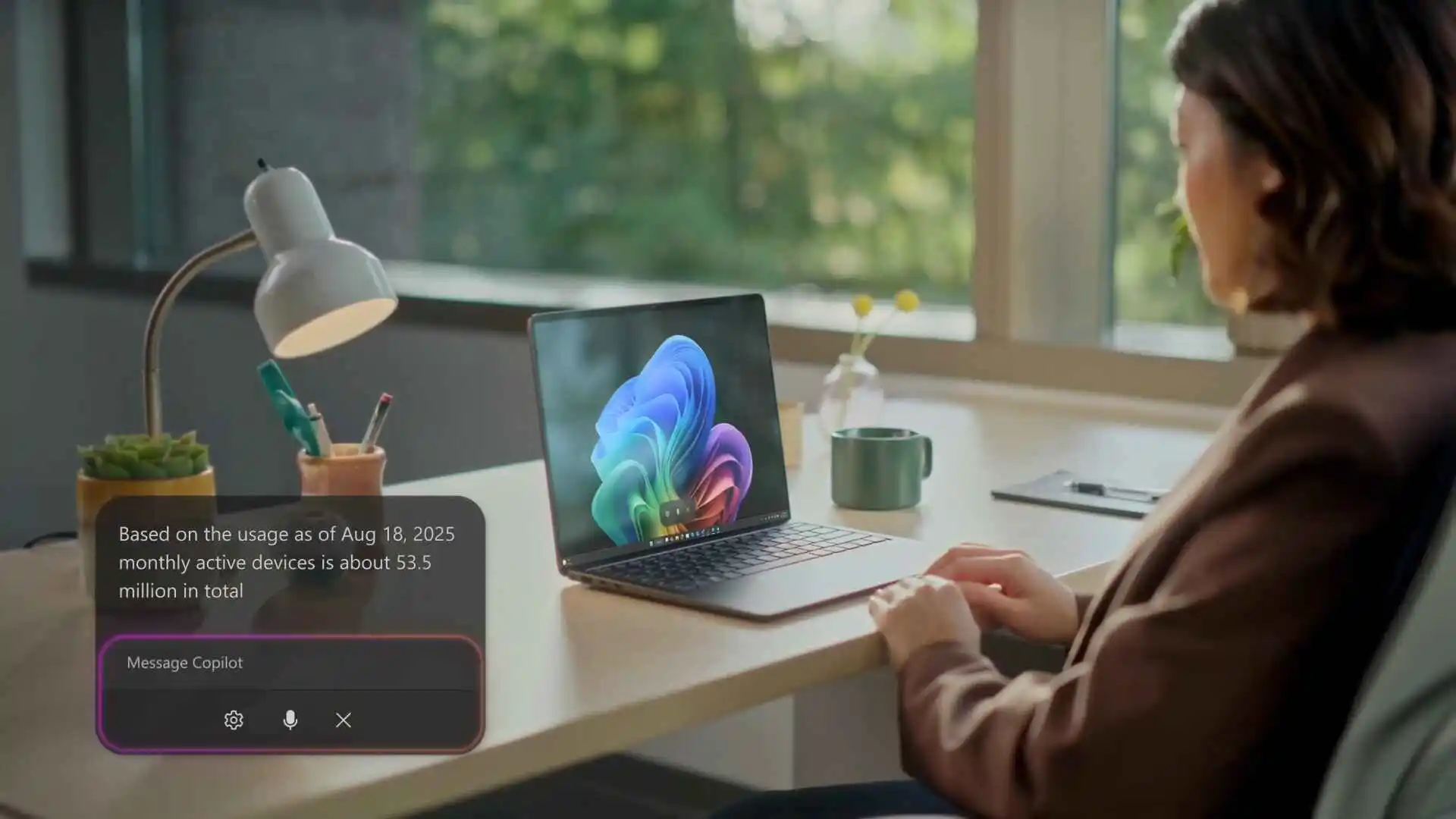
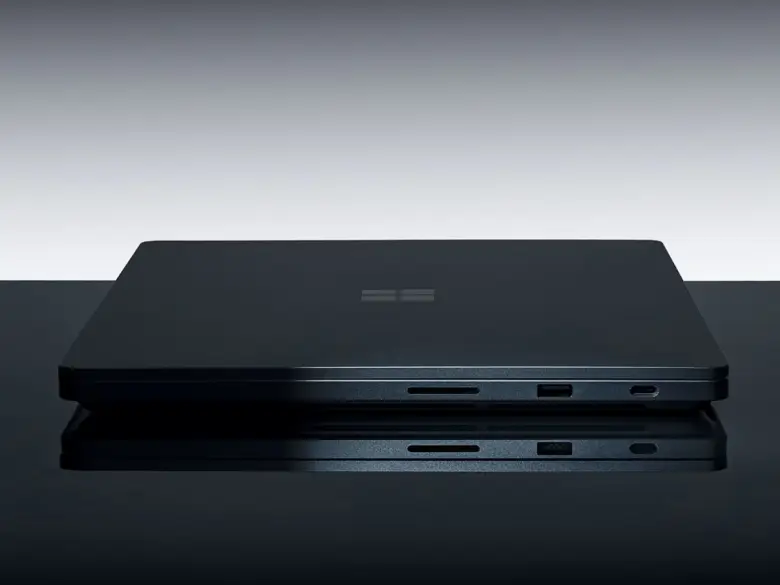
The physical manifestation of this strategy is the Surface Laptop Ultra, a 15-inch machine featuring an aluminum chassis measuring 18 millimeters thick. Unlike previous Copilot+ PCs that relied primarily on modest neural processing units integrated into standard laptop processors, the Surface Laptop Ultra houses the RTX Spark N1X chip. This custom silicon pairs a 20-core CPU with a Blackwell-architecture RTX GPU, moving high-end data center capabilities into a consumer form factor.
The display uses Microsoft’s PixelSense Ultra panel, reaching 2,000 nits of peak brightness with Dolby Vision IQ support. Buyers can configure the machine with up to 128 GB of unified memory and a 2 TB solid-state drive. Unified memory architectures allow the CPU and GPU to share the same memory pool without copying data back and forth, a requirement for running large language models locally without latency.
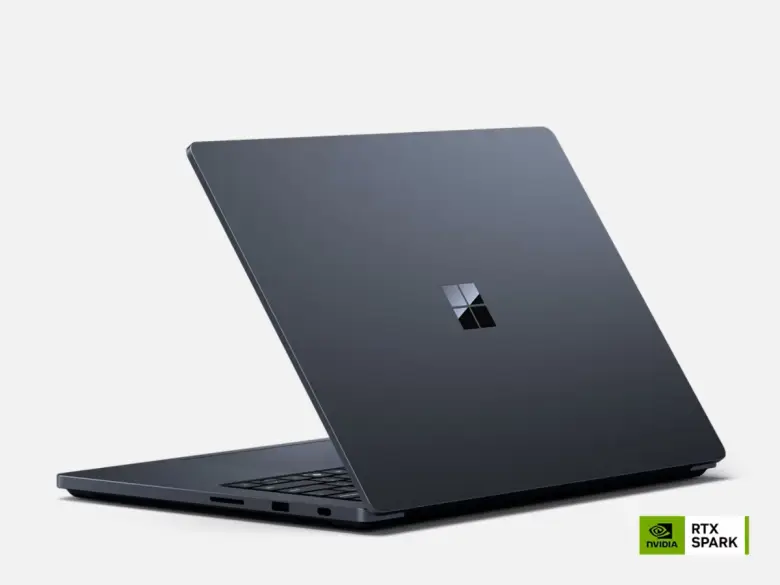
Pricing reflects the workstation-class components. A base model with 24 GB of RAM and reduced core counts on both the CPU and GPU starts at $2,599.99. The maximum configuration, equipped with 128 GB of RAM, fully unlocked RTX Spark cores, and a 1 TB SSD, costs $5,899.99. Both tiers position the device well above traditional premium laptops, targeting developers, researchers, and enterprise professionals who need to run heavy inference workloads locally rather than relying on cloud APIs.
Microsoft confirmed that Acer, ASUS, Dell, HP, Lenovo, MSI, and Gigabyte will release their own machines utilizing NVIDIA RTX Spark silicon, signaling a broader ecosystem shift away from relying solely on integrated NPUs for advanced AI tasks.
For enterprise clients requiring significantly more compute power, NVIDIA introduced the DGX Station for Windows. Built around the GB300 Grace Blackwell Ultra superchip, the desktop workstation delivers 20 petaFLOPS of performance in FP4 precision and includes 748 GB of memory. These specifications allow organizations to run foundation models containing up to one trillion parameters entirely on-premises, bypassing cloud infrastructure for sensitive corporate data. The DGX Station remains restricted to commercial buyers.
This hardware push follows the muted industry reception of the initial Copilot+ PC initiative launched in mid-2024. Those early devices, constrained by limited memory bandwidth and reliance on Qualcomm Snapdragon X processors optimized for efficiency over raw throughput, struggled to deliver transformative AI experiences beyond basic image generation and text summarization. By integrating Blackwell-architecture GPUs directly into laptops, the companies are attempting to close the gap between mobile hardware and the computational demands of agentic AI.
Acer, ASUS, Dell, HP, Lenovo, MSI, and Gigabyte are preparing their respective RTX Spark configurations for market release.



