89 Owners Lost the Tesla FSD in South Korea Refund Case. 80 Others Were Referred for Switching It On.
The court, the police and the regulator have all answered the same buyers in the past nine days.
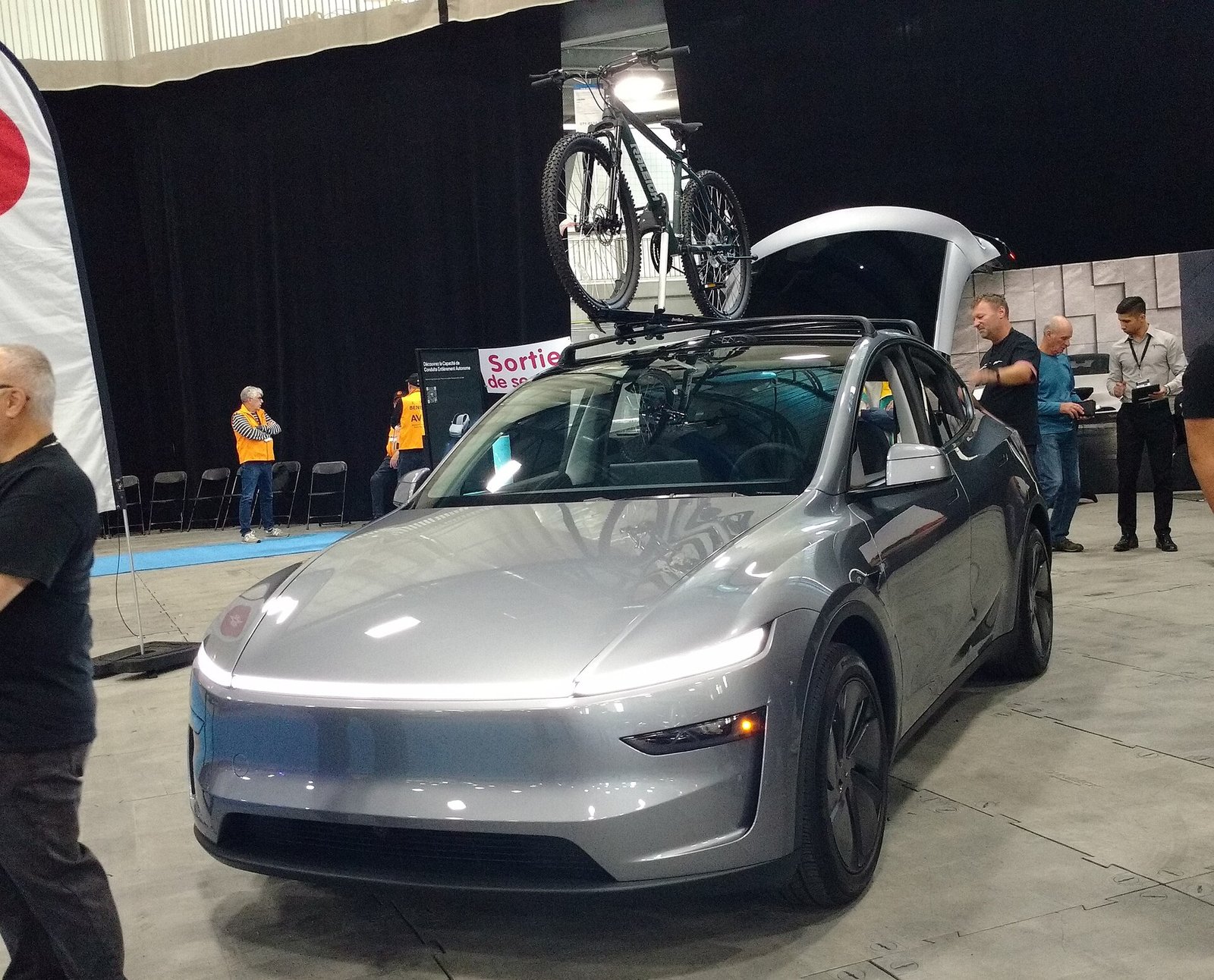
On 29 October, the Seoul Central District Court told 89 Tesla owners that the Full Self-Driving option they had bought between 2019 and 2022 was never a promise of a driverless car. The owners had filed in December 2024, asking the court to cancel their FSD contracts and return what they paid. They argued that the option had been sold as fully driverless operation under all conditions, and that more than nine years after sales began in March 2017 the capability still had not arrived. Civil Division 30, presided over by Judge Kim Seok-beom, dismissed every claim. The court read the contract as an open-ended agreement. Tesla would provide the option once regulatory approval and technological development allowed it. FSD did not mean Level 5 automation, the tier at which a car handles every road and condition with no human fallback. Autopilot and Enhanced Autopilot functions had already been delivered, the court found. Buyers of Hardware 3 cars were not owed the same version as Hardware 4 cars. The rollout of FSD v14 Lite on 10 July, which gave Hardware 3 cars traffic-light recognition and city driving, counted against the owners’ warranty claim. Their argument that the delay itself entitled them to cancel was rejected. Ninety-eight owners had filed; nine withdrew during the trial. In court, the owners’ side had put it plainly: if the system was not going to be introduced, Tesla should not have taken the option price, and asking buyers to persuade the government to change the rules was not their job.
Two days before that ruling, Seoul police had referred a different group of Tesla drivers to prosecutors. The Seoul Metropolitan Police Agency said on 27 October that it had booked 80 people for activating FSD with devices bought in Europe and China or built by the drivers themselves. One device was built by an IT worker from code found on GitHub. Police had seized 21 of the devices. The drivers had also traded tips online on how to keep the activation from leaving records in their cars, police said. The investigation began after the Ministry of Land, Infrastructure and Transport asked police to look into unauthorised activation in April, having warned in March that changing software affecting safe operation was prohibited. Under the Motor Vehicle Management Act, the offence carries up to two years in prison or a fine of up to 20 million won, about $15,000. A police official said safety risks had been confirmed. None of the 80 has been convicted. Prosecutors decide next. The ministry and Tesla Korea had identified 93 vehicles in total, according to a report in Hankyung.
Under the Korea-U.S. free trade agreement, an originating motor vehicle is deemed to comply with Korean safety standards if its manufacturer certifies that it complies with U.S. federal safety standards. A Tesla built in the United States therefore arrives with its safety compliance already recognised. A Tesla built in Shanghai has no equivalent recognition. FSD on those cars needs Korean certification it does not have. Tesla Korea’s own figures, sent to National Assembly member Jang Jong-tae, put the registered fleet at 238,968 cars at the end of September. Of those, 53,477 could use FSD and 185,491 could not. Of the cars that could not, 183,407 were China-made Model 3 and Model Y vehicles. The eligible share had risen from 20.7 per cent in August, not because any China-made car gained access, but because the July rollout of v14 Lite brought U.S.-built Hardware 3 cars into the eligible pool. Tesla has sold more than 170,000 Shanghai-produced vehicles in South Korea since 2023, and 99 per cent of the new Teslas sold in the country last year could not legally use FSD, according to data Tesla submitted to the National Assembly and reported by Reuters.
Tesla Korea’s current Full Self-Driving (Supervised) subscription agreement is version dated 21 August 2026. It says the features are subject to change and limited by region. Activation and use depend on regulatory approval, which may take longer in some jurisdictions. Drivers must use the system only when it is safe and legal to do so, with eyes on the road and hands on the wheel. The system does not make the vehicle autonomous, the agreement says. It sets the price at 150,000 won a month, or 75,000 won for owners moving up from Enhanced Autopilot. The agreement’s usage condition is a single line: it applies only to vehicles where the product is purchased. No sentence in it states that eligibility follows the factory where the car was built, or that a China-made Model 3 or Model Y cannot use the system at all.
Citizens United for Consumer Sovereignty plans to file a complaint with the Korea Fair Trade Commission on Thursday. It alleges deceptive marketing and asks for a temporary cease-and-desist order on marketing FSD for ineligible vehicles, administrative fines and a referral to state investigators. Choi Young-suk, who leads automotive issues at the group, told Reuters that Tesla had generated substantial revenue by selling an expensive driver-assistance system to mass-market buyers who could not use it for even a single day. The commission has already opened its own probe into Tesla’s FSD advertising this year and has received written responses from the company, a commission official told Reuters. Tesla did not respond to Reuters’ requests for comment. The complaint also alleges that Tesla promoted FSD last year as coming soon and posted a demonstration video filmed in South Korea without clearly disclosing that the technology could only be used in a small fraction of the Teslas being sold.
In 2021, Citizens United for Consumer Sovereignty complained about Tesla’s driving-range claims. On 3 January 2023 the Korea Fair Trade Commission fined Tesla 2.85 billion won for false and misleading advertising. It found that driving range could fall by up to 50.5 per cent in cold weather against what the Korean website advertised, and that fuel-cost and Supercharger claims were exaggerated. Tesla was fined a further 1 million won over cancellation-policy disclosure. After the decision, Tesla added fine print to the range figures on its Korean website, a disclosure that appeared only there. The new complaint asks the commission to go further than a fine this time, with a marketing ban and a criminal referral among its requests.
Tesla Korea’s first formal step toward certification for Tesla FSD in South Korea came only after lawmakers asked about it in public. At the National Assembly audit on 8 October, country manager Seo Young-deuk said the company had not formally requested FSD testing from the transport ministry or the Korea Transportation Safety Authority. He told lawmakers: “We have not requested any tests from the authorities.” Two weeks later, on 22 October, Tesla Korea applied by email and registered mail for conformity approval. It used a special-case provision that lets the transport minister permit a device notwithstanding the standards if it is recognised as an excellent new device or necessary for safety. Transport Minister Hong Ji-seon confirmed at a parliamentary audit on 23 October that the request had been sent the previous day. Neither side has disclosed which models or hardware it covers, or on what timetable it will be judged. The ministry’s own position, in a statement sent to a lawmaker and reviewed by Reuters, is that FSD does not comply with local safety rules, including the requirement to keep hands on the wheel. The ministry is separately preparing domestic rules for driver control assistance systems based on the United Nations standard UN R171. Its latest series, adopted in June, covers system-led driving on general roads. Hands-off driving in urban areas falls outside even that series, so separate conformity approval would still be required. If approval is granted, Chosun Biz reported, vehicles on the Hardware 4 platform are expected to be able to use FSD.
Posting on Instagram on 26 October, an account called tesla.log that identifies its author as a Model Y Juniper owner wrote, in Korean, that he hoped FSD would work soon. On X on 1 November, @teslachoi, writing from the standpoint of Hardware 3 owners who had waited for years, called the court result disappointing. He said he hoped the day would come soon when FSD could properly be used in Korea. Both posts are translated from Korean.
The court answered with contract law: no deadline, no Level 5 promise. The ministry’s statement to a lawmaker said FSD did not meet local safety rules. Those rules, for a system like this one, are still being written. The consumer group’s answer was a complaint to a regulator that has already fined Tesla once for what its Korean website said. None of the three gives the owners the feature. None gives them their money back. The application filed on 22 October is the only route that could, and its scope and timetable remain undisclosed.
Tesla registered 89,148 vehicles in South Korea between January and September, up 104.4 per cent on the same period a year earlier, according to Korea Automobile Importers and Distributors Association figures reported by the Korea Times, and most of them were China-made Model Y cars. Tesla surpassed BMW this year as South Korea’s top imported-car brand, according to South Korean import data reported by Reuters.