Centene CEO: Health Care AI Drives Revenue, Not Lower Costs
Enterprise data shows organizations tracking growth metrics and appointing chief AI officers see significantly stronger returns on technology investments.
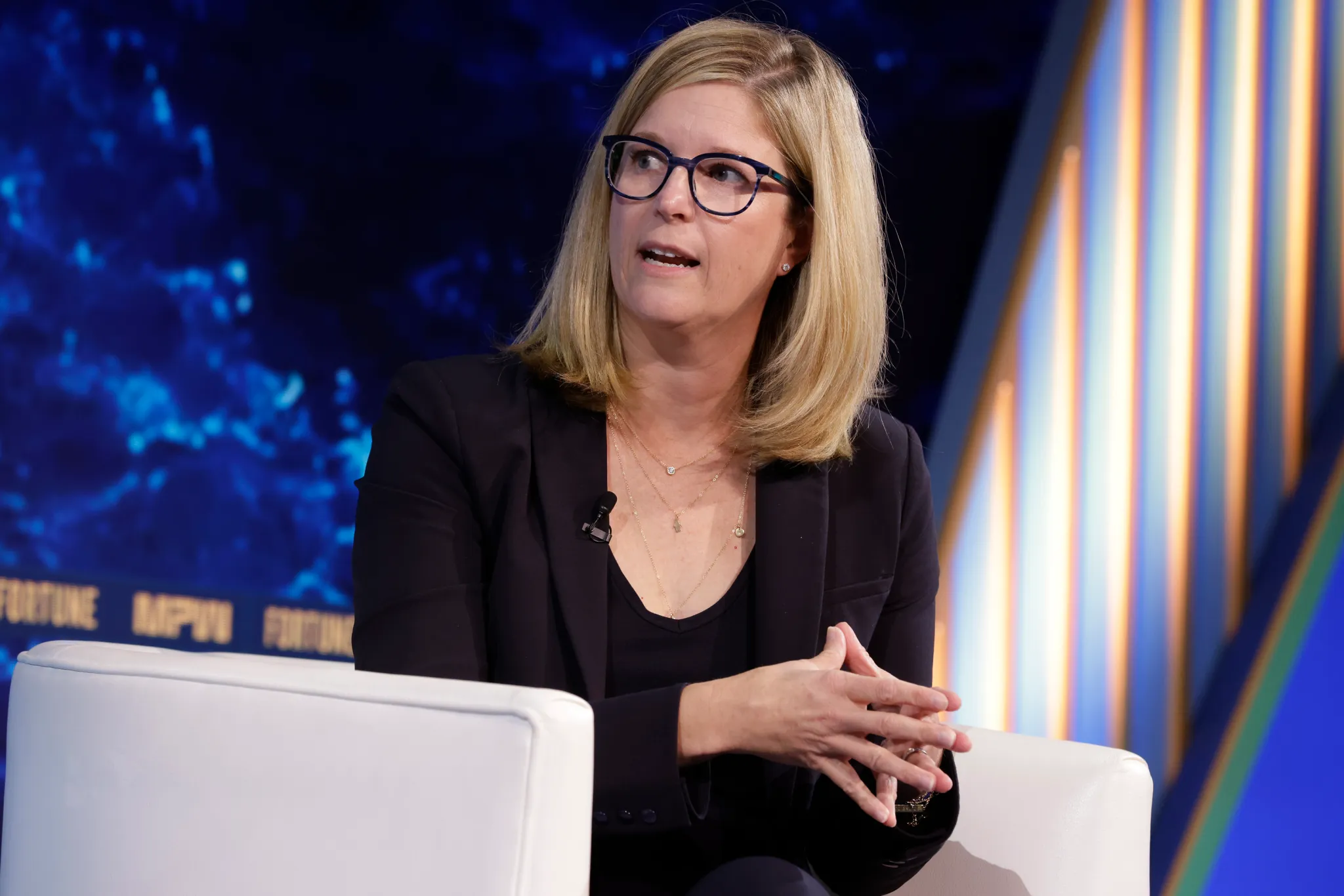
Most artificial intelligence deployed across the U.S. health care system today is engineered to generate more revenue rather than reduce the underlying cost of medical treatment, according to Centene CEO Sarah London.
Speaking at the Fortune Most Powerful Women Summit on Monday, London drew a sharp distinction between administrative automation and structural changes in how patients receive care. She characterized much of the current industry investment as “inflationary use cases” — tools that accelerate billing cycles, automate paperwork, and help providers capture higher reimbursements within the traditional fee-for-service payment model.
The distinction matters because the U.S. spends roughly $1 trillion annually on health care administration alone, according to estimates from the Centers for Medicare & Medicaid Services. When AI optimizes those workflows under fee-for-service arrangements, it typically increases throughput and revenue without necessarily lowering premiums or out-of-pocket expenses for patients.


Centene operates at the intersection of these economic pressures. The St. Louis-based insurer manages $33 billion in annual revenue, administering Medicaid plans across 29 states alongside Medicare Advantage and Affordable Care Act marketplace coverage. Its 26 million members represent some of the most complex, costly, and historically underserved populations in the American health system.
London identified two specific applications where AI could alter the economics of treating these populations rather than merely streamlining back-office operations. The first involves deploying community health workers equipped with AI triage tools in rural areas facing severe physician shortages. By resolving non-acute medical issues locally, insurers and health systems can divert patients away from emergency departments, which remain the most expensive point of entry in U.S. health care.
The second application centers on interactive patient-facing tools designed to guide individuals through initial health decisions independently, reducing reliance on clinician visits for every step of care navigation.
“Every dollar that we can save in the administration of health care, we can apply to benefits,” London said, arguing that administrative efficiency only fulfills its potential when savings are redirected toward member coverage rather than retained as margin.
This tension between efficiency-driven returns and growth-oriented transformation extends well beyond health insurance. According to the 2026 AI Adoption Report published by Wharton Human-AI Research and GBK Collective, nearly all enterprises now report positive returns on AI investments, but the magnitude varies drastically based on measurement criteria. Only 13% of leaders who track efficiency metrics alone report strongly positive ROI, compared with 35% of those measuring at least one growth indicator.
Governance structures also dictate financial outcomes. Organizations that have appointed a dedicated chief AI officer report strongly positive ROI at a rate of 58%, versus just 8% among companies lacking the role. Wharton professor Sonny Tambe, co-director of the research group, noted that while executives broadly expect AI to transform their industries, many continue evaluating the technology solely on its ability to save time.
That evaluation gap is reshaping executive hiring across the technology sector. Runpod, an AI developer cloud platform, recently appointed Brian Erickson as CFO, drawing on his experience guiding DigitalOcean through its public offering and leading finance at Amazon and Microsoft’s cloud divisions. MoonPay, a financial technology firm, named Anne Giviskos as CFO after her tenure as interim finance chief and chief accounting officer at AI-powered travel platform Navan.
Legacy enterprise software firms face similar recalibrations. Workday, which spent years disrupting incumbents like Oracle and SAP during the shift to cloud computing, now confronts AI-driven displacement. Co-founder Aneel Bhusri returned as CEO to lead the transition, supported by CFO Zane Rowe and Chief AI Officer Joel Hellermark, whose startup Sana was acquired by Workday for over $1 billion.
For health care specifically, the capital required to test these structural shifts is already in motion. Big Tech firms have committed hundreds of billions of dollars to build foundational AI infrastructure. Bill Miller, chairman and CEO of home health technology firm WellSky, argued this week that health care may become the definitive proving ground for whether that infrastructure can produce productivity gains sufficient to justify the unprecedented capital expenditure.