AI Usage Surges in U.S. Companies as Manager Excitement Fades
Verification demands and middle-management strain replace the experimentation phase as companies seek measurable returns from generative tools.
U.S. corporate managers are using artificial intelligence at record rates, but the novelty has worn off. Daily AI adoption among managers and above reached 62% this year, up from 46% a year ago, according to new data from Wharton Human-AI Research and GBK Collective. Yet excitement dropped eight percentage points to 51%, while caution climbed to 44%. It is the first time in the four-year study that usage and enthusiasm moved in opposite directions.
The divergence marks a structural shift in how enterprises interact with generative models. The initial phase of experimentation has ended, replaced by the friction of integrating unpredictable systems into rigid corporate workflows. For the youngest workers already navigating these tools, the sentiment is familiar. A Gallup survey conducted with the Walton Family Foundation and GSV found that while 51% of Americans ages 14 to 29 use generative AI weekly, their excitement fell 14 percentage points over the same period. Nearly half of employed Gen Z respondents said workplace risks outweigh the benefits, even as they acknowledged the speed advantages.
This cooling does not signal abandonment. Optimism among management held at 59%, and 80% reported positive financial returns, though only 28% characterized those gains as strongly positive. Because the annual surveys draw separate samples rather than tracking identical individuals, the data reflects a broad mood shift across the management class rather than individual disillusionment.


The primary driver of that shift is verification. Seventy-two percent of managers and above reported their focus has moved from generating outputs to managing what AI produces. Among vice presidents and above, that figure reaches 82%. An autonomous agent’s capacity to execute a task does not equate to an organization’s ability to confirm it executed correctly. Prasanna Tambe, co-director of Wharton Human-AI Research and currently conducting economic research inside OpenAI, noted that organizations have overindexed on agent capabilities while underestimating verification requirements, particularly when automated work crosses departmental boundaries.
Wharton researchers Gideon Nave and Steven Shaw have studied this dynamic under the term “cognitive surrender,” questioning whether human reviewers genuinely audit AI output or simply rubber-stamp it. Corporate governance structures have not resolved the liability question. When asked who bears responsibility for consequential errors made by autonomous AI, 28% pointed to governance or risk teams, 26% to the deploying employee’s manager, and 25% to the employee. One in five managers and directors reported no clear accountability framework exists.
Consequently, most departments maintain strict human oversight. Forty-eight percent require human approval before AI executes work, and 35% restrict AI to drafting suggestions. Only 17% permit autonomous operation with real-time guardrails or after-the-fact sampling.
The burden of this oversight falls heavily on middle management, a layer Jeremy Korst, a Wharton lecturer and GBK partner, described as lacking the capacity to lead enterprise-wide transformation while simultaneously auditing algorithmic output. Expanded model capabilities compound the strain by creating prioritization dilemmas rather than solving them.
That strain alters hiring trajectories downstream. A third of managers reported their departments slowed or froze hiring due to AI, and 24% expect fewer entry-level hires over the next two to five years, compared with 14% anticipating executive reductions. A disconnect persists regarding readiness: 78% of managers believe employees receive adequate AI training, while only 56% of entry- and mid-level workers agree.
Departments extracting material value from AI share specific operational traits. Those measuring success against growth metrics like net-new revenue or sales conversion were far more likely to report strongly positive returns than those tracking efficiency alone. High-return departments also restructured management hierarchies and redesigned core workflows without accelerating staff reductions. Departments allowing agents to take irreversible financial, legal, or customer-facing actions showed the highest rates of workflow transformation.
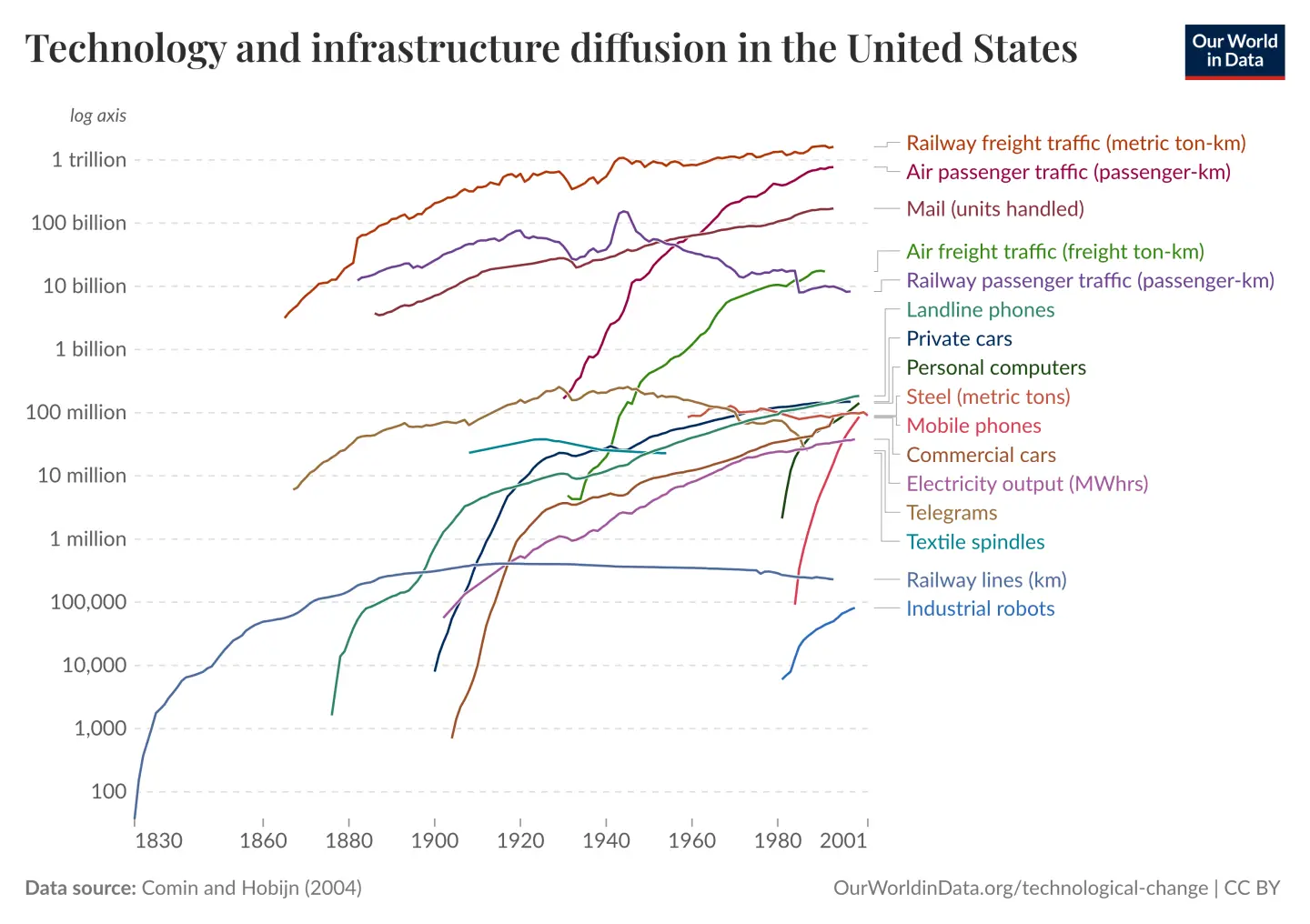
Korst compared the current deployment phase to early factory electrification. Manufacturers initially replaced central steam plants with single electric motors, yielding marginal improvements. Transformative gains arrived decades later when engineers realized individually powered machines allowed complete redesigns of the factory floor. Tambe cautioned that while electricity took roughly a century to permeate the economy—air conditioning did not drive Southern U.S. economic expansion until the 1950s—generative AI achieved mass adoption within months. Unlike historical technological shifts that relied on retiring generations of managers to clear the way for new ones, AI integration must occur within existing leadership tenures.
Stanford economist Robert Hall, who shared the Nobel Prize in economics with Michael Woodford on the morning the survey findings were discussed, has demonstrated that major economic shifts typically lock in during recessions. Goldman Sachs economists David Mericle and Pierfrancesco Mei advanced a similar thesis last October, arguing the U.S. entered a period of jobless growth where robust GDP expansion coexists with modest hiring, and suggesting AI’s full labor market consequences may remain obscured until a macroeconomic downturn forces rapid automation.
Despite the absence of a recession catalyst, 52% of managers reported structural changes to their departments, and 73% cited significant workflow alterations driven by AI. Tambe observed a convergence forming between younger workers confronting career uncertainty and executives confronting deployment realities, though the underlying pressures driving their skepticism differ. Both groups increasingly recognize that generating instant output requires less skill than determining its accuracy—a distinction forcing organizations to decide whether generalists should manage entire AI workflows or whether dedicated experts must handle verification.