Social Security COLA 2027: 3.6% Raise, Medicare Costs and Trust Fund
Average retirees gain $75 monthly, but rising Medicare Part B premiums and trust fund depletion timelines complicate the financial outlook.
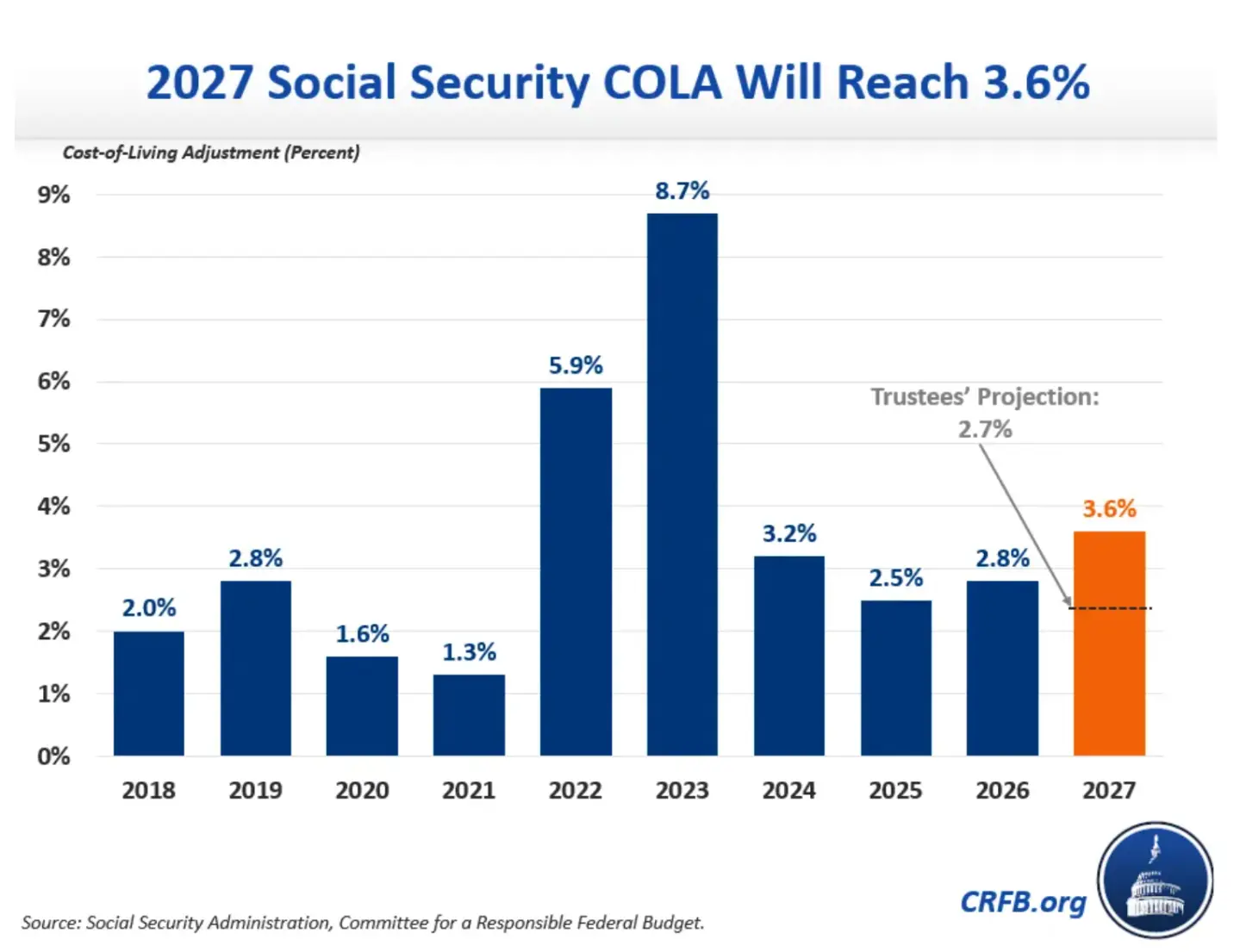
The Social Security Administration confirmed a 3.6% cost-of-living adjustment for 2027, the largest increase since the 8.7% surge enacted during the 2022 inflation spike. The raise, which takes effect in January, will reach approximately 72 million beneficiaries and add an average of $75 per month to retirement checks.
Because the adjustment is calculated as a percentage of existing benefits, the financial impact varies drastically across income levels. Data compiled by the Committee for a Responsible Federal Budget shows the average retiree will receive roughly $900 more annually. By contrast, maximum-benefit couples retiring at full retirement age this year will see combined increases approaching $3,600, pushing their total annual payouts past $100,000. This structural feature of the program means higher earners absorb a disproportionate share of every inflation adjustment, a dynamic that has drawn increasing scrutiny from fiscal policy analysts as trust fund reserves dwindle.
The formula driving these payments relies on the Consumer Price Index for Urban Wage Earners and Clerical Workers, known as CPI-W. Unlike the broader CPI-U index used for general economic reporting, the CPI-W specifically tracks spending patterns among hourly wage earners and clerical staff. Critics have long argued this metric fails to accurately reflect the actual purchasing habits of older Americans, who spend significantly more on healthcare and housing than the working-age population measured by the index.


Healthcare costs threaten to erode much of the new increase before it reaches bank accounts. Medicare Part B premiums are automatically deducted from Social Security payments. While the Centers for Medicare & Medicaid Services has not finalized the 2027 rate, projections from the Medicare trustees estimate a standard monthly premium of $209.50 — a $6.60 increase over 2026. For retirees receiving the average benefit bump, that premium hike would consume nearly 9% of their new monthly income.
The 3.6% figure landed 0.9 percentage points above recent projections made by the Social Security Board of Trustees, signaling that consumer prices accelerated faster than federal forecasters anticipated through the third quarter measurement period. Independent policy analyst Mary Johnson characterized the persistent price environment earlier this year as a landscape of “breathtakingly high prices and costs” for fixed-income households.
Larger automatic payouts accelerate the depletion of the Old-Age and Survivors Insurance Trust Fund. According to the 2026 Trustees Report, the retirement fund possesses sufficient reserves to pay full scheduled benefits only through the fourth quarter of 2032. Once those reserves are exhausted, incoming payroll tax revenue alone would cover just 78% of promised benefits. Combining the retirement fund with the Disability Insurance Trust Fund extends the solvency window slightly, to the third quarter of 2034.
Fiscal watchdogs warn that congressional inaction risks an abrupt 22% reduction in payments six years from now. The CRFB has outlined several structural reforms aimed at slowing the drain, including capping the dollar value of future adjustments so the wealthiest beneficiaries do not receive unlimited inflation protection. Another proposal involves adopting the chained CPI, an alternative inflation measure that accounts for consumers substituting cheaper goods when prices rise. Actuaries at the Social Security Administration estimate switching to the chained CPI would reduce annual adjustments by roughly 0.3 percentage points on average. Additional proposals include establishing flat-rate adjustments that boost lower-income recipients while constraining top-tier payouts, or imposing hard six-figure caps on total lifetime benefits.
Social Security Commissioner Frank Bisignano has publicly dismissed insolvency concerns, stating the program will “be around for another 90 years.” However, any legislative overhaul faces steep political hurdles in Congress, where previous attempts to alter the benefit formula or adjust the retirement age have historically stalled amid bipartisan resistance from voter-sensitive lawmakers.
Beneficiaries will receive official notices detailing their exact new payment amounts by mail and through their my Social Security online accounts beginning in late November.