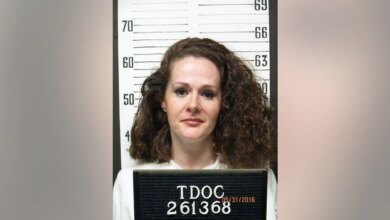
Wind River tribes demand pastor leave over sermon
Tribal sovereignty allows the Eastern Shoshone and Northern Arapaho nations to revoke residency privileges for non-members who violate community standards.

Tribal leaders on the Wind River Reservation in Wyoming have formally demanded that a Christian pastor vacate the reservation after she publicly disparaged Indigenous religious practices during a sermon. The expulsion request underscores the fragile legal and cultural boundaries governing religious expression on sovereign Native American land.
The controversy erupted after the pastor delivered remarks characterizing traditional Native spiritual ceremonies as inferior or incompatible with Christianity. Tribal authorities from both the Eastern Shoshone and Northern Arapaho nations, which share the 2.2-million-acre reservation in central Wyoming, moved swiftly to revoke her permission to operate within their jurisdiction.
Unlike municipalities or states where the First Amendment broadly protects offensive speech from government interference, federally recognized tribes exercise inherent sovereign authority over their territories. This sovereignty allows tribal councils to regulate who may enter, reside, or conduct business on reservation land. Non-Native individuals, including clergy members, generally require explicit tribal consent to live or work within these boundaries, and that consent can be withdrawn if an individual’s actions violate tribal codes or threaten community welfare.


The incident highlights a persistent tension between outside missionary activity and Indigenous cultural preservation. For decades, Native communities across the United States have fought to protect traditional ceremonies—such as the Sun Dance, sweat lodge rituals, and peyote sacraments—from historical suppression. Federal boarding school policies and assimilation campaigns actively criminalized many of these practices well into the 20th century. Congress did not formally protect the right of Native Americans to practice their traditional religions until the passage of the American Indian Religious Freedom Act in 1978.
On the Wind River Reservation, traditional spirituality remains deeply integrated into governance, community health, and daily life. Denigrating these practices is frequently treated by tribal leadership not merely as an expression of personal belief, but as an act of cultural hostility that undermines social cohesion.
Wyoming’s Wind River Reservation remains one of the few locations in the United States where two distinct tribes jointly manage a single land base, requiring coordinated responses to external threats. Both the Eastern Shoshone Business Council and the Northern Arapaho Business Council must align on enforcement actions regarding non-member expulsions, making the unified demand for the pastor’s departure a significant demonstration of inter-tribal consensus.
Tribal police and administrative offices are responsible for executing removal orders on the reservation. Failure to comply with an official tribal exclusion order typically results in physical removal by law enforcement and permanent bans from re-entering the territory. As of mid-October 2026, the timeline for the pastor’s physical departure has not been publicly detailed by either tribal council.