Australia Breaks Annual Renewable Investment Record in Q3 2026
Rooftop solar and home battery deployments are accelerating alongside utility-scale project approvals as Q3 matches historical highs.
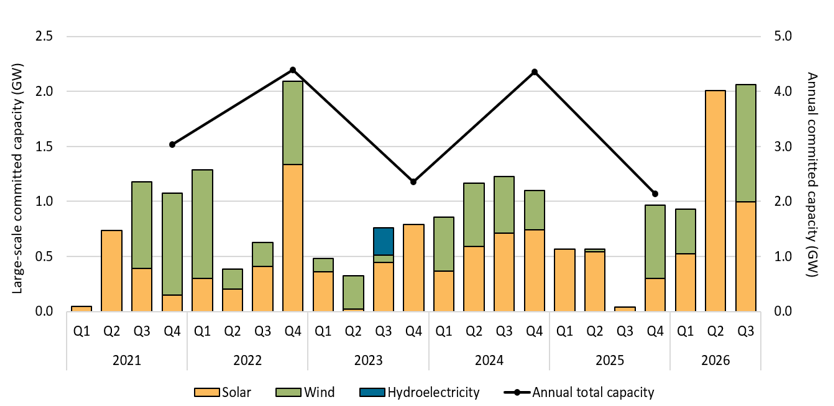
Australia surpassed its previous full-year record for large-scale renewable energy investment with three months remaining in 2026, driven by a surge in solar final investment decisions and an accelerating rollout of residential battery storage.
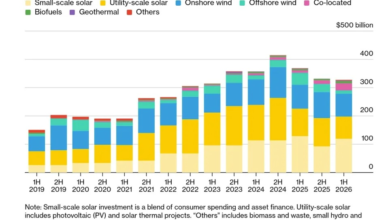
Final investment decisions for large-scale renewable projects reached 5 gigawatts through October 2026, exceeding the prior annual high of 4.9 GW, according to data released by the Clean Energy Regulator. Solar accounted for the bulk of that momentum, with approximately 3.5 GW committed by mid-year and another 1 GW locked in during the September quarter alone. That pace places annual solar commitments roughly 30% above the sector’s previous record.
The 2.1 GW of total large-scale renewable capacity approved in the third quarter matched the highest quarterly result on record. Since 2022, cumulative large-scale final investment decisions have approached 17 GW, signaling a structural shift in capital allocation away from fossil fuel generation toward wind and solar infrastructure across the National Electricity Market.
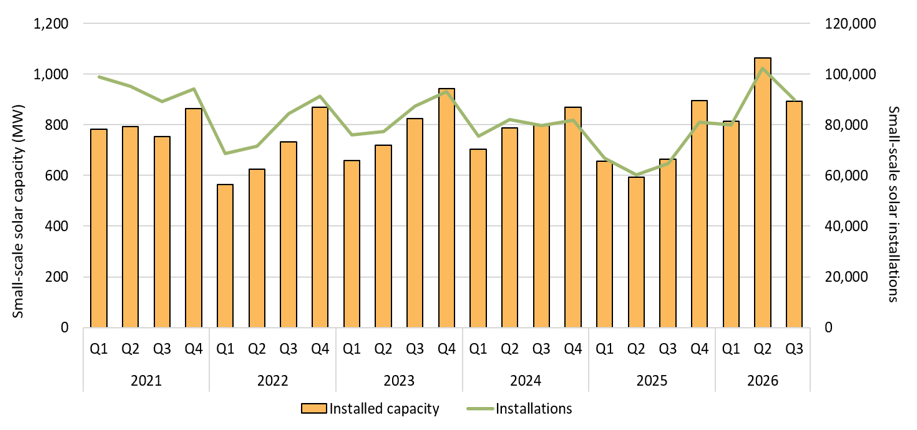
Residential installations are scaling at a comparable rate. Rooftop solar capacity additions hit 894 megawatts across 90,042 systems in the third quarter, a 35% increase in capacity over the same period in 2025. Year-to-date rooftop deployment stands 45% higher than it was at this point last year. The second quarter of 2026 remains the largest single quarter for small-scale solar on record, having added 1 GW. With 2.8 GW installed so far this year, the residential sector is poised to eclipse the entirety of 2025’s output before December.
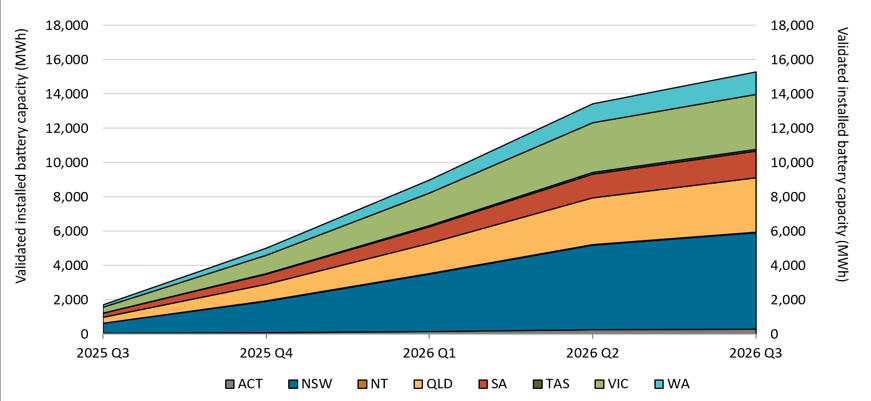
Unlike previous years when rooftop expansion operated largely independent of storage, the current buildout is increasingly paired with batteries. Approved capacity under the federal Cheaper Home Batteries Program reached 15.3 gigawatt-hours by the end of September, more than tripling from 5 GWh at the close of 2025. When pre-existing installations are included, total Australian home battery capacity sits near 19 GWh — five times the volume recorded when the subsidy scheme launched on July 1, 2025.
New South Wales leads state-level approvals with 5.6 GWh, followed by Victoria and Queensland at approximately 3.2 GWh each. Installation data indicates a near-even split between retrofitting batteries onto existing solar arrays and deploying them alongside new or upgraded rooftop systems. This pairing addresses a growing operational challenge in Australia’s grid: managing midday solar oversupply and shifting energy availability into evening peak demand windows without relying on gas-fired peaking plants.
Federal Climate Change and Energy Minister Chris Bowen pointed to the investment figures as evidence that the government’s policy framework is functioning as intended. Bowen noted that beyond capital commitments, renewable sources generated more electricity on the national grid than fossil fuels last month.
The rapid expansion of distributed energy resources has placed new demands on network operators. The Australian Energy Market Operator has spent much of 2026 updating technical standards to accommodate higher penetrations of inverter-based resources, while transmission planners accelerate major interconnector projects designed to move surplus renewable generation between states.
Total small-scale solar installations since 2022 now exceed 13 GW, fundamentally altering the load profile managed by distribution networks nationwide.
The Clean Energy Regulator’s latest reporting captures project approvals and capacity registrations logged through the end of the September 2026 quarter.