COP31 Electrification Target: Australia’s Solar Push to 35% by 2035
Host nation Australia leverages world-leading rooftop solar, home battery adoption, and collapsing wholesale gas reliance to model the 2035 grid transition.
Australia and Türkiye will co-host the United Nations Climate Change Conference COP31 in November 2026, where a central policy benchmark is expected to reshape global energy planning: raising the share of final energy demand met by electricity from roughly 20% today to 35% by 2035. The target arrives as industrialized nations attempt to decouple economic growth from fossil fuel combustion, leveraging rapidly falling costs for solar photovoltaics, wind turbines, and lithium-ion storage.
The 35% goal addresses a structural inefficiency in how governments measure energy consumption. “Final energy” metrics treat chemical energy from burning natural gas or gasoline identically to electrical energy, ignoring thermodynamic realities. An electric vehicle or heat pump requires three to five times less raw energy input than an internal combustion engine or gas furnace to deliver the exact same service. Consequently, shifting transportation and building climate control to electricity reduces total primary energy demand even as grid load increases.
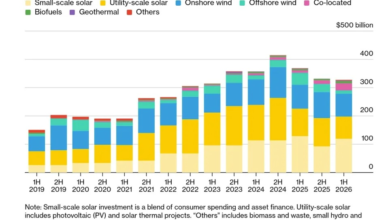
Closing this gap requires massive capital deployment. Industrialized economies, including the United States, China, the European Union, Japan, and Australia, currently consume between 6 and 12 megawatt-hours (MWh) of electricity per person annually, compared to a global average of 4 MWh. Developing regions across Latin America, India, and Southeast Asia lag significantly at 1 to 3 MWh per capita. Fully decarbonizing land transport, residential heating, cooling, water systems, and light industrial processes in advanced economies demands approximately 20 MWh per person each year—a threshold achievable with commercially available technology. Decarbonizing heavy industry, including steel, cement, plastics, precursor chemicals, and synthetic aviation fuels, requires an additional 5 to 25 MWh per capita, necessitating substantial technological maturation over the next decade.


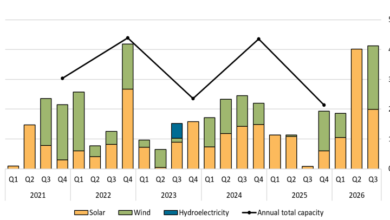
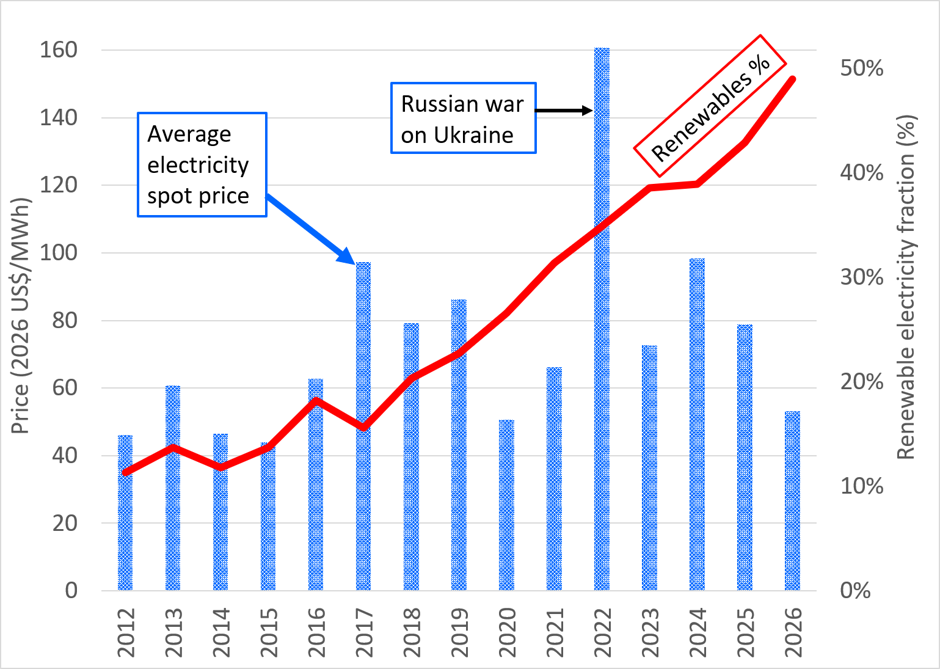
Australia enters the COP31 negotiations positioned as a live demonstration of rapid domestic electrification. The country already generates more solar power per capita than any other nation and ranks eighth globally for wind generation. Federal targets aim to source 82% of national electricity from renewables by 2030, up from 50% today.
This transition is fundamentally altering wholesale power economics. Inflation-adjusted spot market prices in the National Electricity Market have shifted alongside renewable penetration. Expensive fossil gas, which accounted for 13% of Australian generation a decade ago, has been displaced from both peak-period supply and ancillary services, dropping to 3% today.
South Australia illustrates the speed of this shift. The state is tracking toward 100% net electricity supply from solar and wind by 2028, a milestone that has begun attracting manufacturing firms seeking operations powered entirely by clean energy.
At the residential level, more than 40% of Australian homes feature rooftop solar—the highest per-capita adoption rate worldwide—with projections pointing toward 50% by 2030. Streamlined government permitting, an experienced installation workforce, and an absence of import tariffs have driven the turnkey cost of new 10-kilowatt systems down to approximately $10,000.
Rooftop generation is increasingly paired with distributed storage. Around 7% of Australian dwellings now operate home batteries, typically 25-kilowatt-hour units, a figure expected to triple by 2030. Initial government subsidies catalyzed the market and are being phased out as the sector matures. When combined with heat pumps and electric vehicles, these systems allow households to reduce annual electricity expenses below $800 while eliminating natural gas and gasoline bills entirely.
Electric vehicle adoption in Australia has accelerated sharply, reaching approximately 25% of new car sales—a rate aligning with the current global average but trailing Norway’s dominant 98% market share. Geopolitical instability, specifically the ongoing conflict involving Iran, has intensified consumer urgency to transition away from imported liquid fuels.
Grid-scale infrastructure is expanding in parallel. The 350-gigawatt-hour Snowy 2.0 pumped hydro project, slated for completion around 2029, will add 13 kilowatt-hours of long-duration rechargeable storage per Australian resident, establishing another global per-capita record.
Türkiye, the physical host of COP31, faces its own distinct electrification challenges. Unlike Australia’s distributed solar boom, Türkiye relies heavily on imported natural gas and domestic hydropower, making its co-leadership role critical for demonstrating how emerging economies with different resource baselines can execute similar transitions. Negotiations scheduled for November 2026 will determine whether the 35% electrification target becomes a binding framework or remains a voluntary benchmark for participating nations.