Australia Opens AUD 250M Solar Sunshot Round 3 for Robotics
Built Robotics and Luminous Robotics secure grants to manufacture autonomous solar construction equipment in Brisbane and Melbourne ahead of the November expression of interest period.
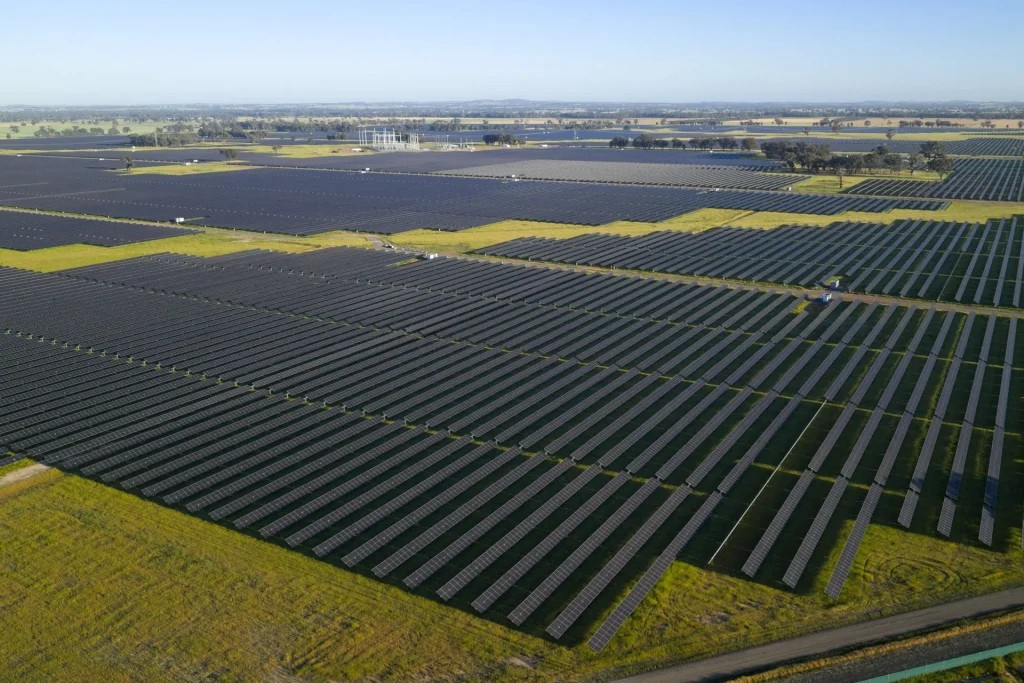
U.S. robotics manufacturers Built Robotics and Luminous Robotics are expanding production facilities in Australia after securing federal grants, setting the stage for a broader AUD 250 million ($174 million) funding round aimed at automating utility-scale solar construction.
The Australian Renewable Energy Agency (ARENA) confirmed on October 13 that the California-based companies received AUD 14.5 million and AUD 17.8 million, respectively, through the second phase of its Solar Sunshot program. Built Robotics will scale manufacturing of autonomous piling robots at a new large facility in Brisbane, while Luminous Robotics plans to produce its LUMI automated installation units in Melbourne.
Both companies previously tested their equipment on Australian soil. Luminous deployed prototype robots at the Goorambat and Culcairn solar farms over the past year, while Built Robotics ran pilot programs before committing to local manufacturing. Their pivot from importing U.S.-developed hardware to establishing Australian production lines reflects a structural shift in how the country intends to build renewable energy infrastructure.
Expressions of interest for the program’s third round open November 2, 2026. Unlike earlier phases focused heavily on photovoltaic cell and module fabrication, Round 3 targets balance-of-plant technologies — the racking, tracking, robotics, prefabrication systems, and advanced automation required to physically construct solar farms.
The funding is tied directly to ARENA’s ultra low-cost solar framework, specifically the 30-30-30 target: achieving 30% solar module efficiency at an installed cost of 30 cents per watt by 2030. Current global commercial silicon module efficiencies generally peak around 22% to 24%, meaning the 30% benchmark relies on next-generation architectures such as perovskite-silicon tandem cells reaching mass production viability within the next four years.
Applicants must bring private capital to cover at least half of total project costs. ARENA offers either capital subsidies to offset factory construction expenses or production subsidies designed to make initial manufacturing batches price-competitive against established Asian supply chains.
This financing structure addresses a core vulnerability in Western solar manufacturing. Facilities outside China routinely struggle to compete on unit economics due to Beijing’s massive economies of scale and state-backed industrial policy. The U.S. attempted to bridge this gap through the Inflation Reduction Act’s Advanced Manufacturing Production Credit under Section 45X, which pays domestic producers per watt or per component. Australia’s approach differs by offering direct, negotiated grants capped at 50% of project value rather than open-ended tax credits tied to production volume.
Round 3 applicants must demonstrate how their technology reduces long-term costs for developers building or owning utility-scale assets. Australia currently installs roughly 5 gigawatts of large-scale solar annually. ARENA expects the deployment technologies funded through this round to help double that pace to 10 gigawatts per year, a threshold required for the nation to meet its grid decarbonization timelines as aging coal-fired power stations retire.
The broader AUD 850 million Solar Sunshot initiative, launched in March 2024, has already moved capital into several segments of the supply chain. Round 2 is expected to fully allocate its AUD 150 million budget. Meanwhile, ARENA extended the application deadline for Round 1B — an AUD 50 million tranche dedicated to upstream manufacturing feasibility studies and front-end engineering design — to November 12, 2027.
That extension acknowledges the volatility of the upstream market. Establishing polysilicon processing, wafer slicing, or cell manufacturing outside of dominant Chinese hubs requires buyers willing to absorb a non-China premium, a dynamic currently reshaping global trade flows following recent U.S. tariff escalations on Southeast Asian solar imports.
Earlier rounds have already backed South Australian panel manufacturer Tindo Solar, Sydney-based modular solar firm 5B, and Sunman. Founded by University of New South Wales alumnus Dr. Zhengrong Shi, Sunman is constructing a 500-megawatt annual module manufacturing plant in New South Wales’ Hunter Valley, supported by AUD 171 million in combined federal and state government funding.
ARENA anticipates successful Round 3 recipients will eventually export their manufactured products and services to New Zealand, Southeast Asia, and other regional markets once domestic operations reach commercial maturity.