

Tesla Roadster Pricing, Thrusters and Reservation Details
Base reservations start at $5,000 while SpaceX thruster packages require $250,000 upfront
Tesla has opened reservations for its long-delayed next-generation Roadster, introducing a tiered purchasing structure that separates the standard electric sports car from experimental variants equipped with SpaceX-derived cold-gas thrusters and vacuum suction technology.
The base model requires a $5,000 initial reservation fee, followed by a $45,000 payment due within 10 days. Buyers seeking the upgraded hardware package — which includes accelerator thrusters and suction mechanisms capable of adhering the vehicle to vertical surfaces — face a flat $250,000 reservation cost. A third configuration, engineered to launch from a stationary position, complete aerial rotations and descend using hover technology, remains restricted to an invite-only allocation.
Cold-gas thrusters operate by expelling highly pressurized gas through nozzles to generate directional thrust without combustion. The technology is widely used in spacecraft attitude control systems, including those developed by SpaceX for orbital maneuvers and precise landings. Integrating such propulsion into a street-legal passenger vehicle represents a significant departure from conventional automotive engineering, where aerodynamic downforce and mechanical grip dictate handling limits.


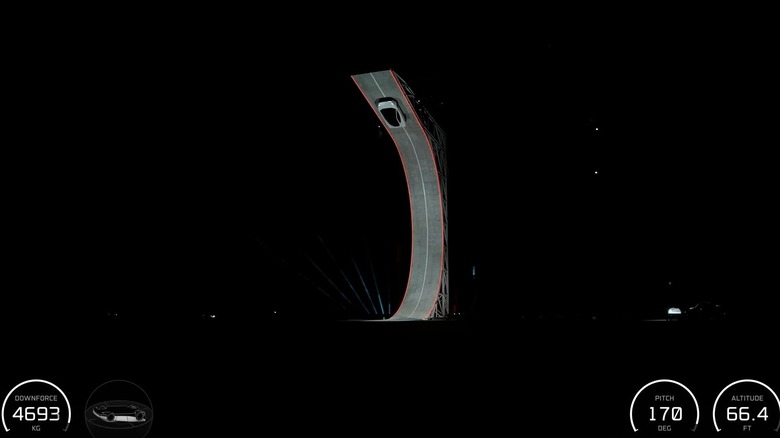
The vehicle’s extreme capabilities were demonstrated during a dedicated launch event featuring a series of aggressive stunts. The Roadster ascended a C-shaped ramp twice, coming to rest perpendicular to the ground before executing a jump, rolling over mid-air and utilizing its thruster system to hover safely to the surface. Additional demonstrations included clearing multiple parked vehicles in a single bound and performing a full flip from a dead stop.
First unveiled as a prototype in November 2017, the second-generation Roadster has endured numerous production delays over nearly a decade. CEO Elon Musk originally targeted a 2020 production start, later pushing timelines repeatedly as Tesla redirected manufacturing capacity toward the Cybertruck, Semi and high-volume Model Y output. The original first-generation Roadster, built on a modified Lotus Elise chassis, ceased production in 2012 after approximately 2,500 units were delivered.
Whether the thruster-equipped variants will meet Federal Motor Vehicle Safety Standards or receive approval for unrestricted public road use remains unconfirmed. Pressurized gas storage systems and active thrust vectoring introduce regulatory complexities that extend far beyond standard crash-test and emissions compliance frameworks overseen by the National Highway Traffic Safety Administration.
Reservations for the base and $250,000 tiers are currently being accepted through Tesla’s official platform.









