2026 Porsche Macan Turbo EV: 630 HP Hides in a $150K Crossover
An 800-volt architecture and 630 horsepower redefine what a daily-driver luxury crossover can deliver.
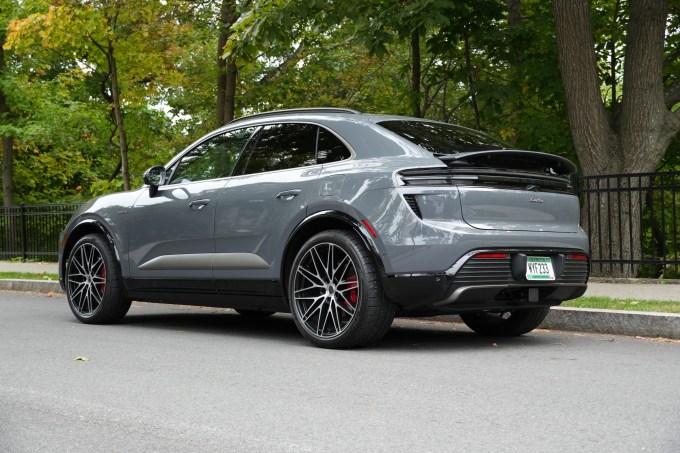
The 2026 Porsche Macan Turbo EV erases the traditional boundary between high-performance sports cars and utilitarian family haulers, packaging 630 horsepower inside a two-row crossover that draws virtually no attention on suburban streets. Starting at $112,700, the electric SUV represents a fundamental shift in how automakers define performance vehicles in the battery era.
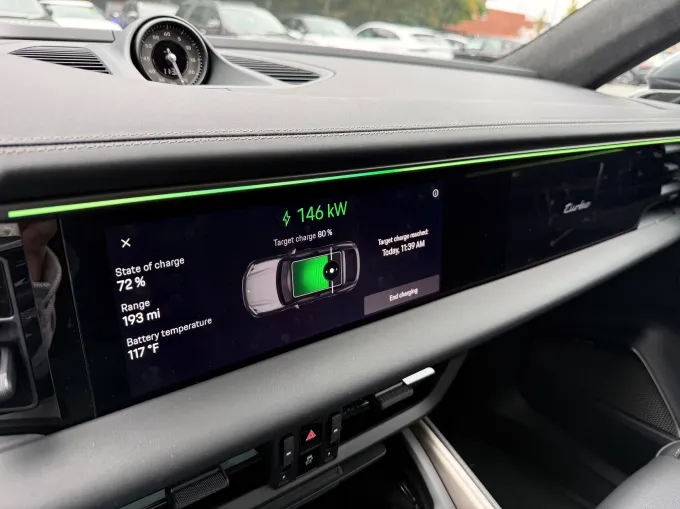
Unlike the original combustion-powered Macan introduced in 2014, which helped pioneer the compact luxury crossover segment alongside rivals like the BMW X3, the fully electric generation rides on Volkswagen Group’s Premium Platform Electric (PPE) architecture. This 800-volt electrical system — shared with the Audi Q6 e-tron — allows the Macan Turbo to accept direct-current fast charging at rates up to 270 kilowatts. In practice, replenishing the 100-kilowatt-hour battery from 19% to 80% takes exactly 20 minutes when connected to a 350-kW charger. Real-world highway range settles around 285 miles, though equipping the vehicle with larger optional wheels and high-grip tires reduces that figure slightly.


Acceleration remains violent regardless of passenger count or cargo load. Engaging Sport Plus mode lowers the standard air suspension, altering the center of gravity for aggressive cornering. Rear-axle steering, available as a $2,150 option, tightens the turning radius at low speeds while improving stability during high-speed lane changes. The driving position mimics a dedicated sports sedan rather than an elevated utility vehicle, with the steering column extending deeply enough into the cabin to accommodate a crouched posture rarely found in the crossover class.
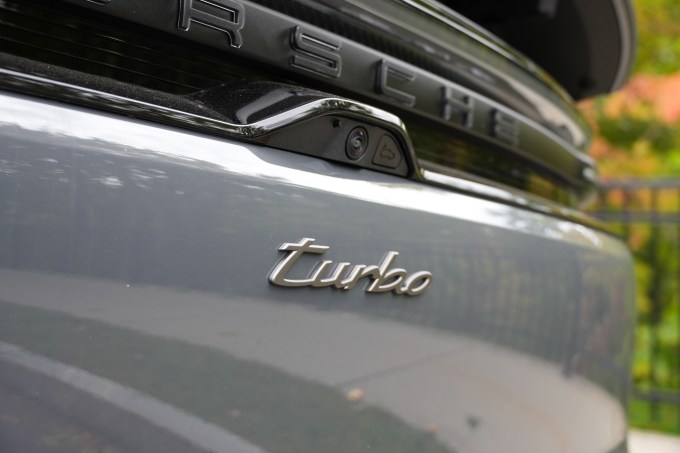
Porsche continues to apply the “Turbo” designation to its top-tier electric models despite the absence of forced induction. The naming convention mirrors broader industry practices where legacy badges serve as trim-level indicators rather than mechanical descriptions. BMW abandoned matching model numbers to engine displacement decades ago, and Mercedes-Benz utilizes numeric badges entirely decoupled from cylinder volume across its EQ electric lineup.
Buyers configuring the Macan Turbo face a sprawling options list capable of inflating the final transaction price significantly. A tested example finished in Slate Grey Neo — a $2,620 exterior color upgrade — reached $149,610 including destination charges. That roughly $37,000 in options exceeds the base price of several mainstream electric vehicles currently sold in the U.S., including the Chevrolet Equinox EV.
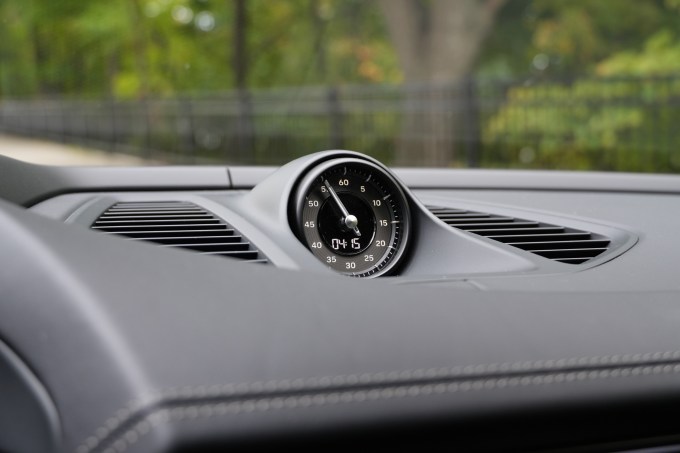
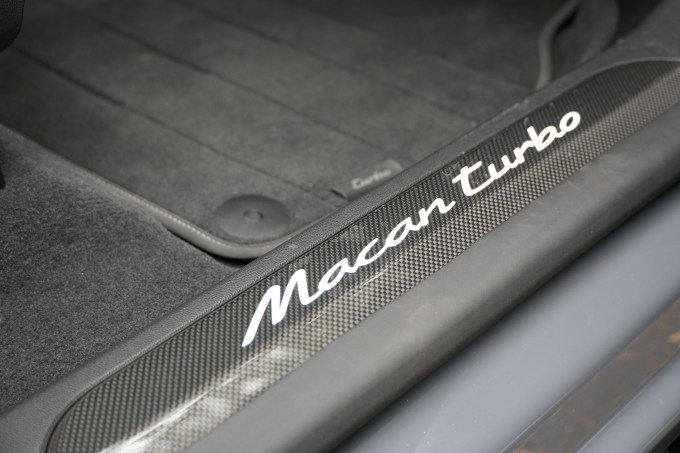
Not every factory addition delivers proportional value. The $1,710 front-passenger infotainment display streams video but offers limited utility given that children legally ride in the rear seats. Cosmetic enhancements such as illuminated headrest crests ($640), projecting puddle lamps ($420), and lighted door sill badges ($1,230) strictly alter aesthetics. The analog Sport Chrono clock mounted atop the dashboard costs an additional $1,040.
Where the Macan Turbo struggles is software integration for route planning. The onboard navigation system occasionally generates illogical charging itineraries. When prompted to locate fast charging at a 22% state of charge, the routing algorithm directed the driver to first visit a 50-kW station inside a retail parking lot to add marginal range before proceeding across the street to a 350-kW terminal. Overriding the system and driving directly to the faster charger allowed peak charging speeds to reach 245 kW, safely approaching the hardware maximum without the battery management system throttling input power due to the brief drop below 20% capacity. Competitors utilizing Tesla’s Supercharger network or integrated Plug & Charge systems generally offer more streamlined routing logic.
The advanced driver assistance suite, priced at $1,140, manages highway cruising competently but exhibits occasional lateral wandering within marked lanes. An artificial intelligence voice assistant handles climate and media commands accurately, though physical controls remain sparse. Activating the $720 heated steering wheel requires either a voice command or locating a discreet button hidden on the inner rim between the lower spokes. A premium Burmester audio system adds $4,960 to the build sheet.
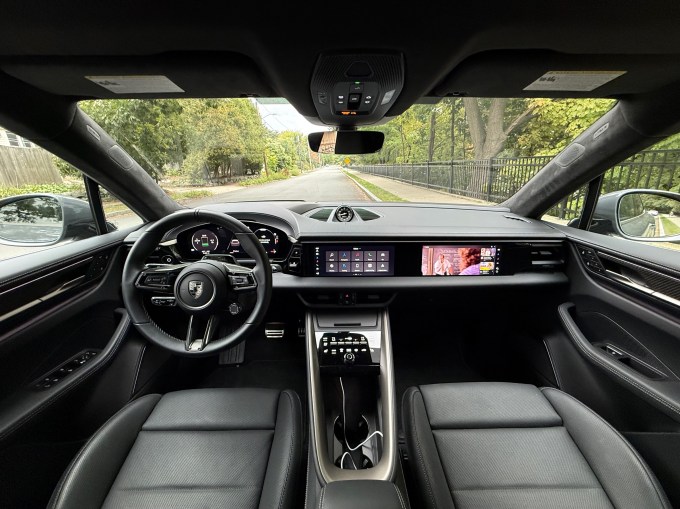
Exiting the vehicle follows modern keyless protocols; opening the door and walking away keeps the audio system active until the doors are manually locked. Traditionalists can still shut down the vehicle using a physical ignition switch positioned to the left of the digital instrument cluster.
Porsche plans to phase out the internal combustion Macan entirely in North America, making this electric platform the sole offering for buyers seeking the brand’s entry-level utility vehicle. Production for the U.S. market continues through the Leipzig facility in Germany before transitioning fully to battery-electric architectures globally by the end of the decade.
As of October 2026, the 2026 Porsche Macan Turbo EV remains available at U.S. dealerships, with order banks open for the incoming 2027 model year carrying identical powertrain specifications.