Apple’s Stylus Segmentation Strategy Facing Compatibility Friction and European Regulatory Mandates
Strict device limits and potential EU battery rules shape Apple's stylus strategy.
Apple Inc.’s pricing and hardware segmentation for its digital tablet styluses is creating compatibility hurdles for consumers, with the flagship $129 Apple Pencil Pro locked exclusively to recent iPad models while upcoming European Union regulations threaten further design changes across the lineup.
The tech giant currently maintains a distinct $50 price gap between its top-tier stylus and the $79 Apple Pencil (USB-C). While both products deliver low latency, pixel-perfect precision, tilt sensitivity for shading, and hover preview capabilities, their supported device footprints differ significantly.
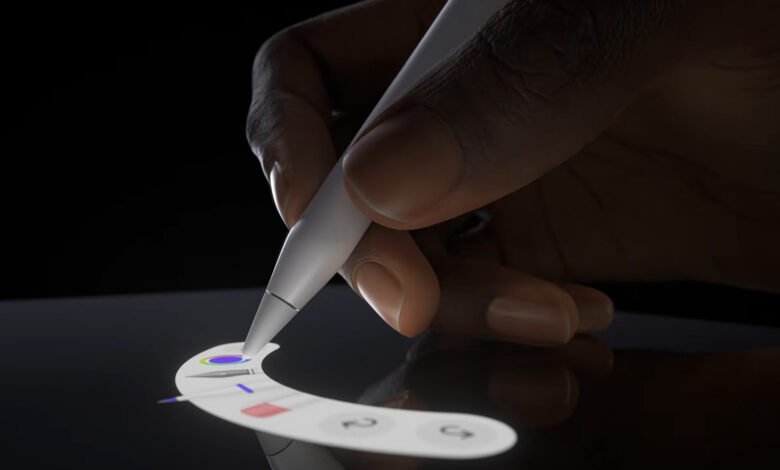
The premium $129 Apple Pencil Pro restricts compatibility to Apple’s newest hardware tier. It works exclusively with the 13-inch and 11-inch iPad Pro featuring M4 and M5 processors, 13-inch and 11-inch iPad Air models powered by M2, M3, and M4 chips, and the A17 Pro iPad mini. To justify the higher price point, Apple equips the Pro model with advanced creative tools including an internal gyroscope for a “Barrel Roll” paintbrush orientation feature, pressure sensitivity adjustments, a haptic feedback engine, squeeze-activated tool palettes, and double-tap medium switching.
The Pro model also includes functional convenience features such as magnetic wireless charging and pairing along the tablet chassis, integration with Apple’s Find My tracking network, and free custom engraving options.
By contrast, the lower-cost $79 Apple Pencil (USB-C) caters to a significantly broader array of tablets, extending compatibility to older generations. In addition to supporting the latest M4/M5 iPad Pros and M2/M3/M4 iPad Airs, the USB-C version supports 12.9-inch iPad Pros from the 3rd through 6th generations, 11-inch iPad Pros from the 1st through 4th generations, 4th and 5th-generation iPad Airs, the 6th-generation iPad mini, the A16 iPad, and the 10th-generation iPad.
The hardware division comes as tech hardware makers face mounting regulatory pressure in Europe. Pending European Union legislation regarding battery repairability and design sustainability may ultimately force Apple to overhaul its stylus portfolio to incorporate replaceable batteries, potentially disrupting current manufacturing paradigms across future product cycles.