Wisconsin Democrats Face Battleground Electability Test in Chaotic Gubernatorial Primary
Milwaukee County Executive David Crowley relies on gubernatorial backing to challenge progressive frontrunner Francesca Hong in a high-stakes battleground primary.
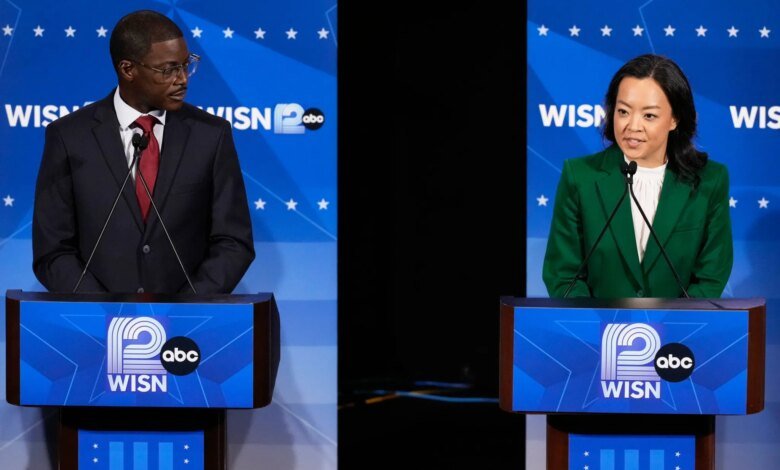
Wisconsin Democrats vote Tuesday in a high-stakes gubernatorial primary that pits democratic socialist Francesca Hong against Milwaukee County Executive David Crowley, testing whether battleground voters will embrace progressive momentum or prioritize moderate electability ahead of November’s general election.
The primary carries critical consequences for control of state government. Democrats are aiming to defend the executive mansion and position themselves to reclaim full legislative control for the first time since 2010. The winner will face Republican Representative Tom Tiffany—a staunch ally of President Donald Trump who entered August holding a ten-to-one financial advantage over both Democratic primary rivals.
Crowley’s late sprint to capture undecided voters follows weeks of ballot volatility that threatens to fragment the Democratic electorate. After withdrawing from the race on July 8, Crowley re-entered 10 days later with the endorsement of two-term Governor Tony Evers following the departure of Lieutenant Governor Sara Rodriguez. Former Lieutenant Governor Mandela Barnes subsequently suspended his campaign amid misconduct allegations. However, both Rodriguez and Barnes remain on the printed ballot, locking in thousands of early votes after more than 112,000 absentee ballots were returned by late July.
“We’ve created a mess,” said Michael Gebben, a 64-year-old Democrat who cast an absentee vote for Rodriguez before her exit. “Hopefully we can get out of it.”
Late July polling from Marquette University Law School showed Hong, a state representative and former restaurant cook vying to become Wisconsin’s first female and first Asian American governor, holding a substantial lead over the field. Her campaign has recently faced increased scrutiny from moderates over past social media posts calling for police defunding, criticizing Valentine’s Day as a product of capitalism, and advocating to cancel Thanksgiving over its historical connection to colonialism. Hong has since clarified those comments, stating she does not support abolishing police departments.
Republicans have seized on the statements to frame the race. Tiffany accused Hong of seeking “to destroy the traditions and culture that unite us.” In justifying Evers’ intervention in the primary, governor spokesperson Britt Cudaback stated this week, “Wisconsinites can’t afford for November to come down to the most extreme things Tom Tiffany and Francesca Hong have said online.”
Seeking to become Wisconsin’s first Black governor, Crowley has pushed back against claims that his gubernatorial backing makes him an institutional figurehead. “When people try to call me the establishment, I look at that as a slur, particularly as an African American candidate,” Crowley said. “I have never run for office to protect the establishment. I’ve always been here to protect people.”
Crowley pointed to progressive candidate Abdul El-Sayed’s narrow victory over Representative Haley Stevens in Michigan’s U.S. Senate primary last week as evidence that the race remains open. Crowley said that El-Sayed’s slim margin of victory “does give me a little bit of hope.”
“We’re going to focus on those undecided voters,” Crowley said.
Primary voter Sarah Miller, a 49-year-old software engineer from Madison, exemplified the pragmatic calculus guiding mainstream Democrats toward Crowley. “The divide is real,” Miller said, while describing Hong as a “very, very weak candidate” whose polling advantage is “a little bit of a mirage.”
“I don’t think she can win,” Miller added.
Progressive voters reject the electability arguments. Hong supporter Chris Vestin, 54, characterized Evers’ intervention as “counterproductive” and warned that “Establishment Democrats want to take the choice away.”
“It frustrates me when they say that person is unelectable,” Vestin said. “A lot of times it’s racist, it’s sexist.”
With party control over future policy battles hinges on the top of the ticket, Crowley reiterated the broad structural stakes to voters. “We need a trifecta,” Crowley said. “And who is at the top of the ticket matters.”
Assessing the closing days of the campaign, Crowley supporter Lindsey Lee, 61, noted that undecided voters appear to be shifting late. “It’s like the last 50 yards of a horse race,” Lee said. “Hong is obviously in the lead but Crowley is coming up on a side lane. I think it will be a photo finish.”