Inside Intel’s Unexpected Turnaround: How Federal Equity, Internal Reform, and AI Demand Revived the Chipmaker
How CEO Lip-Bu Tan flattened hierarchy, restructured debt, and leveraged AI demand to restore the chipmaker.
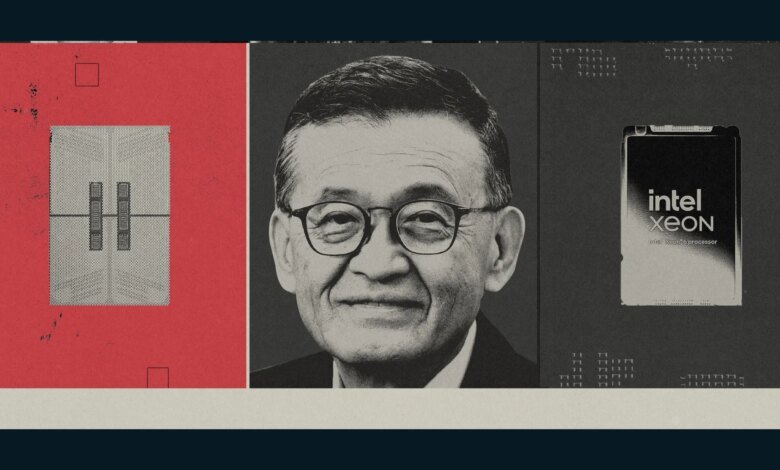
A little over a year after lingering debt and technological missteps raised doubts about its viability, Intel has orchestrated a major financial recovery driven by aggressive restructuring and unexpected demand for its server processors.
The Santa Clara semiconductor firm, burdened by roughly $50 billion in liabilities and years of declining market share, stabilized its balance sheet following a series of strategic maneuvers led by Chief Executive Officer Lip-Bu Tan. Tan, who assumed control in March 2025 as Intel’s third chief executive in six years, initiated a balance sheet overhaul by liquidating non-core assets and securing outside capital.
Intel secured key investments from Nvidia and SoftBank while negotiating an unprecedented agreement with federal officials. Under the arrangement, the Trump administration converted an $8.9 billion scheduled grant from the U.S. Department of Commerce into an equity stake for the federal government. According to Chief Financial Officer David Zinsner, the equity conversion provided a government endorsement that bolstered Intel’s credit standing and reassured institutional investors.
The turnaround follows two decades of strategic setbacks for the silicon giant. In 2007, Apple rejected Intel chips for the original iPhone in favor of ARM architecture, initiating a period where Intel missed both the mobile device boom and the initial surge in artificial intelligence hardware dominated by TSMC and Nvidia.
To combat internal inefficiency, Tan flattened Intel’s organizational structure from 12 management layers down to six. The shift was designed to remove internal filters that previously prevented bad news from reaching top executives. Zinsner noted that Tan made immediate reporting of technical and operational problems mandatory across all divisions.
Simultaneously, the global expansion of artificial intelligence infrastructure created an unexpected market opportunity. The massive memory requirements of AI workloads drove surge demand for traditional x86 server CPUs to coordinate data flow, enabling Intel to clear vast quantities of existing processor inventory. Analysts, including Bernstein’s Stacy Rasgon, noted that this inventory drawdown significantly boosted Intel’s cash flow and share price.
Intel is now focusing resources on its next-generation 14A manufacturing process to compete for custom manufacturing contracts. Reports that Apple is considering returning to Intel for external chip fabrication have further bolstered investor confidence. Moving away from past corporate overconfidence, Tan has repeatedly cited former CEO Andy Grove’s operational principle: “Only the paranoid survive.”