Midterm Pressures and $5 Gas: How the Iran Conflict Threatens Trump’s Political Survival
Former Commerce Secretary Wilbur Ross warns that $5 gasoline could cost the GOP Congress and trigger impeachment proceedings.
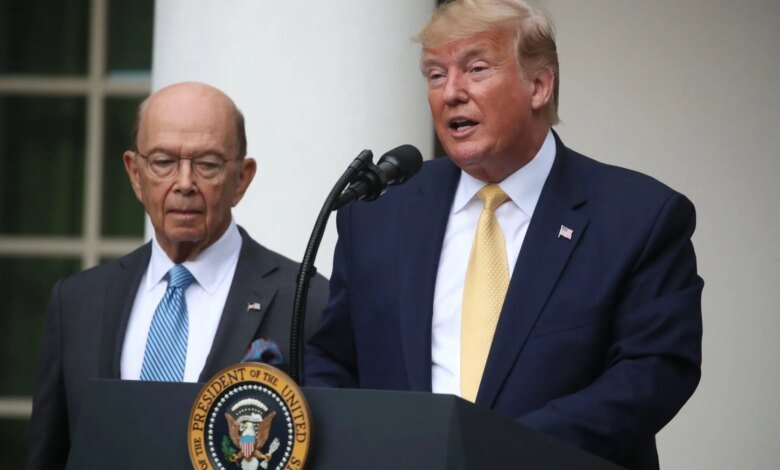
The looming U.S. midterm elections are emerging as the critical battleground for the ongoing military conflict between the United States and Iran, with former Commerce Secretary Wilbur Ross warning that soaring fuel prices could trigger severe political consequences for President Donald Trump, including potential impeachment.
Speaking in an interview with Fortune, Ross outlined the strategic calculations of both Washington and Tehran. While Iran’s conventional military capabilities—including its air force, navy, and air defenses—have been largely decimated, the geopolitical struggle has shifted to the crucial maritime chokepoints of the Middle East, specifically the Strait of Hormuz and the Bab al-Mandab Strait.
The Strait of Hormuz is widely recognized as the world’s most critical oil transit corridor. According to the U.S. Energy Information Administration, approximately one-fifth of global petroleum liquids consumption passes through this narrow waterway daily. Any disruption there immediately reverberates through global energy markets. The situation has been further complicated by recent Houthi rebel attacks in the Bab al-Mandab Strait, a vital passage connecting the Red Sea to the Gulf of Aden, forcing commercial vessels to seek longer, more expensive routes around Africa.
For Trump, the political stakes of the conflict are tied directly to domestic economic sentiment. Ross noted that if gasoline prices climb back to $5 per gallon at the pump, the Republican Party faces a highly challenging path in the upcoming midterms. A loss of both chambers of Congress to the Democrats could expose the president to impeachment proceedings, while a split Congress would significantly constrain his executive authority to conduct military operations.
Conversely, Tehran appears to be playing a waiting game. “The Iranians seem to be betting that they can outlast the president,” Ross said, pointing to a historical pattern where Iran seeks to exhaust the political capital of U.S. administrations. Although Trump initially signaled that the conflict would be resolved within weeks, it has dragged on, testing the patience of both Wall Street and the American electorate.
In response to rising consumer anger over fuel costs, Trump has shifted some of the blame onto domestic oil producers. In recent statements on his Truth Social platform, the president accused major oil companies of “gouging” consumers by failing to lower pump prices in tandem with falling crude prices, revealing that he has instructed the Department of Justice to investigate pricing practices.
Ross expects the administration to maintain intense pressure on energy companies to increase domestic output and limit retail margins. However, boosting production is a slow process. EIA data indicates that U.S. crude oil production averaged 13.8 million barrels per day in 2026, representing only a modest increase from the 13.6 million barrels per day recorded the previous year. This slow supply growth leaves the administration with limited immediate levers to lower global oil prices if Middle Eastern shipping lanes remain blocked or highly risky.