Boeing Accelerates Operational Recovery as Production and Defense Margins Rebound Under Ortberg
Increased 737 Max assembly rates, defense recovery, and balance sheet stabilization fuel momentum.
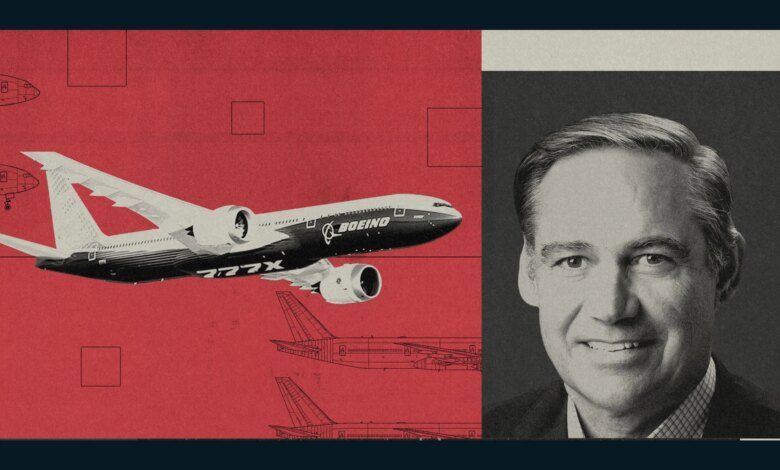
Boeing is charting a significant operational recovery following years of manufacturing setbacks, high-profile safety crises, and mounting financial losses. Under the leadership of Chief Executive Officer Kelly Ortberg, who assumed the post in August 2024, the American aerospace giant has stabilized key assembly lines, secured critical military contracts, and laid the groundwork to restore its free cash flow toward historical peaks.
A central pillar of the company’s operational progress is the gradual scaling of its commercial aircraft production. Regulators at the Federal Aviation Administration recently permitted Boeing to increase its 737 MAX production ceiling from 38 to 42 aircraft per month. Company projections target a monthly output rate of 52 units by the end of 2026, matching output levels not seen since prior to the global grounding of the aircraft type. Supported by rising delivery volumes, executive leadership and financial analysts at Melius Research and Seaport Securities anticipate Boeing could generate $10 billion or more in annual free cash flow around 2028. Chief Financial Officer Jesus Malave noted during a first-quarter earnings call that the company’s underlying cash potential could ultimately surpass that threshold.
The manufacturer’s defense and space division has similarly reversed a period of substantial drag on corporate earnings. After absorbing more than $5.4 billion in operating losses in 2024—largely stemming from fixed-price defense contracts burdened by cost overruns—the division posted an operating profit of $233 million in the first quarter of 2026, yielding a 3.1% operating margin. The shift follows a key contract victory in March 2025, when Boeing defeated Lockheed Martin to secure the U.S. Air Force’s Sixth Generation fighter aircraft program.
Ortberg, a 66-year-old mechanical engineer and former chief executive of Rockwell Collins, took control of Boeing following a prolonged leadership search. His appointment came during an acute operational bottleneck marked by a January 2024 door-plug failure on a 737 Max flight over Portland, Oregon, ongoing efforts to reintegrate fuselage supplier Spirit AeroSystems, and a 53-day strike by 33,000 Pacific Northwest machinists. To shield the balance sheet from liquidity pressures during the labor disruption, Ortberg orchestrated a $24.3 billion capital raise before resolving the dispute.
Inside Boeing, Ortberg has instituted an engineering-focused management model, departing from the financialized strategies that prioritized stock buybacks and aggressive cost reductions between 2014 and 2018. The executive has tied compensation and promotions to cross-departmental collaboration while seeking more cooperative relations with commercial suppliers. Commercial clients have acknowledged the change; United Airlines Chief Financial Officer Michael Leskinen noted enhanced confidence in the predictability of aircraft delivery schedules.
Despite the operational gains, Boeing faces persistent friction across its supply chain. Wiring defects have deferred some 737 Max deliveries from the first quarter into the second quarter of 2026, while shortages of premium business-class seat modules continue to slow assembly lines for the 787 widebody program. Additionally, Boeing faces an upcoming contract expiration in October covering 16,000 unionized engineers, presenting a major labor test for management.
Looking further ahead, Boeing must address a widening market share imbalance against European rival Airbus, which currently controls approximately 60% of the single-aisle commercial jet market with its A320neo, A320XLR, and A220 families. To spearhead long-term aircraft development, Boeing appointed Brian Yutko, an aeronautics expert holding a doctorate from MIT, as head of commercial aircraft development. Industry expectations point to a potential greenfield aircraft program commitment between 2029 and 2030, aiming for entry into service around 2037. The proposed architecture will depend on next-generation propulsion systems from suppliers such as GE Aerospace, RTX, or Rolls-Royce, designed to deliver a 20% reduction in fuel consumption.