Trump Touts Tariff Victory in Michigan as Industrial Data and Auto Realities Tell Complex Story
President Trump claims tariff victory in Michigan as economic data highlights manufacturing job losses and inflation concerns.
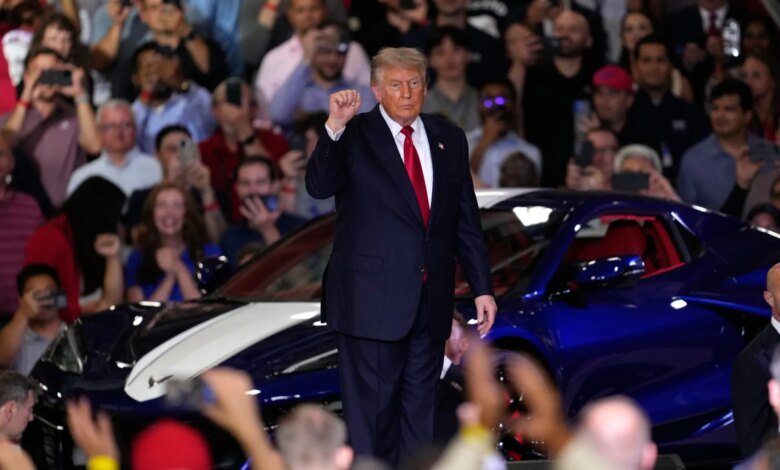
MILFORD, Mich. — Standing before cheering supporters near the heart of the American automotive industry, President Donald Trump declared that import tariffs have propelled U.S. carmakers to unprecedented success. Yet beneath the political rhetoric delivered during a visit to General Motors facilities in Oakland County, industrial statistics and trade realities reveal a far more turbulent transition for Michigan’s economy.
Addressing crowds in Milford, northwest of Detroit, Trump asserted that “car companies are doing better than they’ve ever done” as a direct consequence of his trade agenda. During his tour of new vehicle lineups, where he autographed a white Chevrolet Corvette commemorating the 250th anniversary of the United States, the president proclaimed that Michigan was “thriving” under protectionist trade measures. However, data from the Bureau of Labor Statistics highlights an immediate economic friction: Michigan has shed 8,300 manufacturing jobs since the administration instituted its broad “Liberation Day” tariffs in April of last year.
The divergence between political narrative and economic data is particularly acute in the auto parts sector, where Michigan recorded a loss of approximately 4,000 jobs through June compared to the same month last year. While major vehicle manufacturers have announced long-term onshore investments, the physical shifting of deeply integrated global supply chains remains years away from fully materializing on factory floors.
The automotive industry’s structural reliance on cross-border supply chains has complicated the administration’s trade strategy. Decades of economic integration between the Great Lakes region and Canada—strengthened under the United States-Mexico-Canada Agreement—created near-frictionless component transfers across the Detroit River. Following the decision not to renew that trade pact, setting off multi-year bilateral renegotiations, the administration recently invoked provisions of the historic Tariff Act of 1930 to accuse Canadian authorities of discriminatory practices, outlining plans for 50% tariffs on broad categories of Canadian imports.
To buffer domestic automakers against surging component costs, the administration extended a tariff exemption on foreign auto parts through 2030—a mechanism originally conceived as a short-term rebate. Although General Motors acknowledged it was honored to host the presidential tour, vehicle manufacturers have consistently warned that unmitigated levies on raw materials and specialized parts drive up vehicle production costs.
Corporate realignments are underway, though their employment benefits remain bound to multi-year capital expenditure schedules. In June 2025, General Motors committed $4 billion to shift select vehicle manufacturing from Mexico back to domestic plants beginning next year. Similarly, Ford Motor Company and Stellantis maintain multi-year domestic expansion timelines, while Toyota has committed $3.6 billion to relocate its Tacoma pickup production from Mexico to Texas over a four-year window.
The policy debate comes at a critical juncture for Michigan’s political landscape as voters head to the polls for statewide primary elections. Trump has used his platform to influence key Republican primary contests, backing Congressman John James over Perry Johnson in the gubernatorial primary. In the U.S. Senate race, former Representative Mike Rogers—who narrowly lost to Democratic Senator Elissa Slotkin two years prior—is seeking the GOP nomination to challenge the winner of the Democratic primary between Representative Haley Stevens and progressive candidate Abdul El-Sayed.
Speaking at the rally alongside state Republican leaders, Rogers framed the election as a referendum on alignment with the federal economic agenda. Michigan House Speaker Matt Hall pointed to federal defense commitments, including a new fighter jet mission assigned to Selfridge Air National Guard Base, as tangible evidence of economic prioritization.
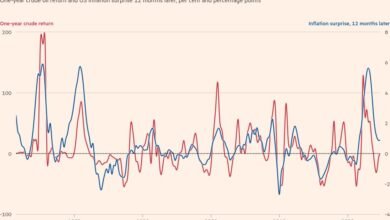
Veteran Michigan pollster Bernie Porn noted that rising consumer prices and persistent inflation continue to weigh heavily on voter sentiment despite high-profile corporate investment announcements. High fuel prices, exacerbated by international conflicts involving Iran, have constrained consumer sentiment statewide.
Among voters attending the Milford event, responses reflected a mixture of immediate financial strain and adherence to long-term economic objectives. Lisa Scherer, a 64-year-old retired worker living on a fixed Social Security income of $1,100 per month, noted that elevated fuel and living costs create significant hardship, though she expressed optimism that trade pressures would eventually yield benefits. Aerospace business owner Joe Miskovich of Fenton argued that temporary price adjustments are a necessary trade-off for long-term domestic industrial strength. Self-employed contractor Roy Parks summarized the sentiment by comparing trade friction to short-term discomfort required to achieve broader structural resilience.