Emerging AI Wealth Directs Millions to Industrial Animal Welfare Organizations
Tech workers are funneling fresh capital into factory farming reform ahead of major AI market liquidity events.
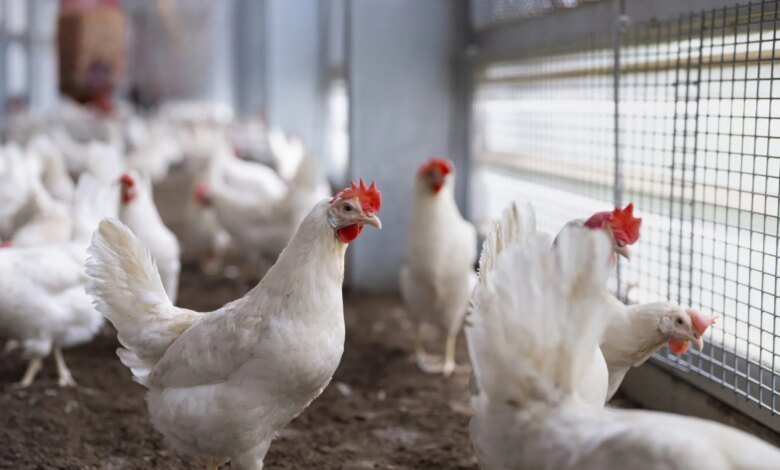
As artificial intelligence labs like OpenAI and Anthropic approach anticipated initial public offerings, a distinct financial pipeline is forming between Silicon Valley’s emerging tech wealth and industrial animal welfare organizations.
Donors connected to the AI sector have channeled approximately $40 million this year into projects designed to improve conditions for chickens, pigs, and other livestock in commercial agriculture. According to Lewis Bollard, who directs farm animal welfare initiatives at Coefficient Giving, young software engineers and founders in the sector exhibit an unusual readiness to write seven-figure checks for animal welfare causes.
The trend arrives amid projections that the broader artificial intelligence expansion could generate $300 billion in new philanthropic capital over the coming years, potentially pouring $30 billion annually into non-profit organizations according to industry estimates. That surge threatens to reshape the landscape of American philanthropy, which reached a record $617.2 billion in total contributions in 2025, according to data from the Giving USA Foundation.
Much of the capital flow into farm animal causes traces back to a movement popularized within tech hubs that applies rigorous quantitative analysis to charitable giving—often prioritizing high-impact cause areas that receive little mainstream funding. While global health and climate change traditionally capture the majority of major philanthropic gifts, advocacy groups note that the treatment of livestock in intensive farming remains severely underfunded.
Thom Norman, co-founder of the non-profit donation platform FarmKind, noted that the global farm animal movement historically operates on less annual funding than McDonald's generates in two weeks of profit. That financial imbalance began attracting targeted attention inside tech companies following an August 2025 podcast featuring Bollard and tech interviewer Dwarkesh Patel.
Patel subsequently launched a matched fundraising drive for FarmKind, offering $250,000 in personal matching funds that were fully claimed in less than 48 hours. The campaign eventually raised $2.3 million, supplemented by an additional $200,000 in recurring donations. To deepen engagement, organizers began hosting private dinners at major AI developers, including OpenAI, bringing researchers together to discuss factory farming practices and animal sentience.
Unlike previous cohorts of Silicon Valley executives who deferred major giving until late in life, younger tech workers are engaging early. A 2024 Bank of America Private Bank study of high-net-worth individuals under age 43 found these donors are twice as likely as older generations to organize peer fundraising campaigns and four times as likely to offer direct mentorship alongside cash gifts.
However, the rapid influx of capital from young tech donors contrasts sharply with growing skepticism expressed by older tech billionaires over whether large-scale philanthropy achieves its intended outcomes.
Tesla and SpaceX chief executive Elon Musk has publicly questioned the efficacy of massive charitable foundations, noting on the WTF podcast that dispensing capital effectively is exceptionally difficult. Musk drew a sharp distinction between giving money away to secure “the appearance of goodness” versus producing “the reality of goodness.” After Nobel laureate economist Daron Acemoglu challenged Musk to divest his fortune by 2036, Musk indicated he planned to pursue a similar timeline.
Venture capitalist Peter Thiel, whose net worth is estimated at $27 billion, has expressed similar disillusionment with institutional philanthropy. Thiel revealed he urged roughly a dozen signers of the Giving Pledge—a campaign launched in 2010 by Bill Gates and Warren Buffett encouraging billionaires to donate the majority of their fortunes—to retract their commitments, describing the organization as an “Epstein-adjacent, fake Boomer club.”
For executive leaders at operational non-profits, managing vast influxes of new capital brings immense structural pressure. Greater Good Charities Chief Executive Officer Liz Baker emphasized that while massive financial gifts are necessary, ensuring those funds create measurable real-world improvement poses significant operational challenges.