Algeria 12 MW Solar Plant: Pandemic Cuts Exposed Output Risks
Pandemic-era cleaning halts caused a larger energy yield drop than six years of natural panel degradation at the Sidi Bel-Abbes facility.
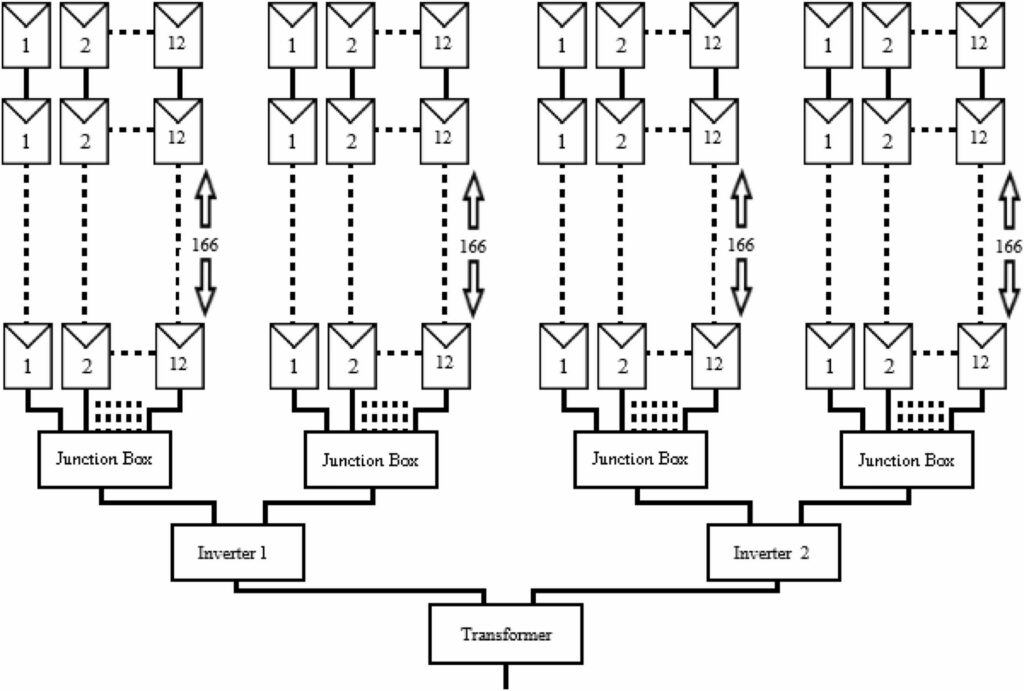
A six-year audit of a 12-megawatt grid-connected solar facility in western Algeria has quantified the precise cost of deferred maintenance, revealing that pandemic-era operational disruptions triggered a sharper decline in energy yield than natural equipment degradation over the same period.
Researchers at Djillali Liabes University of Sidi Bel-Abbes tracked the plant from 2018 through 2023. The performance ratio—a core metric comparing actual output to theoretical maximum production under identical sunlight conditions—dropped from 85.37% in 2019 to 78.74% in 2020. The collapse coincided directly with lockdown restrictions that halted the site’s semi-automatic cleaning schedule, which relied on rotating brushes mounted on a tractor-towed frame to clear desert dust from the arrays.
North African photovoltaic installations face aggressive soiling challenges. Arid environments can reduce solar panel output by 15% to 30% within weeks if left unwashed, as fine particulate matter blocks irradiance and creates localized hot spots that accelerate cell damage. The Sidi Bel-Abbes data confirms that mechanical cleaning interruptions inflict immediate financial losses on utility-scale projects, outpacing the gradual efficiency loss inherent to aging hardware.
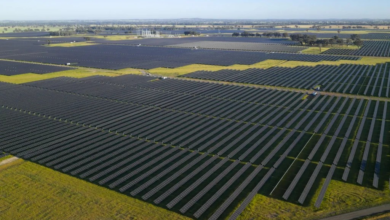
The facility itself represents an earlier generation of commercial solar architecture. Its 47,808 polycrystalline silicon modules, manufactured by Hanwha Qcells and rated at 250 watts each, are mounted at a fixed 34-degree south-facing tilt. Modern utility-scale deployments have largely transitioned to monocrystalline panels exceeding 500 watts paired with single-axis tracking systems, which follow the sun’s trajectory to boost daily energy capture by up to 25%. Despite utilizing older technology, the Algerian plant maintained a six-year average performance ratio of 82.6%, a figure that compares favorably against global benchmarks for similar climates where ratios frequently fall into the high 70s due to extreme heat derating.
Heat management proved central to the site’s operational profile. Ambient temperatures oscillated between 8 and 10 degrees Celsius in winter and 22 to 24 degrees Celsius in summer, while monthly solar irradiation peaked between 100 and 275 kilowatt-hours per square meter during June and July. Photovoltaic cells lose conversion efficiency as operating temperatures rise, typically shedding about 0.4% of capacity for every degree Celsius above standard testing conditions. The plant’s Sunny Central 800CP XT inverters, supplied by Germany’s SMA, mitigated downstream electrical losses effectively, sustaining conversion efficiencies between 97% and 98% throughout the monitoring window.
Annual electricity generation fluctuated between 19.83 and 21.41 gigawatt-hours, peaking in 2019 before the pandemic disruption. Monthly production hit its ceiling at 2,258 megawatt-hours in August 2019 and bottomed out at 1,125 megawatt-hours in January 2020. The average annual capacity factor settled at 19.3%, reaching 20.30% during the strongest year. For context, fixed-tilt solar plants in North Africa generally achieve capacity factors between 18% and 22%, dictated heavily by atmospheric clarity and seasonal daylight hours.
Long-term module degradation was calculated at 4.12% and 4.38% under two distinct standardized irradiance and temperature scenarios. Industry warranties typically guarantee less than 0.7% annual degradation for crystalline silicon modules. The higher rates observed in Sidi Bel-Abbes point to environmental stressors specific to the region, including thermal cycling extremes, ultraviolet exposure, and micro-abrasions from windblown sand that degrade anti-reflective coatings over time.
Data collection followed IEC 61724 international monitoring standards, capturing operational and meteorological variables at 15-minute intervals. An on-site weather station logged solar irradiance, humidity, wind speed, and ambient temperature, feeding directly into a dual-computer control room responsible for both plant supervision and grid synchronization. Array capture losses ranged from 0.3 to 1.5 hours per day, while system-level electrical losses remained tighter, between 0.1 and 0.5 hours daily.
By 2023, the performance ratio had recovered to 84.83% following the restoration of full maintenance protocols. The findings were published in the Journal of Engineering Research under the title “Evaluation of an Algerian solar power plant efficiency: Six-year performance of 12 MWp grid-connected photovoltaic.”
Algeria currently operates roughly 400 megawatts of installed solar capacity but maintains a government mandate to deploy 15,000 megawatts of renewable energy by 2035. As the country scales deployment across the Sahara, the Sidi Bel-Abbes audit provides empirical parameters for calculating lifecycle revenue models, confirming that automated or robotic cleaning infrastructure is a baseline requirement rather than an optional upgrade for desert-based assets.