Mark Ruffalo attacks Newsom over California billionaire tax fight
The actor accused the governor of siding with corporate interests as voters weigh competing ballot measures on taxing billionaires.
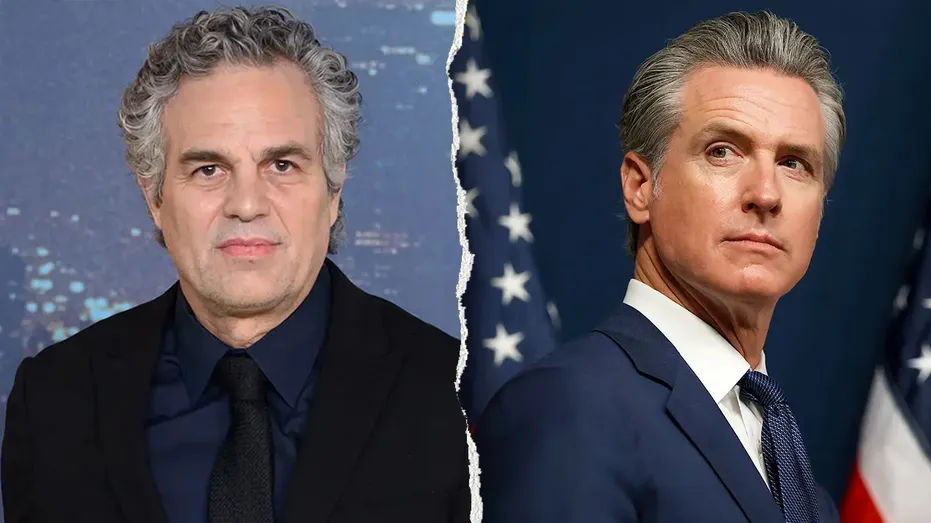
Actor Mark Ruffalo launched a direct political attack on California Gov. Gavin Newsom on Friday, calling the governor’s opposition to a proposed one-time billionaire wealth tax “disqualifying” for anyone seeking higher office. The confrontation exposes a widening rift within the Democratic Party just weeks before voters decide between two competing ballot measures that will determine whether the state can levy taxes based on net worth.
Ruffalo amplified criticism originally voiced by Rep. Ro Khanna, D-Calif., who objected to Newsom’s backing of Proposition 42. That measure, appearing on the Nov. 3 ballot, would amend the state constitution to prohibit California from imposing new taxes on the ownership of financial assets and personal property. If voters approve it, Proposition 42 would effectively block Proposition 40, a separate initiative that would impose a one-time 5% tax on the net worth of individuals who were California residents on Jan. 1, 2026.
Proposition 40 carries the official endorsement of the California Democratic Party, making Newsom’s alignment with Proposition 42 an unusual break from his own party apparatus. The wealth tax initiative targets roughly 200 billionaires currently residing in the state. Payments would be due in 2027 but could be amortized over five years at an additional cost. Real estate holdings, pensions, and retirement accounts are excluded from the calculation, meaning the levy falls primarily on equities, business valuations, and liquid assets.


“Gavin, we aren’t looking for the Democratic version of Trump. That was a good goof. Please try something else. It’s tired,” Ruffalo wrote on X. He urged the governor to abandon what he characterized as a prioritization of corporate interests, arguing that Californians need “a real, bona fide champion who isn’t just tough in tweets or press conferences, but tough when it comes to the real imbalances people are struggling with every day.”
Newsom, frequently mentioned as a potential contender for the 2028 Democratic presidential nomination, has framed his support for Proposition 42 as a defense of the state’s economic competitiveness. California operates under Proposition 13, the landmark 1978 voter initiative that strictly limits property tax increases. However, Proposition 13 governs real estate assessments and does not restrict the state legislature or voters from creating new categories of taxation on intangible wealth or financial assets. Proposition 42 was designed specifically to close that gap, extending asset-tax protections beyond physical property.
The debate over Proposition 40 has triggered warnings from business leaders about capital flight. Because the tax applies to anyone who maintained California residency on the first day of 2026, the window for relocation to avoid the assessment has already closed. Wealth managers and tax attorneys across the state have spent much of this year advising ultra-high-net-worth clients on how to handle the impending liability. Eric Schiffer, chairman of the family office Patriarch, warned that the policy could accelerate the departure of entrepreneurs and executives who have already been migrating to states like Texas, Florida, and Nevada, which lack both state income taxes and wealth levies.
Billionaire investor Mark Cuban also publicly opposed the measure, clashing directly with Khanna over the economic mechanics of taxing unrealized gains. Unlike income taxes, which apply to realized profits, a wealth tax requires individuals to pay out of pocket based on the paper valuation of their assets, frequently forcing founders and major shareholders to liquidate stock to cover the bill.
Supporters of Proposition 40 argue the revenue is essential to fund healthcare expansion and offset the state’s rising cost of living. The measure’s proponents estimate it would generate tens of billions of dollars in a single fiscal cycle, though critics point out that actual collections depend heavily on market valuations at the time of assessment and the inevitable wave of legal challenges regarding the constitutionality of retroactive residency requirements.
Newsom’s office has not issued a formal response to Ruffalo’s remarks. Campaign finance disclosures filed earlier this month show that committees supporting Proposition 42 have significantly outraised proponents of the wealth tax, drawing heavy funding from technology executives and venture capital firms operating in Silicon Valley.