Marcus Rashford Returns as Man United’s Top English Players
Marcus Rashford rejoins the squad from Barcelona, adding to a post-war legacy defined by Charlton, Scholes, and Rooney.

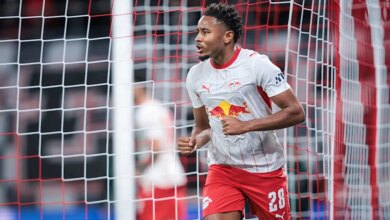
Marcus Rashford is back in a Manchester United shirt following his loan spell at FC Barcelona, instantly reclaiming his status as the only active player among the club’s all-time leading English appearance makers.
Rashford’s return to Old Trafford injects fresh relevance into a historical lineage that stretches back to the immediate aftermath of World War II. While modern transfer markets frequently cycle through global talent, the foundation of Manchester United’s domestic and European dominance has consistently relied on English players who defined distinct tactical eras under Sir Matt Busby and Sir Alex Ferguson.
No Englishman has played more games for the club than Bobby Charlton, whose 758 appearances remain second only to Welshman Ryan Giggs in the overall record books. Charlton’s career bridged the tragedy of the 1958 Munich Air Disaster and the triumph of the 1968 European Cup, earning him the Ballon d’Or and a World Cup winner’s medal in 1966. Fellow Munich survivor Bill Foulkes anchored the defense for 19 years between 1951 and 1970, logging over 680 matches as a center-back during the club’s post-war reconstruction.

The Class of ’92 fundamentally altered the Premier League landscape in the 1990s, with Paul Scholes and Gary Neville serving as its English pillars. Scholes evolved from a late-arriving goalscorer into a deep-lying playmaker whose passing range drew public admiration from contemporaries like Xavi Hernandez and Zinedine Zidane. Neville compensated for perceived technical limitations with relentless preparation, winning every major trophy available during his tenure at right-back. Both emerged from a youth development pipeline that historically supplied the first team far more reliably than the current academy setup, which has struggled to produce consistent senior starters since the departures of players like Jesse Lingard.
Wayne Rooney arrived from Everton in 2004 and ultimately surpassed Charlton to become the club’s outright all-time leading scorer. His partnership with Cristiano Ronaldo and Carlos Tevez drove the 2008 Premier League and Champions League double. Long before Rooney broke records, Jack Rowley established the early benchmark for English forwards, scoring 211 goals between 1937 and 1954. Rowley remains one of only four players—alongside Rooney, Charlton, and Scottish striker Denis Law—to breach the 200-goal mark for the club.
Defensive stability across different decades frequently depended on English pairings. Rio Ferdinand, acquired from Leeds United, replaced traditional physical defending with elite positional awareness, forming a highly successful partnership with Serbian center-back Nemanja Vidic. A decade earlier, Gary Pallister and Steve Bruce provided the foundation for Ferguson’s first title-winning squads. Bruce was particularly anomalous for a central defender, scoring 52 goals for the club and providing a direct threat on set pieces that modern United teams have often lacked.
Midfield control similarly transitioned through distinct English archetypes. Bryan Robson, known universally as “Captain Marvel,” brought an all-action box-to-box intensity to the 1980s that galvanized the Stretford End before he finally secured league titles in 1993 and 1994. Michael Carrick, who joined from Tottenham Hotspur in 2006 and currently manages the club, offered a contrasting profile. His 12-year playing stint was defined by composure and distribution rather than physicality, dictating tempo during United’s late-2000s period of domestic dominance.
Goalkeeping duties for over a decade fell to Alex Stepney, whose calm authority and positioning defined the role between the posts from 1966 to 1978, culminating in the 1968 European Cup victory. On the flanks, Steve Coppell spent eight seasons starting in 1975 as a high-tempo right winger, while Nobby Stiles operated as the midfield enforcer alongside Paddy Crerand during the 1960s, utilizing aggressive tackling and sharp game-reading to protect the backline.
Rashford now navigates the latter stages of his United career having rejoined the squad this season after testing himself in La Liga. His total appearances place him firmly within the top 15 English players in the club’s history, operating in a squad managed by Carrick that continues to balance the weight of these historical standards against the demands of the current Premier League campaign.