

Tesla Unveils Next-Gen Roadster With SpaceX Thrusters
Cold-gas thrusters and active ground-sealing aerodynamics define the invite-only Rocket and Thrust variants arriving in 2028.
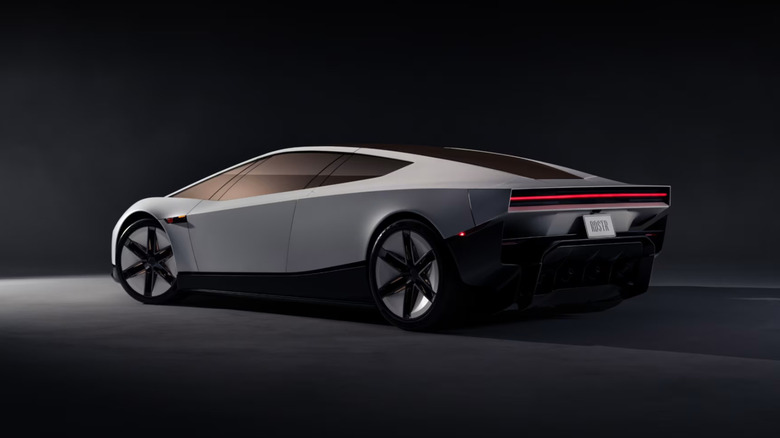
Nine years after its initial concept debut, Tesla has formally revealed the production-intent version of its next-generation Roadster, demonstrating a vehicle engineered with aerospace technology rarely seen outside military or experimental applications. The unveiling took place at the SpaceX propulsion test facility in McGregor, Texas, underscoring the deep technical integration between Elon Musk’s automotive and rocketry companies.
The demonstration centered on capabilities that blur the line between high-performance sports car and low-altitude flight system. Using cold-gas thrusters derived from SpaceX spacecraft maneuvering hardware, the Roadster launched off a C-shaped ramp, executed an aerial flip, and engaged all-electric actuators to perform micro-adjustments within fractions of a second before hovering safely to the ground. These thrusters rely on compressed gas rather than combustion, providing precise attitude control without the thermal management challenges associated with traditional rocket engines.
To achieve inverted adhesion during the stunt, Tesla equipped the chassis with a multi-mode fan and ground-sealing architecture. This active aerodynamic system extracts air from beneath the vehicle to generate extreme downforce, effectively creating a vacuum seal capable of suspending the car upside down while stationary. While ground-effect aerodynamics have been utilized in motorsport for decades—most notably through venturi tunnels in Formula 1—an active suction mechanism designed to hold a road-legal vehicle inverted represents a significant departure from conventional automotive engineering.

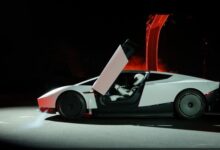
During the presentation, the driver-side door opened to reveal a Tesla Optimus humanoid robot seated behind the wheel. The automaker confirmed the stunts were entirely programmed and autonomous, with the robot serving as a visual placeholder rather than an active operator.
Production is now targeted for 2028. The original Roadster concept was announced in 2017, joining a long list of Tesla products that experienced extended development timelines. The first-generation Roadster, which converted a Lotus Elise chassis to electric power, ceased production in 2012, leaving the company without a dedicated two-door sports car for over a decade.
Tesla has restructured the reservation process into distinct performance tiers. A standard reservation requires a $5,000 deposit followed by $45,000 within 10 days. Buyers seeking the demonstrated aerodynamic and thrust capabilities must opt for the “Thrust” package, demanding an additional $245,000 paid within 10 days of the initial reservation. A top-tier “Rocket” variant, featuring a full-flight system, remains strictly invite-only.
The integration of SpaceX-derived thruster packages into a consumer vehicle raises unresolved questions regarding federal and state regulatory approval. The National Highway Traffic Safety Administration and the Federal Aviation Administration currently lack established frameworks for certifying road vehicles equipped with cold-gas propulsion systems intended for airborne maneuvers. How these agencies will classify the Thrust and Rocket variants—whether as modified motor vehicles or experimental aircraft—remains a critical hurdle ahead of the 2028 production target.









