

KFC Drops Pepsi for Coca-Cola, Ending 40-Year U.S. Pact
The transition across 3,700 U.S. locations begins in January 2027, though PepsiCo retains KFC's international and Taco Bell contracts.
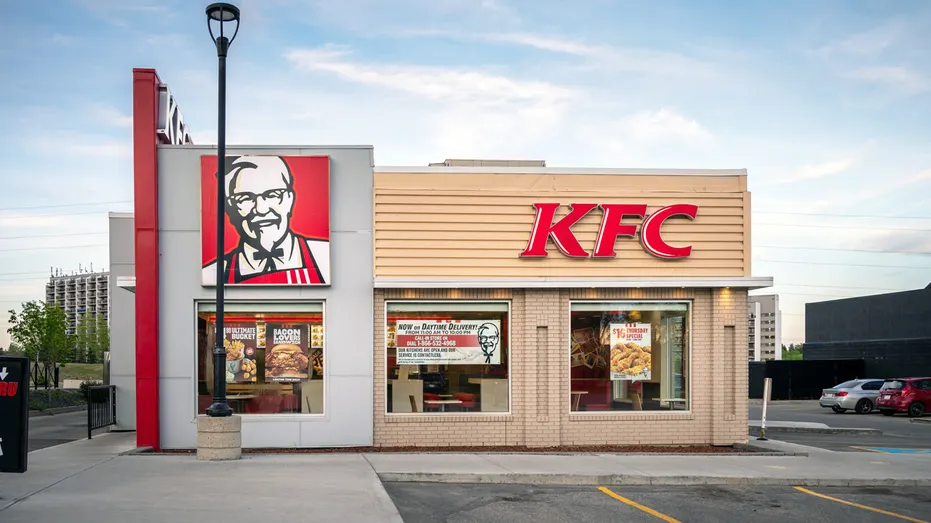
KFC is severing its nearly four-decade fountain drink relationship with PepsiCo, announcing Thursday that Coca-Cola will become the exclusive beverage provider across all U.S. restaurants by spring 2027.
The transition begins in January 2027 and affects approximately 3,700 American locations. For a quick-service restaurant chain of this scale, swapping out a primary beverage supplier requires replacing fountain dispensers, reprogramming point-of-sale systems, retraining staff on new syrup ratios and recalibrating supply chain logistics. The staggered rollout reflects the physical complexity of overhauling back-of-house infrastructure without disrupting daily operations.
PepsiCo’s grip on KFC’s cups traces back to 1986, when the beverage giant acquired the chicken chain outright. Although PepsiCo spun off its restaurant division in 1997 — creating Tricon Global Restaurants, which later became Yum! Brands — the pour contracts remained intact. This arrangement was always an anomaly in the industry. Most major fast-food chains align with either Coca-Cola or PepsiCo exclusively, but rarely does a restaurant operate under the legacy umbrella of a former corporate parent that also happens to be its direct competitor in the consumer packaged goods aisle.

Yum! Brands shares rose 2.82% following the announcement, trading at $150.83. Investors appear to view the shift as a modernization play rather than a simple vendor swap. Wall Street has increasingly scrutinized how traditional fast-food operators leverage brand partnerships to drive foot traffic amid intensifying competition from fast-casual concepts and value-focused discounters.
Coca-Cola secures a significant victory in the ongoing war for fountain dominance. The Atlanta-based company has aggressively expanded its foodservice footprint in recent years, leveraging proprietary data analytics and digital integration tools that tie directly into restaurant loyalty programs. Unlike retail shelf space, where consumers choose individual cans, fountain contracts lock in high-margin, captive-audience consumption. Coca-Cola’s president of foodservice and on-premise, Dagmar Boggs, framed the deal around pairing the beverage portfolio’s “innovation capabilities” with KFC’s menu, signaling potential co-branded limited-time offerings.
KFC President Catherine Tan-Gillespie characterized the agreement as a broader effort to evolve the brand and create a more relevant experience for today’s customers. The chain has spent the last several years attempting to shed its image as a purely traditional fried chicken destination, experimenting with plant-based proteins, sandwich formats designed to compete with Chick-fil-A and Popeyes, and upgraded store designs.
Crucially, PepsiCo is not losing KFC globally. The company recently renewed agreements covering KFC’s international restaurants, as well as fellow Yum! Brands subsidiary Taco Bell. This geographic bifurcation underscores how multinational beverage contracts are negotiated region by region, often yielding different winners depending on local distribution strength and historical ties.
The timing arrives during a turbulent stretch for PepsiCo’s broader business. The company recently raised prices on Doritos, Ruffles, SunChips and select sodas, reversing earlier price cuts implemented to combat volume declines. Simultaneously, financial analysts tracking the sector have noted widening performance gaps between the two beverage giants, with Coca-Cola’s stock outpacing PepsiCo’s in recent market movements.
Franchise operators will begin receiving transition timelines and equipment specifications from Yum! Brands in the coming weeks ahead of the January installation window.









