Amazon’s Panos Panay on Surviving a $1B Product Failure
The Amazon SVP details how a 30-degree pivot saved the Surface brand after a historic hardware disaster.
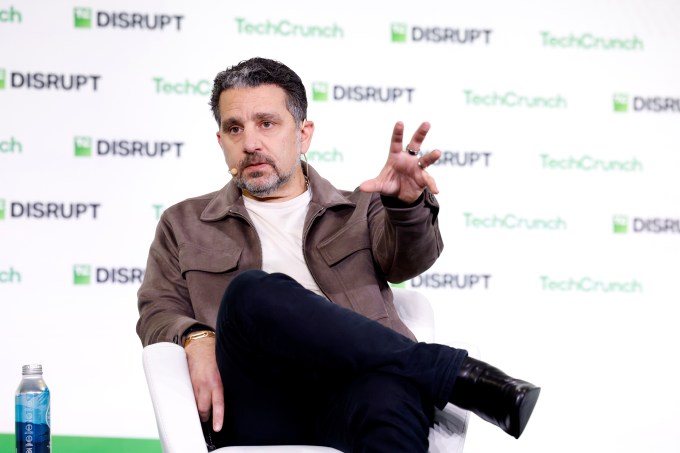
Panos Panay knows what a public product disaster looks like. Before taking over Amazon’s devices and artificial intelligence division, he spent nearly two decades at Microsoft, where he led the launch of a tablet that forced the company to swallow a roughly $900 million inventory write-down in 2013.
The Surface RT was designed to challenge Apple’s iPad dominance by running a stripped-down version of Windows on ARM-based processors. The device could not run traditional desktop applications, confusing consumers and alienating enterprise buyers who expected full Windows compatibility. Retail partners were left holding unsold inventory, and Microsoft took one of the largest financial hits in its hardware history.
Panay, now senior vice president of Devices, Alexa, and Leo at Amazon, used that experience to deliver a blunt assessment of product development during an appearance at TechCrunch Disrupt in San Francisco. His core argument targeted startup founders navigating early-stage hardware or software launches: catastrophic failure is not an anomaly but a structural requirement for building durable technology products.


“Failure wasn’t that moment,” Panay said, referring to the media coverage that branded the Surface RT a disaster. “It was decisions that led up to it two years before that, whether the software wasn’t complete or the inventory was wrong or how we balanced into retail.”
That distinction between the public collapse and the private sequence of errors is where most startups miscalculate. Founders frequently treat a failed launch as a singular event rather than the compounding result of upstream compromises in supply chain forecasting, software readiness, or channel strategy. By the time a product reaches consumers with fatal flaws, the operational mistakes have already been locked in for months.
Image Credits:Kimberly White/Getty Images for TechCrunch /
Hardware startups face particularly unforgiving margins for error compared to pure software companies. A flawed app can be patched overnight; a flawed physical device requires recalling components, renegotiating manufacturing contracts, and absorbing warehousing costs. The Surface RT’s ARM architecture choice meant Microsoft had to convince developers to rebuild applications for a new instruction set—a massive undertaking that was incomplete at launch.
Panay’s prescription for recovering from that kind of deficit relies on minor directional shifts rather than wholesale pivots. He described the necessary adjustment as a 30-degree change in vector, arguing that founders who execute 180-degree turns usually do so because they refused to acknowledge earlier warning signs until total collapse became unavoidable.
This philosophy mirrors his current mandate at Amazon, where he oversees Echo hardware, Fire TV, and the integration of generative AI through the Leo assistant. Amazon has historically absorbed expensive hardware missteps—including the 2014 Fire Phone, which resulted in a $170 million write-down—to refine subsequent iterations of its consumer electronics ecosystem.
The underlying lesson Panay pushed to the Disrupt audience was about separating the vision from the execution. Retaining the original goal while dismantling the flawed mechanics that prevented it from working is what allowed the broader Surface brand to eventually stabilize. After abandoning the restricted Windows RT operating system, Microsoft transitioned the line to full Intel-based processors and premium build materials, ultimately establishing the Surface Pro as a standard fixture in corporate environments.
“Take your lessons learned, change a little bit, adapt your vision where it needs to be, and then go,” Panay said.
Panay joined Amazon in late 2023 after departing Microsoft, replacing longtime devices chief Dave Limp. He currently manages the integration of large language models directly into Amazon’s consumer hardware lineup.