

Character.AI Files Chapter 11, Sells Assets to Disney for $20M
The AI chatbot startup listed up to $100M in liabilities as Disney acquires technology licenses amid a court-supervised auction.
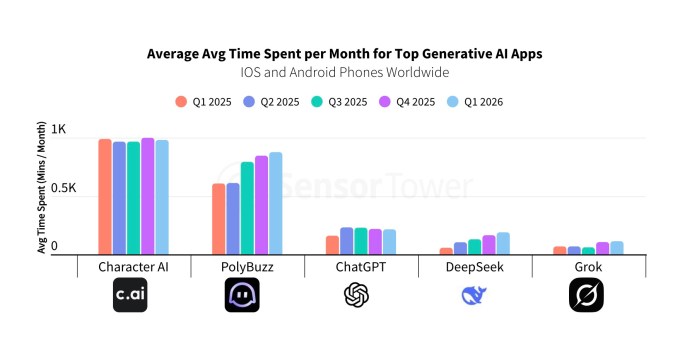
Character.AI has filed for Chapter 11 bankruptcy and agreed to sell a portion of its assets to Disney for $20 million, marking a sudden collapse for one of the most heavily used consumer artificial intelligence platforms in the United States. The startup listed both its assets and liabilities between $50 million and $100 million in court filings.
Disney will acquire a non-exclusive perpetual license to Character.AI’s technology as part of the transaction. Former Character.AI CEO Karandeep Singh Anand and several employees who joined Disney last month will provide transition services to integrate the acquired tools into the entertainment company’s operations. Disney has spent the past two years aggressively expanding its generative AI capabilities for animation pipelines and theme park experiences, making conversational character technology a logical acquisition target for a company built on intellectual property-driven storytelling.
The bankruptcy sale process is expected to close in late November or early December. Current CEO Colin Adams confirmed the platform will remain operational during the proceedings but stated no comprehensive bid for the company’s remaining assets has emerged yet. If the court-supervised auction fails to produce an actionable proposal, the service will be permanently wound down.


Unlike Chapter 7 liquidation, Chapter 11 allows companies to restructure or sell assets while continuing daily operations. For consumer software platforms, this mechanism preserves user access temporarily while giving potential buyers time to evaluate underlying codebases, datasets, and active user metrics without the immediate pressure of server shutdowns.
The financial unraveling exposes the severe unit economics plaguing consumer-facing AI applications. Analytics firm Sensor Tower previously ranked Character.AI among the top mobile apps globally for average time spent per session. However, unlike traditional social networks where marginal serving costs approach zero, large language model inference requires continuous, expensive GPU compute. Every additional minute a user spends chatting with an AI persona directly increases infrastructure bills. When users average more than two hours daily on a platform, the cost of serving free or low-tier subscribers rapidly outpaces subscription revenue, creating an unsustainable cash burn that engagement metrics alone cannot fix.
Founded in late 2021 by Noam Shazeer and Daniel De Freitas, the company initially capitalized on deep expertise in machine learning architecture. Shazeer co-authored the foundational Transformer paper that underpins virtually all modern generative AI. By September 2022, venture capital demand pushed the startup to a unicorn valuation following a $150 million funding round. At the time, users had exchanged over 2 billion messages with custom bots within five months of launch.
Mobile adoption accelerated further in May 2023 when Character.AI applications generated more than 1.7 million installs in their first week. The trajectory shifted fundamentally in August 2024 when Google executed a $2.7 billion licensing deal for the startup’s models, prompting both founders to return to the search giant. General counsel Dominic Perella assumed the interim CEO role, and the company pivoted away from training foundation models to focus entirely on product growth.
Despite reaching 20 million monthly active users by October 2024, the platform faced mounting legal and regulatory exposure. A wrongful death lawsuit was filed by the mother of a 14-year-old Florida boy who died by suicide after developing an intense attachment to a chatbot on the service. Texas authorities subsequently launched an investigation into whether the platform violated child privacy and safety statutes. Character.AI settled portions of the litigation, implemented stricter safety guardrails, and ultimately banned minors from the platform.
Anand, previously an executive at Brex and Meta, was appointed CEO in June 2025 to steer a turnaround. Under his leadership, the company introduced AI video generation, algorithmic social feeds, interactive storytelling formats, and microdramas to diversify beyond text-based roleplay. These features failed to alter the underlying financial trajectory.
According to PitchBook data, Character.AI raised over $193 million across multiple funding rounds backed by Lightspeed, SV angels, Greycroft, and a16z.









