

Volvo Drops EX40 EV in US, Keeps Only Gas XC40 for 2028
Volvo scales back US EV offerings, keeps only gas-powered XC40 for 2028.
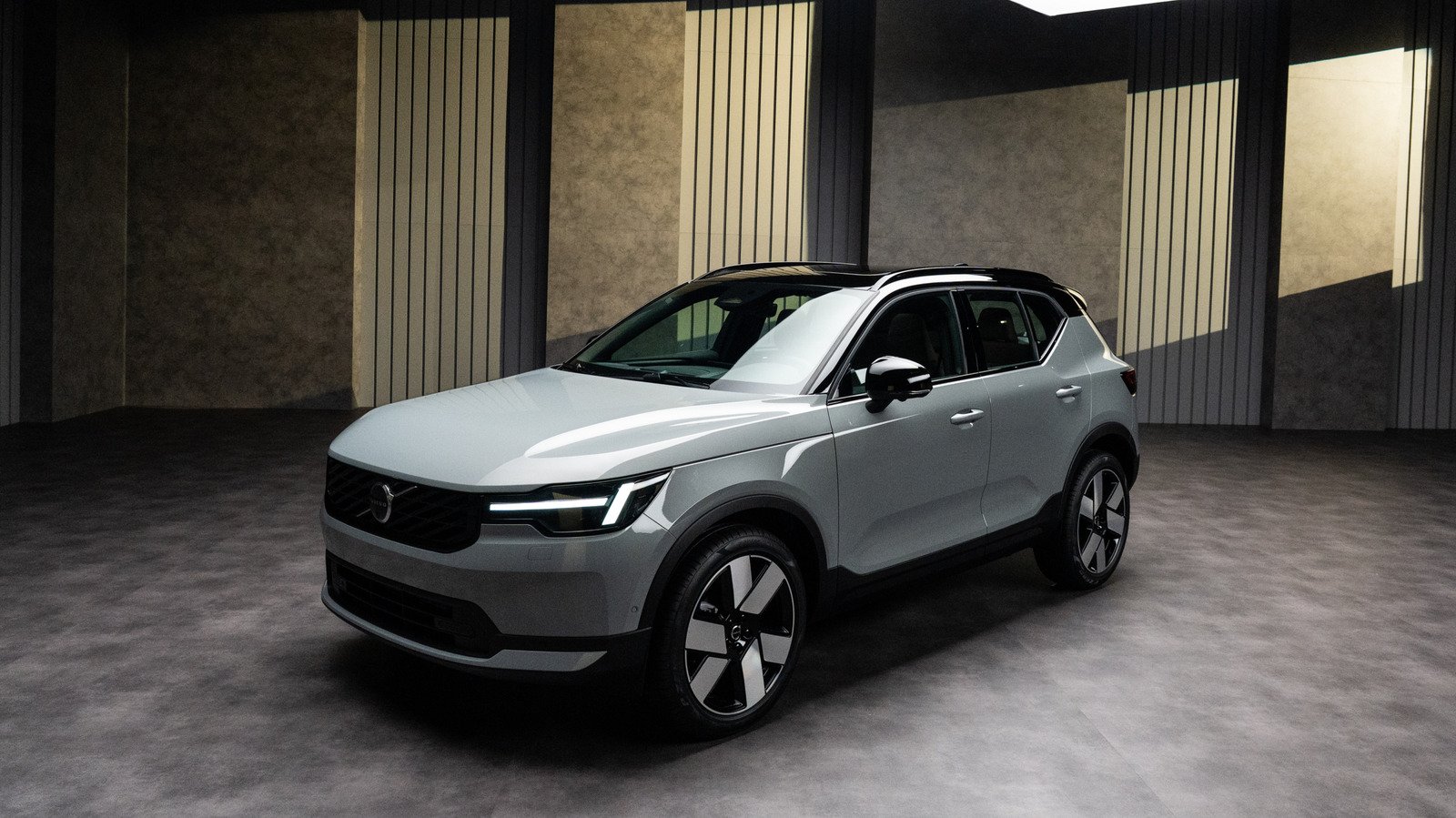
Volvo Cars is scaling back its U.S. electric vehicle offerings for the 2028 model year, dropping the battery-electric EX40 crossover from its North American lineup while retaining only the mild-hybrid XC40 B5 variant. The sole remaining XC40 variant in the U.S. for 2028 will feature the B5 powertrain, which pairs a 2.0-liter turbocharged four-cylinder engine with a 48-volt mild-hybrid system. The setup generates 247 horsepower and 266 pound-feet of torque, sent through an eight-speed automatic transmission and standard all-wheel drive.
The mild-hybrid assist delivers an EPA-estimated combined fuel economy rating of 27 mpg. Current U.S. inventory of the electric EX40 will be sold until depleted, after which the model will be phased out domestically. The decision marks a broader recalibration of the Swedish automaker’s U.S. product strategy. While international markets will continue to receive both the refreshed internal combustion and fully electric models, American buyers will be limited to the gasoline-powered XC40 as Volvo navigates shifting EV adoption rates, evolving trade policy, and supply chain adjustments across North America.
The retreat from an all-electric compact option in the U.S. coincides with adjustments to Volvo’s global electrification timeline. In late 2024, the automaker backed away from its previously announced target to become an exclusively electric brand by 2030, revising its goal to target between 90% and 100% of global sales from electrified vehicles, including plug-in hybrids and mild hybrids. Geopolitical factors and trade barriers have also impacted Volvo’s U.S. electric portfolio. Volvo, which has been majority-owned by China’s Zhejiang Geely Holding Group since its acquisition from Ford Motor Company in 2010, relies on global manufacturing footprints that include assembly plants in Ghent, Belgium, and Taizhou, China.


Increased U.S. tariffs on Chinese-built electric vehicles, alongside federal sourcing rules for battery components under the Inflation Reduction Act, have complicated the margins for foreign-built compact EVs. Similar tariff pressures previously forced Volvo to delay the U.S. rollout of its smaller EX30 electric crossover while shifting production for North American units to its Ghent facility. Despite its removal from the U.S. market, the electric EX40 receives the same exterior and interior redesign as the gasoline XC40 for 2028. Both models share Volvo’s Compact Modular Architecture (CMA), co-developed with Geely’s engineering division.
Visually, the 2028 refresh introduces a simplified front end that eliminates the multi-piece cutouts and scalloped bumper lower sections of the previous iteration. The front fascia now presents a smoother appearance, anchored by updated lighting units. Volvo’s signature “Thor’s Hammer” LED daytime running light graphic remains, but underlying lighting elements are now concealed behind darker housings. Additional exterior changes include resculpted front fenders, a reshaped hood, and a simplified rear bumper valance. The primary visual differentiator between the two global models remains the front grille treatments: the mild-hybrid XC40 features a refreshed grille mesh with diagonal slashes accentuating the central Volvo iron mark logo, while the electric EX40 utilizes a fully enclosed, body-colored front panel.
Inside, the 2028 XC40 receives an updated dashboard layout dominated by a new 11.2-inch central display screen, replacing the 9.0-inch portrait unit previously integrated between the vertical air vents. The larger screen sits proud of the dashboard surface and operates on the latest iteration of Google’s Android Automotive operating system. The software package integrates Google Gemini artificial intelligence, expanding voice-control functions for vehicle settings, navigation, and infotainment. Beyond standard routing, the system can perform detailed queries, such as filtering local restaurant search results by specific dietary preferences or calculating scenic driving routes based on travel time. Volvo previously began rolling out Gemini functionality across its broader vehicle lineup earlier in the model year via over-the-air software updates.
Underneath the cosmetic updates, Volvo has overhauled the model’s active safety hardware. The 2028 XC40 incorporates an upgraded suite of external sensors, including higher-resolution surround-view cameras, updated ultrasonic sensors integrated into the front and rear bumpers, and long-range radar units. The enhanced sensor suite enables a detailed 3D spatial view around the vehicle during parking maneuvers—a feature previously reserved for Volvo’s larger models, such as the XC90 and EX90. The sensor data feeds into an updated central safety domain controller with increased processing power, capable of receiving future over-the-air functional updates.
The upgraded safety system enhances Volvo’s Pilot Assist suite, which combines adaptive cruise control with active lane-centering assist. For 2028, the system adds automated lane-change assistance. However, Volvo maintains a strict hands-on driving mandate for its driver-assist technologies, explicitly requiring continuous driver oversight rather than pursuing hands-free highway driving systems offered by competing luxury brands. The XC40 platform has been a key volume driver for Volvo since its initial introduction in late 2017. Built as the first vehicle on the CMA architecture, the model earned European Car of the Year honors in 2018. A battery-electric variant joined the global lineup in 2019 under the “XC40 Recharge” badge, before being renamed the EX40 in early 2024 to align with Volvo’s revised EV nomenclature (EX30, EX60, EX90).
In the U.S. market, the XC40 ranks as Volvo’s third-best-selling model line behind the midsize XC60 crossover, while holding the second position in global sales. Deliveries of the refreshed 2028 Volvo XC40 B5 are scheduled to begin at U.S. dealerships in early calendar year 2028. Final pricing and detailed trim packaging for North America will be announced closer to the vehicle’s market launch.