

Foreign Visitor Surcharge at U.S. National Parks Yields $22.5 Million in First Six Months
Initial six-month collections reach $22.5 million amid statutory challenges and data gaps
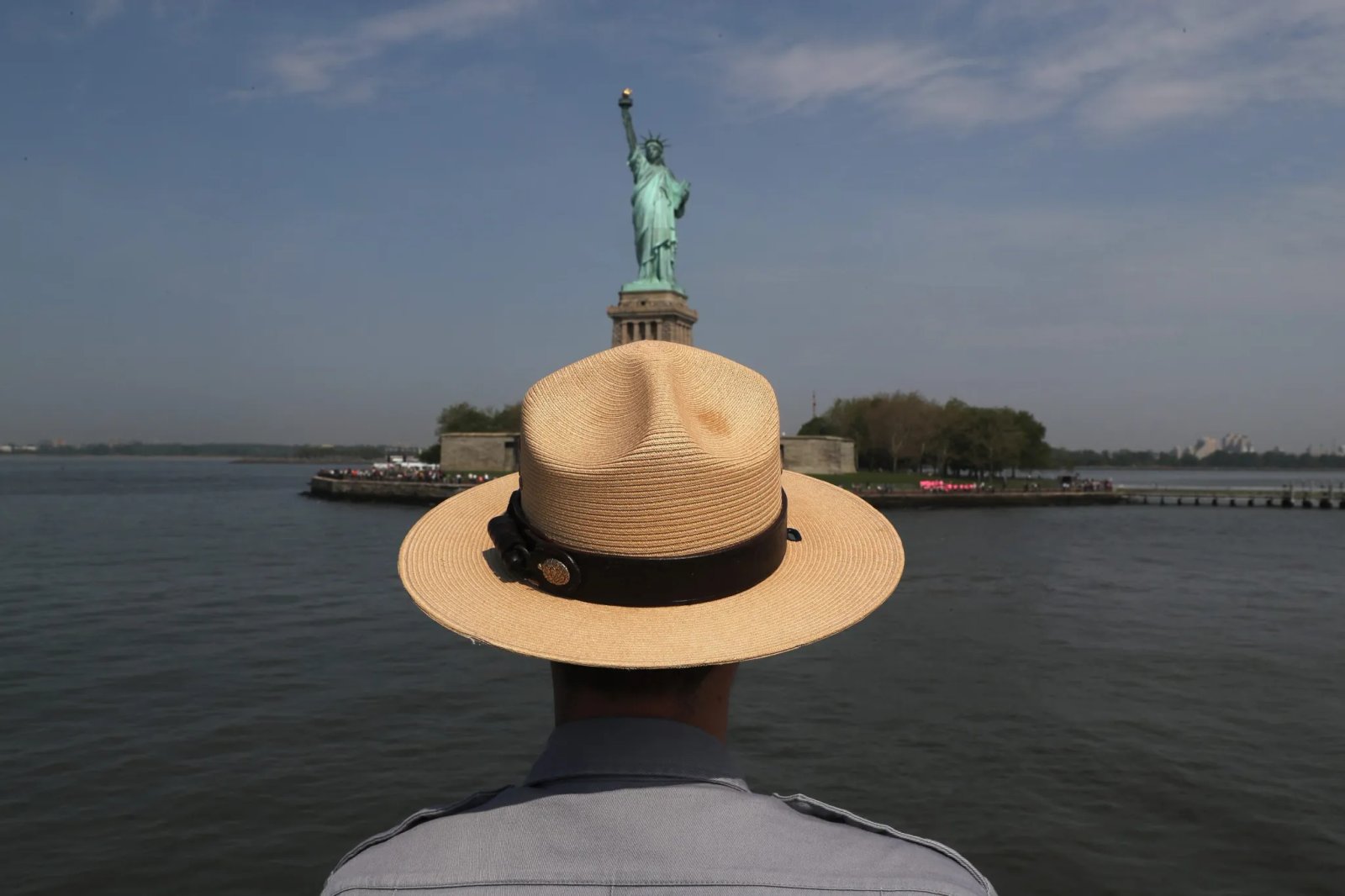
A dual-tier pricing model for international visitors at select U.S. national parks generated $22,531,075 in its first six months, Interior Secretary Doug Burgum disclosed to the Daily Signal. The fee structure, which took effect Jan. 1 under Executive Order 14314, was projected by the Interior Department to produce $90 million annually, meaning the initial yield reached roughly one-quarter of that target.
President Donald Trump signed Executive Order 14314 on July 3, 2025, directing federal agencies to increase entry fees for foreign tourists. The Department of the Interior unveiled a revised pricing schedule in November 2025. Under the directive, the annual “America the Beautiful” Interagency Pass—granting entry to more than 2,000 federal recreation sites—rose from $80 to $250 for foreign nationals, while U.S. residents maintained the $80 rate.
Burgum told the Daily Signal that the $22.5 million yield represents early-stage growth toward establishing a permanent funding stream for the National Park System, rather than indicating a financial shortfall. The policy also instituted a mandatory $100 per-person surcharge on foreign visitors aged 16 and older at 11 of the country’s most heavily visited parks, including Yellowstone, Yosemite, and Zion.


The National Park Service was established by Congress through the Organic Act of 1916, signed into law by President Woodrow Wilson on August 25, 1916. Today, the agency manages 429 individual units covering more than 85 million acres across all 50 states, the District of Columbia, and U.S. territories. System-wide visitation reached a record high during the NPS Centennial in 2016, exceeding 330 million total recreation visits.
Senate Democrats led by Sens. Alex Padilla of California, Catherine Cortez Masto of Nevada, and Ron Wyden of Oregon sent two formal letters to Burgum asserting that the Department of the Interior violated procedural requirements set by Congress. The lawmakers argued the department bypassed public notice and comment mandates outlined in the Federal Lands Recreation Enhancement Act (FLREA) of 2004. Enacted under Title VIII of Public Law 108-447, FLREA governs how the National Park Service, U.S. Forest Service, Bureau of Land Management, and Fish and Wildlife Service collect and expend recreation fees.
Under FLREA regulations, 80 percent of entry and recreation fees remain at the collecting park to fund local maintenance and visitor services, while 20 percent is redistributed agency-wide. The law generally mandates public involvement and consultation with local advisory committees before new fee structures are established. Recreation fees collected under FLREA are primarily directed toward reducing the National Park Service’s long-standing deferred maintenance backlog, which includes deferred repairs on roads, bridges, wastewater systems, visitor centers, and trails.
The Congressional Research Service noted in an assessment of the policy that calculating precise revenue projections is inherently difficult because the National Park Service has not historically collected systematic demographic data differentiating foreign and domestic visitors at park entrance gates. This data gap complicates evaluating the precise fiscal impact of the surcharge program. Furthermore, official federal accounting on park fee collections operates on a multi-year administrative delay, with the most recent comprehensive FLREA fee-revenue accounting published for fiscal year 2023.
Padilla and his colleagues have separately formally petitioned the Department of the Interior to clarify whether residency data or visitor information collected at park entrance stations is shared or stored with external federal law enforcement or immigration agencies. Neither the Department of the Interior nor the National Park Service has publicly responded to inquiries regarding data collection practices. To enforce the differential pricing, Park Service staff must conduct verbal residency checks for non-pass holders at the 11 designated surcharge parks, creating gate delays during the initial rollout in early January.
Differential entry pricing based on nationality or residency is established practice across numerous international cultural institutions and national park networks. The Louvre Museum in Paris raised entry ticket prices for non-European Union visitors by nearly 50 percent to €30 (approximately $37), while preserving reduced rates for EU citizens. Foreign adult visitors to Galápagos National Park in Ecuador pay a $200 entry fee, compared to $30 for Ecuadorian citizens. International tourists entering the Masai Mara National Reserve in Kenya pay an entry fee of $200 per day, compared to $24 for domestic residents.
International visitation to the U.S. fell by 5.5 percent in 2025, contrasting with growth in global travel to European and Asian markets. Total spending by foreign tourists in the U.S. decreased by $14 billion in 2025 compared to 2024 levels. Survey data analyzing international travel sentiment indicated that 46 percent of foreign prospective visitors cited administration policies as a factor rendering them less likely to travel to the U.S.
Kruger National Park in South Africa charges foreign visitors a daily conservation fee of approximately $35, compared to $8 for South African residents. British policy makers considered differential admission charges for national museums but ultimately opted for local municipal overnight tourist levies on hotel accommodation. Total deferred maintenance needs across the National Park Service historically exceeded $13 billion to $20 billion, leading Congress to pass the Great American Outdoors Act in 2020, which dedicated up to $1.9 billion annually from energy development revenues to fund park infrastructure repairs alongside standard fee collections.
The Statue of Liberty National Monument in New York Harbor—first proclaimed a national monument by President Calvin Coolidge in 1924 and expanded to include Ellis Island in 1965—welcomed a record 4.5 million visitors during the 2016 centennial year. The figures provided by Burgum represent the sole available financial data on the program’s initial implementation.