

Moon’s New McGetchin Crater Exposes Hidden Risks for Future Rovers
A fresh lunar impact has created colder, less stable terrain for future explorers
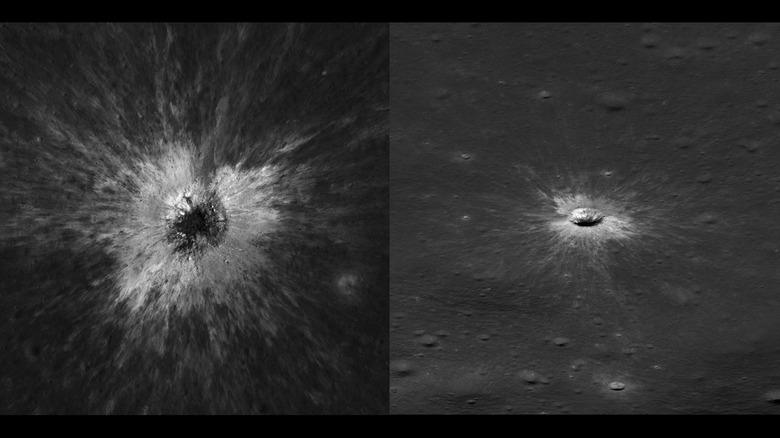
WASHINGTON — A newly discovered impact crater on the moon is the largest modern collision site detected in the solar system. The event is giving scientists critical insights into how space rocks alter the lunar environment while presenting new engineering challenges for future robotic and human exploration.
The crater formed between April 11 and May 22, 2024, when an asteroid or comet roughly the size of a three-to-six-story building struck the lunar surface. The collision went unnoticed in real time. Researchers identified the scar late last year through data from NASA’s Lunar Reconnaissance Orbiter (LRO), which has mapped the moon in unprecedented detail since its launch in 2009.



The International Astronomical Union officially named the feature the McGetchin crater in honor of the late planetary geologist Thomas R. McGetchin. He was the former director of the Lunar and Planetary Institute and dedicated his career to studying volcanic and impact processes on the Earth and Moon.
The discovery drew intense scientific interest because of a localized thermal anomaly around the impact zone. Thermal data from the spacecraft’s instruments revealed a four-mile-wide area encircling the crater where nighttime temperatures are roughly 16 degrees Fahrenheit, or about 9 degrees Celsius, colder than those of the surrounding undisturbed terrain.
Robert Wagner, a researcher at Arizona State University working with the LRO camera team, noticed a distinct surface disruption in October 2025 while examining imagery from the orbiter’s Wide Angle Camera. He compared the images with historical scans of the same region and confirmed the formation of a fresh impact site.
To obtain high-resolution details, mission controllers directed the LRO’s Narrow Angle Cameras to pass directly over the coordinates in December 2025. The resulting imagery showed a crater 728 feet (222 meters) in diameter and 141 feet (43 meters) deep.
The moon’s upper surface normally consists of a tightly packed layer of fine dust and rock fragments called regolith. That material acts as an insulator, retaining heat during the brutal lunar nights. The 2024 impact violently disrupted the structure, excavating material and spreading a loose, low-density blanket of debris across the landscape.
The newly deposited ejecta blanket is less dense and highly porous, leaving it with significantly reduced thermal inertia. Once the sun sets, the ground therefore loses its stored heat much faster. The same changes in soil density can affect how future lunar rovers move across the surface.
NASA engineers warned that the loose, low-density soil in these “cold spots” can significantly alter traction, potentially causing rover wheels to sink or slip more easily than they would on older, more compacted lunar ground. Colder surface temperatures also require rover heating and battery preservation systems to work harder during operational traverses.
The McGetchin crater is minor beside ancient lunar structures such as the South Pole-Aitken Basin, a massive impact crater on the far side of the moon that spans 1,550 miles in diameter and formed billions of years ago. Planetary scientists estimate that an impact of the McGetchin crater’s magnitude occurs on the moon only once every 132 years.
Understanding these mechanical and thermal changes is increasingly vital as NASA and international partners prepare for sustained surface exploration under the Artemis program, alongside commercial robotic missions scheduled to land on the moon in the coming years.










One Comment