US Allocates $175M for Undersea Cables in Central America to Counter Chinese Reach
Washington prepares hundreds of millions in fresh foreign spending to push back on Beijing's digital and maritime footprint.
The Trump administration has formally notified Congress of plans to allocate $175.8 million to replace outdated undersea telecommunications cables in the Caribbean and Central America, initiating a broader effort to counter China across global infrastructure networks.
The newly submitted proposal, named the Countering CCP Control of Caribbean and Central America Undersea Cables project, targets funding for critical subsea digital lines serving El Salvador, Guatemala, Honduras, Haiti, and Nicaragua. Washington does not plan to work directly with the Nicaraguan government due to strained diplomatic relations.
Subsea fiber-optic routes transmit the vast majority of international internet data, making physical cable landings a primary focus of global digital sovereignty and security. Washington has repeatedly raised concerns over Beijing’s deepening investments in the Western Hemisphere, including Chinese control of port facilities framing the Panama Canal and infrastructure loans provided under the Belt and Road Initiative.
The proposed telecom funding marks a shift following months of severe budget cuts driven by the Elon Musk-led Department of Government Efficiency, which resulted in the dismantling of the U.S. Agency for International Development and the elimination of hundreds of overseas diplomatic positions.
An internal State Department document indicates the administration is considering nearly half a billion dollars in broader counter-influence projects across Latin America, Africa, and Asia. Specific plans under review include allocating over $340 million across more than 50 projects, such as establishing cybersecurity centers in Argentina and Belize to monitor infrastructure threats.
Other initiatives aim to protect port operations, offshore fisheries, and critical mineral extractions in Ecuador, Jamaica, Mexico, Paraguay, Peru, and Uruguay. Additional proposals address proprietary security technology surrounding the Dalai Lama succession, counter-measures against China’s space program, and efforts to block foreign deployments of Chinese surveillance technologies.
A State Department official speaking anonymously stated that Chinese infrastructure proposals often appear economical initially but lead to long-term costs through hidden maintenance fees and project delays. A senior official confirmed that while high-level counter-China spending plans are expanding, many specific projects remain under executive review.
Responding from Beijing, Chinese Foreign Ministry spokesperson Lin Jian stated that submarine communications infrastructure supports global connectivity and should not be politicized. He stated that China’s international partnerships aim to safeguard peace and development rather than compete for regional hegemony.
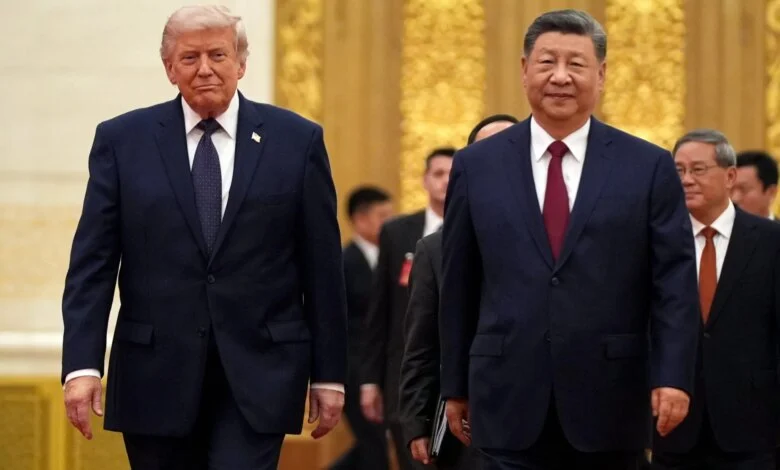
The policy developments precede a planned autumn meeting between President Donald Trump and Chinese leader Xi Jinping during the UN General Assembly in New York. In preparation for the summit, Secretary of State Marco Rubio held talks with Chinese Foreign Minister Wang Yi in the Philippines, as documented by the State Department.