Cybersecurity Startup Neo Emerges From Stealth With $100 Million to Secure Autonomous AI Agents
cybersecurity startup Neo has officially exited stealth mode, securing $100 million in combined seed and Series A funding to address a rapidly growing enterprise threat: unmonitored autonomous AI agents operating directly on user workstations.
The substantial funding round was backed by prominent venture firms Andreessen Horowitz and Bessemer Venture Partners, alongside participation from Craft Ventures and Merlin Ventures. As part of the investment, Andreessen Horowitz general partner Zane Lackey and Bessemer partner Elliott Robinson have joined Neo’s board of directors. The funding represents one of the largest early-stage capital raises in AI governance and security to date, reflecting heightened investor interest in controlling non-deterministic software across corporate networks.
Enterprise adoption of artificial intelligence has moved far beyond simple chat interfaces to agentic tools—software capable of taking autonomous actions such as scheduling meetings, summarizing transcripts, sending emails, and connecting to external software services. While employees often adopt these tools individually for routine tasks like taking meeting notes, vendors frequently update them with expanded administrative capabilities. This shift turns harmless workplace assistants into autonomous background processes capable of bypassing traditional security boundaries and creating significant enterprise blind spots.
Neo’s approach focuses directly on the endpoint—the local computer where humans and AI applications interface—rather than monitoring network traffic or central Application Programming Interface (API) gateways. Traditional network security mechanisms rely on monitoring fixed entry points or establishing baseline activity metrics to detect anomalous behavior. However, modern frontier AI models can reason independently, invoke external tools, and execute localized system commands directly on host machines, rendering legacy baseline-traffic defenses largely ineffective.
To solve this visibility gap, Neo developed a dedicated endpoint sensor that performs three primary security functions: maintaining a complete inventory of all installed agentic software, auditing individual system configurations, and strictly enforcing operational access policies. By controlling what tools an AI agent can invoke and what local resources it can touch, the platform prevents unauthorized software permissions from escalating into automated corporate data leaks.
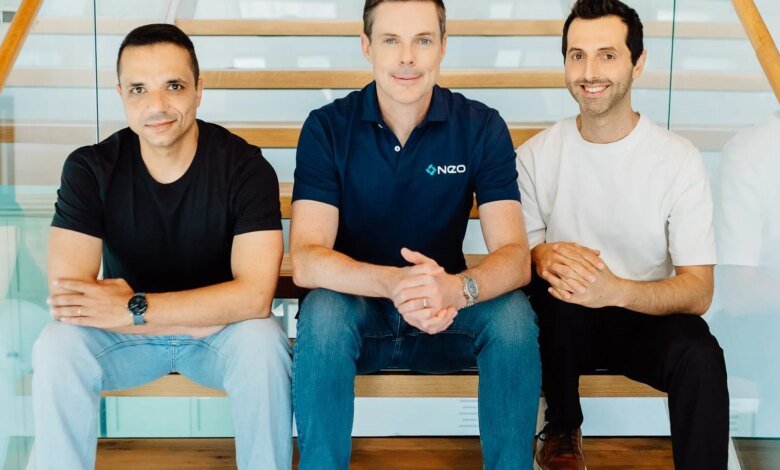
The company was founded by an executive team with extensive backgrounds in commercial cybersecurity and military intelligence. Chief Executive Officer Nick Warner previously served as chief operating officer at SentinelOne, where he directed go-to-market strategies and guided the firm through its public offering in 2021. Co-founder Shlomi Salem spent over a decade leading threat research and detection engineering at SentinelOne, while co-founder Eran Shirazi previously co-founded customer workflow startup EasySend and led vulnerability research within Unit 8200, the elite cyber intelligence organization of the Israel Defense Forces. Unit 8200 has historically produced numerous founders behind high-profile global cybersecurity firms.
Neo has already begun deploying its endpoint protection technology across enterprise clients operating in heavily regulated sectors, including financial services, healthcare, insurance, and industrial manufacturing. Organizations in these fields face strict regulatory frameworks around data protection and record-keeping, making unmonitored AI activity on employee endpoints a critical operational risk.