Powerful Earthquake Hits Japan’s Kumamoto Region, Triggering Mall Explosion and Leaving Dozens Missing
A magnitude 7.1 quake devastates southern Japan, causing a major blast at a recently rebuilt shopping center in Kyushu.
A powerful earthquake struck southern Japan’s Kumamoto Prefecture on Tuesday, triggering a massive gas explosion that destroyed a major shopping center and left dozens of workers unaccounted for, as emergency crews struggle to launch rescue operations amid persistent aftershocks.
The shockwaves hit the region shortly before 4:30 p.m. local time, centered roughly nine miles north of Kumamoto City at a shallow depth of six miles. Data recorded by the United States Geological Survey classified the tremor as a magnitude 6.8 earthquake, while the Japan Meteorological Agency assessed the event at magnitude 7.1 on its preliminary seismic scale.
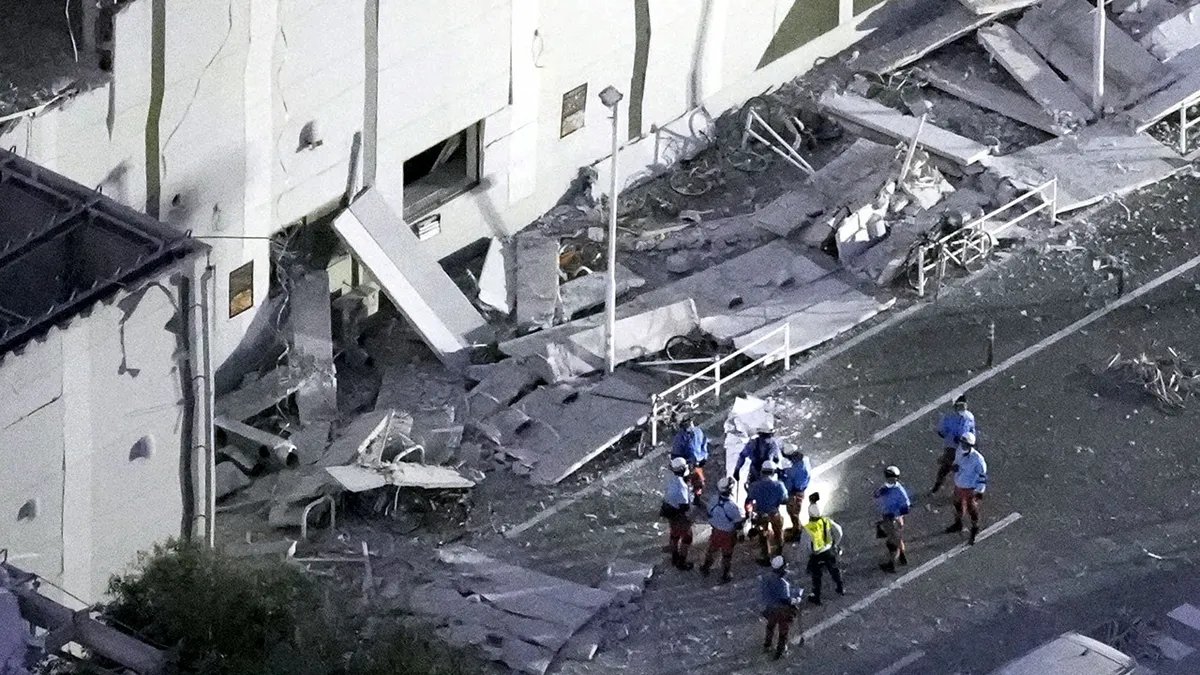
The most severe destruction occurred in Kashima Town, where the prominent Aeon Mall suffered catastrophic structural failure. Approximately 200 shoppers were successfully ushered out of the multi-story facility following the initial tremors. However, roughly an hour later, a violent explosion tore through the complex, tearing off exterior concrete paneling and exposing its steel skeleton.
Eyewitnesses reported smelling strong fumes consistent with natural gas in the minutes preceding the detonation. Public broadcaster NHK reported that between 20 and 30 mall employees remain missing inside the shattered complex. Local police confirmed that search teams have been prevented from making full entry into the unstable building due to ongoing secondary tremors.
The disaster strikes a deeply emotional nerve for Kumamoto residents. The Aeon Mall had celebrated its official grand reopening on June 13, following years of extensive structural rebuilding. The complex had previously sustained heavy damage during the historic April 2016 Kumamoto earthquakes—a sequence of foreshocks and a magnitude 7.3 mainshock that devastated infrastructure across Kyushu and killed over 200 people.

Designed to serve as a flagship symbol of regional recovery, the reconstructed 200-store hub featured modernized seismic reinforcements, a multi-screen cinema, parking space for 5,000 vehicles, and an annual foot traffic surpassing eight million visitors. The surrounding area had recently experienced an economic boom, further accelerated by Taiwan Semiconductor Manufacturing Co. opening its flagship Japanese semiconductor fabrication facility in nearby Kikuyo in 2024.
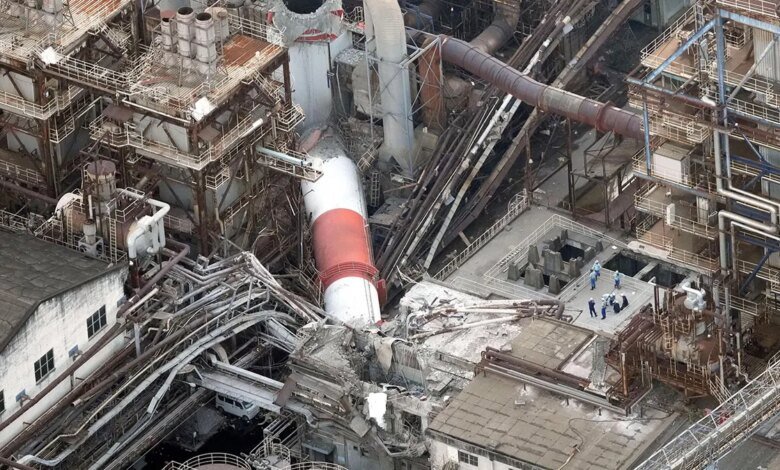
Across Kyushu, the impact of Tuesday’s quake reverberated through major infrastructure networks. According to Japan’s Fire and Disaster Management Agency, the tremor ignited at least eight fires across the region, while NHK confirmed at least 50 reported injuries. Regional transit ground to a halt as Kumamoto Airport suspended all operations to inspect runway integrity, and industrial sites reported severe physical damage, including a collapsed smokestack at Nippon Paper Industries’ mill in Yatsushiro.
Although the Japan Meteorological Agency briefly issued a tsunami advisory for sections of the Kyushu coastline, the warning was later rescinded without reports of significant wave surges. Nightfall in Kumamoto saw emergency crews poised on standby surrounding the ruined shopping center, unable to advance deep into the wreckage as relentless aftershocks continued to rattle the bedrock.