California Mail Ballot Rejections Surge as Postal Delays Disenfranchise Thousands
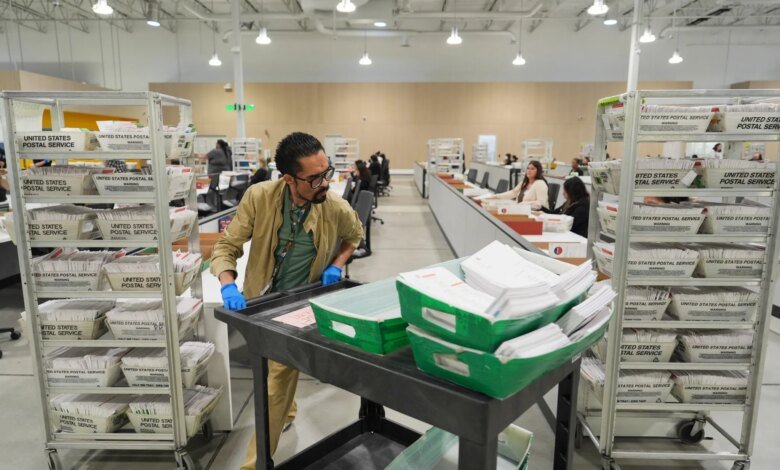
California election officials invalidated 148,241 mail-in ballots during the state’s June primary, marking a notable spike in ballot rejections driven primarily by postal routing delays and missed postmark deadlines.
The disqualified votes represented 1.73% of all mail ballots cast in the primary, up from a 1.56% rejection rate (108,982 ballots) in 2024 and 105,818 rejected ballots in 2022. According to official data from the California Secretary of State, the vast majority of rejected ballots—93,479 in total—were thrown out because they lacked a valid postmark dated on or before Election Day.
Under state law expanded under Assembly Bill 37 in 2021, every registered voter automatically receives a mail ballot, and envelopes received up to seven days after Election Day are counted provided they carry a timely postmark. However, voting rights experts note that postmark dates increasingly fail to reflect when a voter actually dropped their ballot into a mailbox. Kim Alexander, president of the nonpartisan California Voter Foundation, highlighted that a last-minute rush of voter decision-making combined with altered postal collection schedules meant thousands of ballots sat uncollected or unhandled until after polls closed.
The issue stems largely from operational shifts within the U.S. Postal Service under its long-term network consolidation strategy. Under updated postal guidelines, postmarks are frequently applied at regional processing hubs rather than local post offices. In rural or suburban communities where local facilities no longer process outbound mail on site, ballots dropped in mailboxes on Election Day afternoon may not receive a physical postmark until reaching a centralized facility hours or days later.
Concerns over mail processing changes prompted federal lawmakers to demand answers from postmasters earlier this year, warning that delayed postmarking could inadvertently disenfranchise voters across several states. In California, agricultural and rural areas registered the highest rejection rates. Tulare County in the Central Valley led the state with a 3.52% ballot rejection rate, followed closely by Alpine County and Merced County, which both posted rejection rates of 3.36%.
Beyond postmark issues, technical errors accounted for tens of thousands of additional voided ballots. Roughly 44,000 ballots were disqualified due to signature mismatches between the return envelope and state voter registration files, while more than 8,300 ballots arrived with no signature at all. California election law requires county clerks to notify voters of signature discrepancies and offer a “cure” window to verify their identity before final certification, though thousands of voters fail to respond in time. Additional disqualifications stemmed from empty envelopes, multiple ballots submitted in a single envelope, and 743 duplicate ballots submitted by individuals who had already voted.
While California’s protracted counting timeline has drawn criticism from political commentators and federal agencies—including a Department of Justice inquiry into Los Angeles County election administration—impartial election audits continue to demonstrate the security of vote-by-mail systems. Extensive empirical evidence, including a research study published by the Brookings Institution, indicates that voter fraud in mail-based elections remains exceptionally rare, averaging roughly four documented cases for every 10 million mail ballots processed nationwide.