Why Jeff Bezos and Top CEOs View Stress as a Call to Action
From active problem-solving to strict personal routines, chief executives rely on distinct strategies to navigate corporate pressure.
For world-class enterprise leaders, managing the relentless pressure of steering global corporations often comes down to a choice: reacting to anxiety or harnessing it as an operational signal.
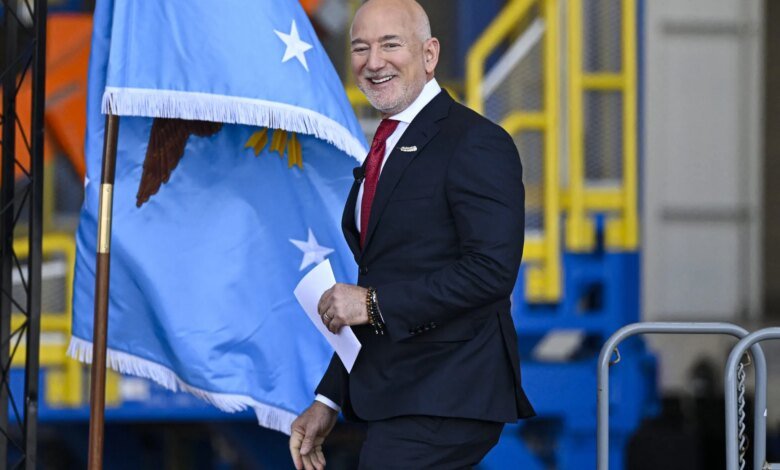
Amazon founder Jeff Bezos, currently the world’s third-richest individual with an estimated net worth of $257 billion, views psychological tension not as an unavoidable burden, but as a physical indicator that an unaddressed problem demands immediate movement. Speaking during an address at the Museum of Flight in Seattle, Bezos revealed that professional anxiety rarely stems from heavy workloads, but rather from remaining passive while problems compound. According to Bezos, the sensation of stress typically dissipates the moment a leader takes the initial, decisive step toward a solution.
That bias toward decisive movement was forged during Amazon’s foundational era in the mid-1990s. Operating out of a rented garage, Bezos held 60 separate pitch meetings just to secure $1 million in seed capital for his young e-commerce platform. That early experience established a framework that continues to influence the Fortune 500 giant today. Current Amazon chief executive Andy Jassy noted that the company’s 16 leadership principles—which explicitly mandate a bias for action—serve as vital, practical tools for executive leadership navigating high-stakes environments.
From a behavioral perspective, Bezos’ approach aligns with what research terms problem-focused coping, a mechanism where individuals actively address stress triggers rather than attempting to soothe their internal emotional state. According to insights from the American Psychological Association, engaging in active problem-solving directly reduces chronic cognitive strain and restores a sense of agency.
Beyond individual action, Bezos relies on collective problem-solving to mitigate tension. Bringing teams together to dismantle complex challenges shifts the physiological experience from distress to collaborative innovation, effectively turning high-pressure situations into engaging exercises.
Yet across major corporate boards, executive stress management strategies vary significantly based on individual leadership philosophy:
At Starbucks, former chief executive Laxman Narasimhan championed strict personal boundaries to prevent executive burnout. Narasimhan, who currently sits on the boards of the Brookings Institution and Verizon, relied on a rigid triad of non-negotiables—daily morning meditation, consistent physical exercise, and protected evening family time—to maintain emotional stability while navigating turnaround strategies.
Conversely, Damola Adamolekun, the 37-year-old chief executive officer of Red Lobster, focuses on deliberate emotional regulation. Adamolekun emphasizes pausing to assess crises before responding, arguing that visible executive control establishes an environment of stability that keeps teams focused during turbulent periods.
At Microsoft, chief executive Satya Nadella treats stress management as an institutional design challenge. Nadella prioritizes ongoing employee dialogue and flexible operational policies, warning that unmanaged tension leads to systemic employee burnout that ultimately undermines organizational health and broader economic stability.