Chinese AI Models Gain Rapid Traction Among US Developers Amid Cost Pressures and Regulatory Scrutiny
Low token pricing and open-source availability drive American tech firms toward platforms like Moonshot and DeepSeek despite escalating geopolitical tensions.
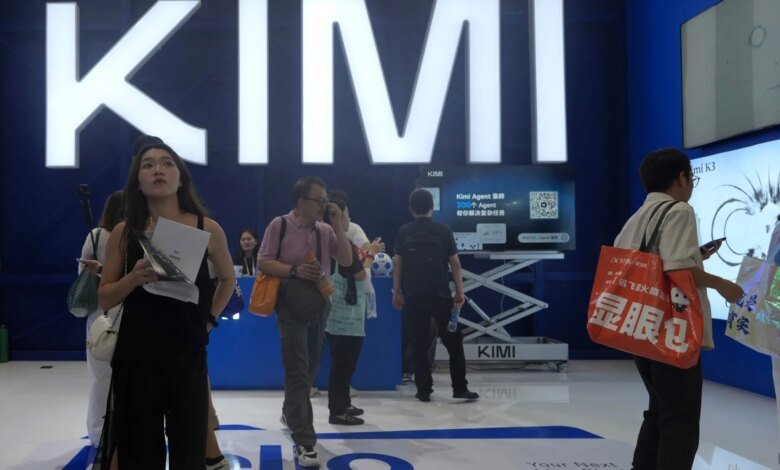
A growing contingent of American software engineers and corporate tech leaders are integrating Chinese artificial intelligence systems into their daily operations, turning away from significantly more expensive domestic alternatives. Driven by extreme cost disparities and competitive processing speeds, companies including cryptocurrency platform Coinbase and Mozilla have begun utilizing platforms engineered by mainland startups such as Moonshot AI and Z.ai.
The economic rationale behind the shift centers on token consumption rates. As software development transitions toward autonomous “agentic” AI—systems capable of executing multi-step programmatic workflows without continuous human intervention—token usage escalates exponentially. While proprietary frontier models developed by U.S. leaders like Anthropic and OpenAI command premium rates that can reach $30 to $50 per million output tokens, competing Chinese platforms offer near-equivalent performance for pennies.
Analysis published in a Goldman Sachs research report highlighted that Chinese systems are approaching a pivotal tipping point for global enterprise adoption. The bank noted that the rapid proliferation of autonomous AI agents across commercial software stacks increases sensitivity to token pricing, creating structural advantages for high-efficiency, lower-cost model providers.
On the popular model aggregator OpenRouter, all five top-ranked platforms over the past month originated from Chinese developers. Sensor Tower market intelligence data showed that Moonshot’s Kimi model recorded more than 930,000 global downloads in the week following its K3 model release in July—a 200% weekly jump. In the United States, weekly downloads soared 387% to approximately 86,000, forcing Moonshot to temporarily suspend new subscription sign-ups when server infrastructure reached max capacity.
San Francisco-based Mozilla Chief Technology Officer Raffi Krikorian transitioned much of his daily routine—including document processing, calendar management, and email workflows—to Moonshot’s Kimi K3 within days of its launch. Raffi Krikorian, who previously utilized Z.ai’s GLM-5.2 engine, noted that the model demonstrated superior responsiveness compared to Anthropic’s Claude Fable engine.
Similarly, Curt Meinhold, founder of the North Carolina-based digital platform LilyList, reported migrating sales lead generation tasks to DeepSeek. Curt Meinhold emphasized that the vast majority of software applications require “good enough” processing power rather than hyper-expensive top-tier systems, noting that Chinese models perform nearly on par with U.S. competitors in writing code and conducting research.
The widespread adoption of these tools comes despite mounting diplomatic and regulatory friction between Washington and Beijing. The Trump administration publicly accused Moonshot of employing covert techniques to develop its Kimi K3 model by distilling output from Anthropic’s Fable engine. While American technology firms and lawmakers frequently accuse Chinese startups of illicitly harvesting intellectual property through distillation—a process of training smaller models using outputs from larger, established systems—officials in Beijing have dismissed such claims as unsubstantiated.
Meanwhile, U.S. trade policy has intermittently created market openings for Beijing-based vendors. When Washington imposed export restrictions on Anthropic’s Fable and Mythos platforms, forcing the models offline for more than two weeks, Chinese developer Z.ai capitalized on the gap by deploying its GLM-5.2 model. Anastasios Angelopoulos, chief executive of AI evaluation platform Arena, noted that restricting access to domestic systems directly opens commercial channels for Chinese competitors, even though Chinese models currently lag American AI leaders across their full-range capabilities.
A fundamental architectural divide is also accelerating the global spread of Chinese systems. While primary American developers maintain closed-source proprietary ecosystems, most major Chinese models—including DeepSeek’s V4 previews, Z.ai’s GLM series, and Alibaba’s Qwen3.8 Max—are released as open-source software. Lian Jye Su, principal analyst at technology advisory group Omdia, noted that Chinese labs are actively leveraging open-source distribution to establish global market share.
This open-source push has drawn a mixed response inside the U.S. industry. While U.S. Treasury Secretary Scott Bessent warned of impending sanctions to safeguard domestic intellectual property, major American technology corporations including Microsoft, Meta, and Nvidia issued a joint open letter advocating for the continued growth of open AI architecture.
Inside China, domestic commercial ecosystems are rapidly integrating AI across consumer hardware platforms. Tech conglomerates such as Huawei and Tencent are incorporating native AI models into smartphones, smart eyewear, and robotics. Addressing a Shanghai technology summit, Chinese President Xi Jinping pledged state support to expand open-source AI deployment globally, emphasizing technology sharing with developing economies.
Despite rapid global user growth, Chinese AI startups face intense domestic price wars and uncertain financial trajectories. Financial disclosures from Z.ai reveal that despite revenue expanding 132% last year to 724 million yuan ($107 million), the startup’s net loss jumped 60% to 4.7 billion yuan ($694 million).