Trump Promotes Universal Investment Accounts for Children Amid Reports of Funding Delays
The administration touts 6.5 million sign-ups for the new investment program despite processing hurdles.
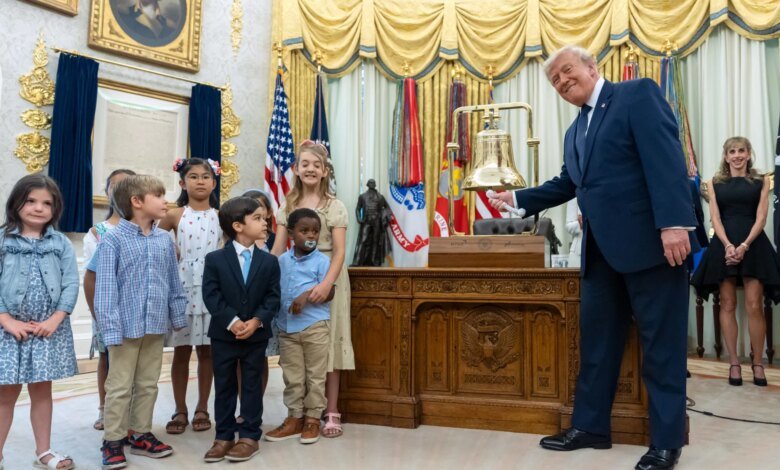
President Donald Trump is scheduled to visit a Georgia high school on Wednesday to advocate for his administration’s signature investment program, even as some families report significant delays in receiving the promised federal seed money. The initiative, known as Trump Accounts, aims to provide every American child with a stake in the stock market, though its rollout has been met with mixed results from early participants.
Launched officially on July 4, the program offers a $1,000 initial deposit from the U.S. Department of the Treasury for every child born during the president’s second term, spanning 2025 through 2028. According to Treasury data, approximately 6.5 million accounts have been opened since registration began, with 1.5 million of those qualifying for the $1,000 federal incentive. The accounts are a central pillar of the “One Big Beautiful Bill,” a massive legislative package passed last year that restructured various federal social and economic programs.
The accounts function as tax-advantaged investment vehicles managed by private financial firms. Contributions from parents, relatives, and employers are funneled into index funds, which are designed to mirror the performance of broader market benchmarks like the S&P 500 or the NASDAQ. While the funds are intended to grow over nearly two decades, they remain locked until the beneficiary turns 18, at which point the capital can only be used for higher education, starting a business, or purchasing a home.
Despite the administration’s promotional efforts, some parents have expressed frustration over the speed of the federal transfers. While the Treasury Department maintains that most participants receive their seed funding within 48 hours, others have been told to expect wait times of up to a month. Officials have characterized these lags as “standard processing time,” comparable to the distribution of federal tax refunds. For families already utilizing 529 college savings plans or custodial brokerage accounts, the Trump Account represents a third tier of long-term financial planning, albeit one tethered to federal bureaucracy.
The program bears a structural resemblance to the concept of “baby bonds,” a policy long advocated by economists like Darrick Hamilton and various Democratic lawmakers to address the racial and economic wealth gap. However, unlike traditional baby bond proposals that typically target low-income households, the Trump Accounts are universal, available to families regardless of their income level. This universality has drawn criticism from social advocates who argue the program fails to address immediate crises such as childhood hunger or homelessness.
Politically, the Georgia visit comes at a precarious time for the administration. A June survey by the Associated Press-NORC Center for Public Affairs Research indicated that only 33% of U.S. adults approve of the president’s economic management. While the administration touts the accounts as a tool for long-term prosperity, the broader economy continues to grapple with the effects of ongoing tariffs and geopolitical tensions in the Middle East, which have contributed to volatile consumer prices.
Furthermore, the legislative vehicle for the accounts has faced scrutiny for its fiscal trade-offs. The same bill that established these investment accounts also implemented significant funding reductions for the Supplemental Nutrition Assistance Program (SNAP) and Medicaid. Critics argue that prioritizing stock market gains for the future comes at the expense of the current social safety net, which provides essential healthcare and nutrition to millions of children today.