White House Withholds Over $1 Billion in Medicaid Funds From California and Minnesota in Escalating Anti-Fraud Campaign
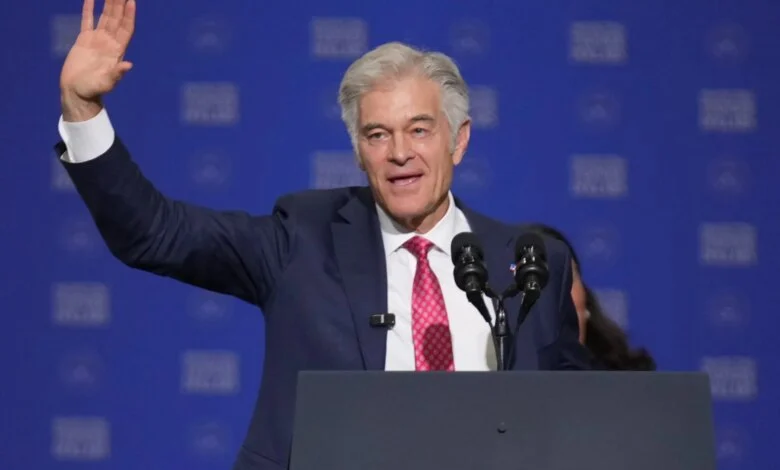
HHS Secretary Robert F. Kennedy Jr. and CMS Administrator Dr. Mehmet Oz freeze over $1 billion in payments to California and Minnesota, drawing fierce political backlash.
The federal government has escalated its financial standoff with two major Democratic-led states, announcing more than $1 billion in new Medicaid funding deferrals for California and Minnesota under the banner of a sweeping anti-fraud campaign.
U.S. Department of Health and Human Services (HHS) Secretary Robert F. Kennedy Jr. and Centers for Medicare & Medicaid Services (CMS) Administrator Dr. Mehmet Oz announced the measures on Tuesday. Under the new directives, the federal government is withholding $867.5 million in federal Medicaid payments from California and $199 million from Minnesota.
According to Kennedy, the administration is shifting toward a preventative strategy designed to block questionable disbursements before they occur, rather than attempting to claw back funds after legal prosecutions. The policy marks a significant departure from the retrospective oversight models utilized by previous administrations.
The aggressive enforcement strategy arrives amid heightened political sensitivity surrounding healthcare costs and government spending ahead of the upcoming November midterm elections. In March, Vice President JD Vance established a specialized anti-fraud task force at the request of President Donald Trump, leveraging interdepartmental data and technology to flag potential misuse of federal healthcare dollars.
State officials in both targeted capitals immediately condemned the funding freezes, accusing the Trump administration of weaponizing federal healthcare dollars for political leverage. John Connolly, the temporary commissioner and state Medicaid director for Minnesota’s Department of Human Services, stated that the federal government failed to provide any empirical data or calculations to justify the specific deferral amounts.
Minnesota Governor Tim Walz suggested the funding cuts were politically motivated maneuvers designed to offset federal tax cuts, while California Governor Gavin Newsom accused the administration of disproportionately targeting his state. Relations between the federal government and both states have been highly strained; earlier this year, federal immigration enforcement actions in Minnesota sparked intense local protests, while the president has frequently criticized California’s state governance.
The administrative clash highlights the complex structure of Medicaid, a jointly funded program where the federal government matches state healthcare expenditures based on statutory formulas. Under federal rules, CMS has the authority to temporarily defer matching funds if it suspects improper billing, though states can restore the flow of money by submitting documentation that proves the legitimacy of the claims.
In defense of the deferrals, Dr. Oz pointed to specific billing anomalies flagged by federal analysts. These included instances of providers billing for multiple patients simultaneously, as well as claims submitted for services dated after a beneficiary’s death. Oz also raised concerns over the rapid expenditure growth within California’s state-funded home care program.
California health officials strongly disputed the federal characterization of its home care expansion. Anthony Cava, a spokesperson for the California Department of Health Care Services, explained that the program’s growth is the result of a deliberate, federally sanctioned policy designed to transition vulnerable residents out of highly expensive nursing homes and into more cost-effective community-based care settings.
The federal government’s aggressive billing audits have previously run into administrative hurdles. In April, CMS acknowledged to reporters that it had relied on inaccurate data to justify a high-profile Medicaid fraud investigation in New York. Furthermore, California’s Medicaid director recently testified to Congress that CMS had failed to present concrete evidence of waste or abuse to justify a separate $1.3 billion Medicaid deferral enacted in May.
Minnesota has similarly been working through a corrective action plan to address federal concerns that previously led to a $260 million funding deferral. State officials emphasized that they have cooperated in good faith, proactively reporting potential vulnerabilities and implementing safeguards to protect program integrity.
To further consolidate federal oversight, Kennedy announced plans to expand CMS’s administrative powers. The proposal would allow the agency to directly exclude problematic healthcare providers from participating in Medicare, Medicaid, and other federal health programs. Historically, this exclusionary authority has been held exclusively by the HHS Office of the Inspector General.