U.S.-Iran Military Confrontation Escalates as Airstrikes Continue and Oil Clambers Toward $98
Airstrikes, maritime attacks, and threats of infrastructure destruction send Brent crude higher as shipping choke points face mounting disruption.
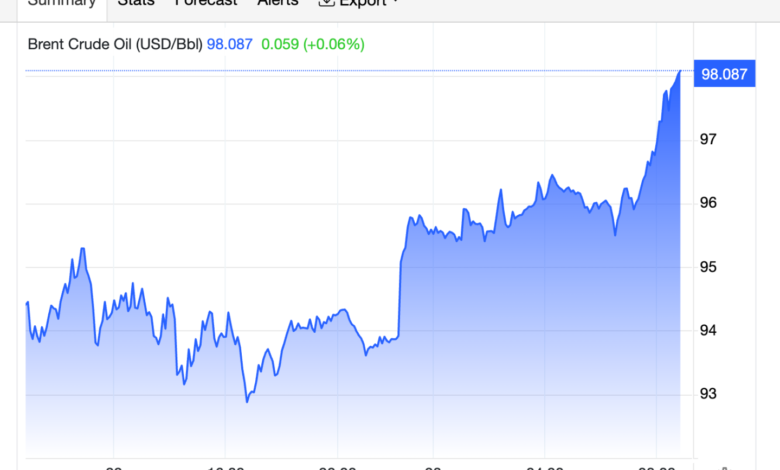
A sharp escalation in military actions between the United States and Iran has raised alarms across global markets, pushing Brent crude oil toward $98 per barrel as vital maritime energy corridors face widening threats.
The U.S. Central Command executed its 12th consecutive night of bombardment inside Iran, targeting coastal surveillance installations, missile and drone storage compounds, air defense systems, and maritime capabilities. Washington has rapidly expanded its posture across the region, deploying special operations units, advanced fighter squadrons, and long-range strategic bombers, including the operational deployment of B-1 aircraft.
Simultaneously, Iran-aligned Houthi militants in Yemen struck two Saudi-flagged vessels in the Red Sea. The strikes severely curtailed commercial vessel movements through the Bab al-Mandab Strait, compounding security fears already affecting the nearby Strait of Hormuz—a narrow choke point responsible for carrying roughly a fifth of global petroleum traffic.
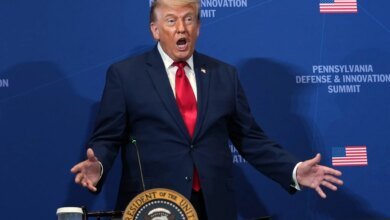
Political rhetoric reached a flashpoint as both nations threatened critical national infrastructure. U.S. President Donald Trump declared that any Iranian strike on shipping in the Strait of Hormuz would prompt retaliatory strikes targeting an Iranian power plant or bridge for every vessel attacked. Iranian Foreign Minister Seyed Abbas Araghchi countered by emphasizing a defense doctrine based on an “eye for an eye,” warning that any assault on domestic infrastructure would compel a decisive response against attackers and those providing support.
The intensifying military friction sent Brent crude oil climbing from a recent low of $93 up to $98 per barrel. Market strategists at Macquarie warned that sustained supply constraints risk dampening broader economic growth and re-igniting inflationary pressures, creating additional headwinds for international central banks managing monetary policy.
In a financial analysis of the confrontation, analysts at Piper Sandler noted that shifting dynamics in the Gulf have led several regional entities to weigh alternative diplomatic and financial arrangements, including transit tolls, to navigate the passage. Defense experts emphasize that safeguarding international shipping lanes against asymmetric warfare presents severe operational challenges, as low-cost unmanned aerial drones and light missile systems require disproportionate naval capabilities to counter effectively.