The Technical Reason Bluetooth Headsets Fail Under Competitive Gaming Conditions
Audio latency metrics, bandwidth degradation during voice chat, and platform hardware restrictions explain why standard wireless headsets fall behind dedicated gaming peripherals.
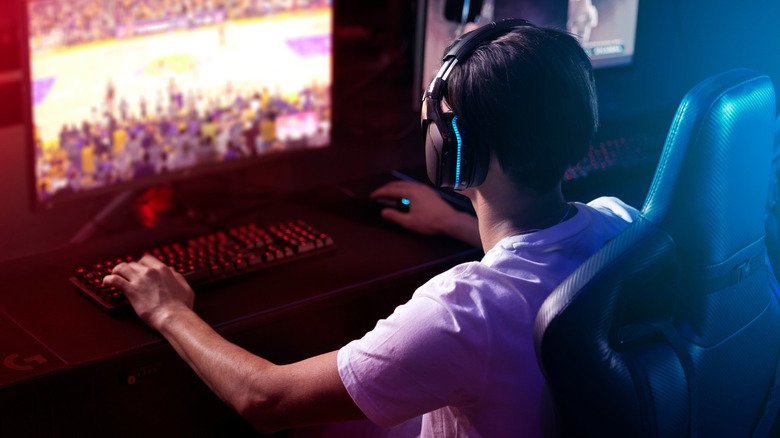
Standard real-world audio latency on common Bluetooth connections averages approximately 200 milliseconds. Standard Bluetooth audio protocols continue to create measurable performance bottlenecks in interactive gaming, driven primarily by connection latency that exceeds standard human auditory response thresholds. While Bluetooth technology serves general media consumption and voice calling effectively, this delay stems from the encoding, transmission, and decoding pipelines inherent to basic Bluetooth codecs such as SBC and AAC.
In fast-paced gaming environments, a 200-millisecond audio lag significantly alters response timing. Human auditory reaction time typically ranges between 170 and 220 milliseconds, while visual reaction time averages between 220 and 280 milliseconds. When an audio cue is delayed by 200 milliseconds, the player’s total reaction time to critical sound indicators like footstep directional cues or weapon fire is effectively doubled. The problem compounds when a headset’s microphone activates for in-game party chat, forcing the Bluetooth controller to switch from the high-quality Advanced Audio Distribution Profile to the low-bandwidth Hands-Free or Headset Profile.
Beyond transmission delay, full-duplex voice communication creates severe bandwidth constraints for Bluetooth devices. This profile shift drops the audio sample rate down to 8kHz or 16kHz monaural sound, causing severe degradation in game audio fidelity while active.
Hardware manufacturers have maintained strict connectivity limits on dedicated gaming platforms due to these latency and bandwidth constraints. Sony’s PlayStation 5 and Microsoft’s Xbox Series X|S consoles do not support direct Bluetooth audio output for headsets without third-party adapters. Instead, console platforms mandate proprietary wireless standards—such as PlayStation Link or Xbox Wireless—or rely on dedicated USB transceivers to maintain stable audio performance.
To eliminate the performance limitations of standard Bluetooth, gaming hardware manufacturers primarily rely on 2.4GHz radio frequency wireless connections. Utilizing dedicated USB dongles, 2.4GHz wireless headsets bypass standard Bluetooth software stacks to deliver uncompressed audio with latency figures consistently under 20 milliseconds. At this threshold, audio synchronization matches the frame rendering rate of modern displays, rendering delay imperceptible to competitive players.
Wired connections via 3.5mm analog jacks or USB interfaces remain the baseline standard for zero-latency audio delivery. Direct wired connections eliminate signal interference, battery dependence, and compression artifacts entirely while maintaining lower manufacturing costs. Console players utilizing wired headsets connect directly to the 3.5mm audio ports integrated into PlayStation 5 DualSense controllers, Xbox Wireless Controllers, or Nintendo Switch devices, receiving near-instantaneous audio pass-through transmitted over the controllers’ dedicated wireless protocols.