Kia Integrates Real-Time Average Speed Telemetry into Factory Navigation Systems
The proprietary software calculates real-time mean speed to help drivers navigate long-distance enforcement corridors.
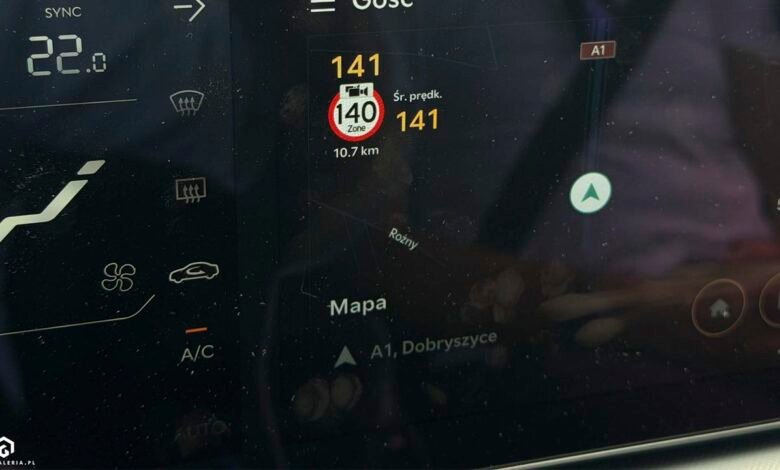
Kia has introduced a sophisticated software update to its proprietary navigation systems designed to manage driver compliance within average speed enforcement zones. The technology moves beyond traditional spot-radar alerts by providing continuous telemetry throughout regulated road sections.
As European traffic authorities increasingly deploy “section radars”—which measure a vehicle’s speed over distances sometimes exceeding 11 kilometers—the South Korean automaker is leveraging integrated hardware to provide real-time data processing. Unlike standard GPS alerts that notify drivers of a single camera location, this system calculates the vehicle’s mean speed from the moment it enters a controlled corridor.
The interface provides three specific data points: the legal speed limit, the remaining distance until the end of the enforcement zone, and the driver’s current average speed. To ensure driver awareness, the digital instrument cluster utilizes color-coded visual cues, turning the speedometer yellow if the calculated average exceeds the posted limit. These alerts are also compatible with the manufacturer’s Head-Up Display (HUD) systems.
Crucially, this functionality is restricted to Kia’s factory-installed navigation software. It does not currently extend to third-party interfaces such as Apple CarPlay or Android Auto, as the feature requires deep integration with the vehicle’s internal odometer and real-time telemetry data.
The development comes amid a broader shift in automotive safety and compliance technology. While the European Union has mandated Intelligent Speed Assistance (ISA) systems in new vehicles, Kia’s implementation focuses on the specific challenge of variable speed management over long distances. By providing a live average, the system allows drivers to adjust their pace dynamically to remain within legal thresholds before exiting the monitored section.
Industry analysts note that such features highlight a growing trend of manufacturers internalizing compliance tools within their software ecosystems. This approach offers a more seamless integration of Advanced Driver Assistance Systems (ADAS) compared to mobile-based applications, which often lack access to the vehicle’s primary sensor suite.