Expressive Humanoid Robots Lose User Trust Faster When Making Errors, Study Finds
Research published in Science Robotics shows animated social cues turn mechanical glitches into perceived social breaches, triggering neural suspicion and elevated oxytocin.
Designing humanoid robots to mimic human expressions and gestures backfires when the machines make conversational mistakes, triggering a brain and hormonal response in users that damages trust more severely than mechanical glitches in static robots, according to research published in the journal Science Robotics.
Researchers from Drexel University, George Mason University, and the U.S. Air Force Academy found that when an animated humanoid robot violated conversational norms, human subjects experienced elevated levels of oxytocin—a hormone traditionally associated with social bonding, but which in this setting tracked heightened suspicion and reduced willingness to follow advice.
The findings challenge a longstanding design assumption across the robotics industry: that endowing artificial intelligence systems with lifelike social cues creates a cushion of goodwill capable of softening operational errors as autonomous machines deploy into homes, hospitals, and corporate environments.
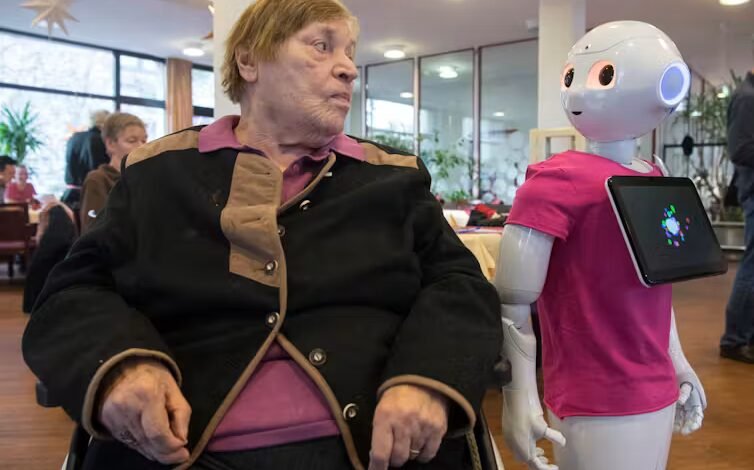
To evaluate real-time cognitive responses during natural encounters, the study monitored 50 male participants engaged in joint decision-making tasks with Pepper, a commercial humanoid robot engineered to express gestures and recognize human emotions.
During the experiments, the robot delivered a combination of sound guidance and deliberate conversational errors, such as interrupting participants or offering illogical suggestions. A portion of the cohort interacted with an animated robot that made eye contact, nodded, and gestured, while others interacted with the machine in a completely motionless state.
Using functional near-infrared spectroscopy—a portable forehead-mounted sensor measuring brain oxygenation without requiring subjects to remain still in an MRI scanner—the research team tracked neural activity across two specific regions: the dorsolateral prefrontal cortex, which flags broken norms and uncertainty, and the medial prefrontal cortex, which infer intentions in social settings.
When the animated robot made mistakes, neural activity surged across both regions, forcing them into tight coordination. This synchronized brain activity directly predicted an increase in oxytocin production, which in turn correlated with falling self-reported trust and a sharp decline in the robot’s influence over participant decisions. In contrast, participants interacting with an expressionless robot that made identical errors showed no such coordinated neural response, perceiving the mistakes as conventional hardware or software glitches rather than personal breaches.
The study was conducted by Hasan Ayaz, professor of biomedical engineering at Drexel University; Ewart J. de Visser, technical director at the Warfighter Effectiveness Research Center at the U.S. Air Force Academy; Frank Krueger, professor of systems social neuroscience at George Mason University; and Yigit Topoglu, research scientist at the U.S. Air Force Academy.
While oxytocin is widely recognized for driving biological affection, the authors noted that a growing body of neuroscience demonstrates its role in managing uncertainty and context-dependent social vigilance. The higher a participant’s oxytocin level during an expressive robot’s error, the less likely they were to accept its recommendations.
The initial study was limited to young male participants and utilized a single commercial robot platform. Subsequent research phases aim to determine whether women and broader demographic groups display similar neural vigilance, and whether humanoid robots can actively repair lost credibility after an error by issuing apologies or acknowledging mistakes.