2026 Toyota RAV4 PHEV Review: More Power, More Trims, and a GR Identity Crisis
Toyota expands its plug-in hybrid lineup with a new performance-inspired GR Sport trim and 324 horsepower.
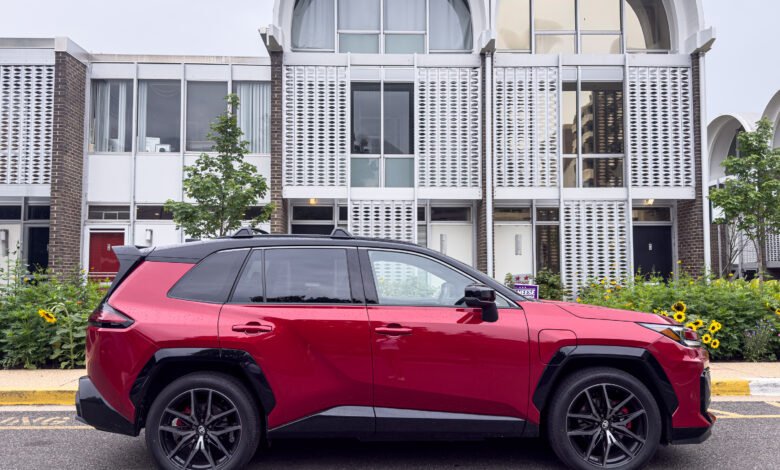
The Toyota RAV4 has long been the bedrock of the American driveway, a vehicle that prioritized utility and reliability over almost everything else. However, the latest iteration of the 2026 Toyota RAV4 PHEV suggests that the world’s most popular crossover is no longer content with just being sensible. With a combined output of 324 hp and a new performance-oriented trim level, Toyota is attempting to inject some genuine personality into its plug-in powerhouse.
Visually, the RAV4 has evolved significantly. It’s a more interesting shape than the slab-sided SUVs we used to get, featuring sharp creases and an aggressive stance that belies its family-hauler roots. Under the skin, the engineering is equally sophisticated. The heart of the RAV4 PHEV is a complex but seamless powertrain that utilizes a 2.5-liter four-cylinder engine paired with a sophisticated tri-motor setup.
Most of the time, propulsion to the front wheels comes from a second electric motor, also connected to the eCVT; this permanent-magnet synchronous traction motor has an output of 203 hp (151 kW) and 201 lb-ft (272 Nm). Because of this configuration, the RAV4 functions primarily as a series hybrid. While drivers may hear the revs flare when they accelerate hard, most of the power being generated alongside that sound is actually being routed to the battery pack. However, at highway speeds, the eCVT allows the system to transition into a parallel hybrid mode, where the internal combustion engine can drive the wheels directly for maximum efficiency.
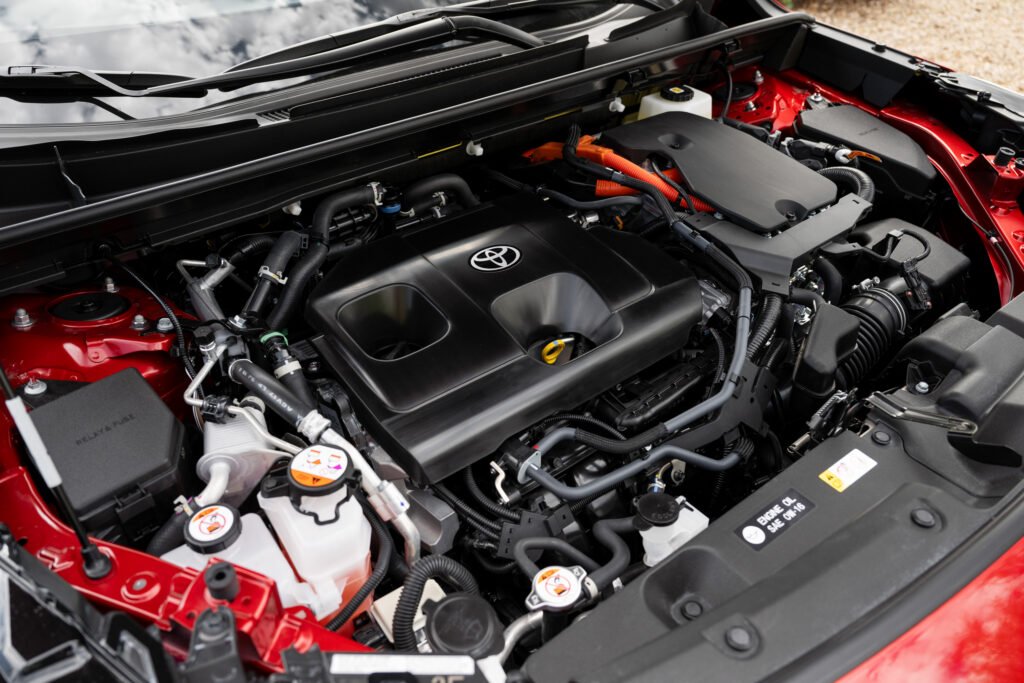
The technical sophistication extends to the engine bay’s packaging. In addition to the four-cylinder engine and two electric motors, the silicon carbide inverter and other electronics are also in the engine bay. This high-tech inverter is key to managing the high-voltage flow between the battery and the motors with minimal heat loss. A third electric motor powers the rear axle, providing an additional 55 hp (41 kW) and 91 lb-ft (123 Nm), and together the RAV4 PHEV offers a maximum combined output of 324 hp (242 kW) and 315 lb-ft (427 Nm). This effectively gives the RAV4 electronic all-wheel drive without the need for a heavy mechanical driveshaft.
Toyota has expanded the lineup for 2026, and the specific trim determines efficiency. For those looking to maximize their green credentials, the SE ($41,500) and the XSE ($47,200) remain the benchmarks. These models are rated at a combined 40 mpg and can travel up to 52 miles on battery power alone—a figure that covers the daily commute for a vast majority of Americans.
For buyers with a penchant for the outdoors, the Woodland ($45,300) offers a more rugged aesthetic. It features protective cladding and tow hitches, but the addition of all-terrain tires and a raised ride height comes with a physical cost. These modifications conspire to reduce the combined economy to 37 mpg and the electric-only range to 49 miles.
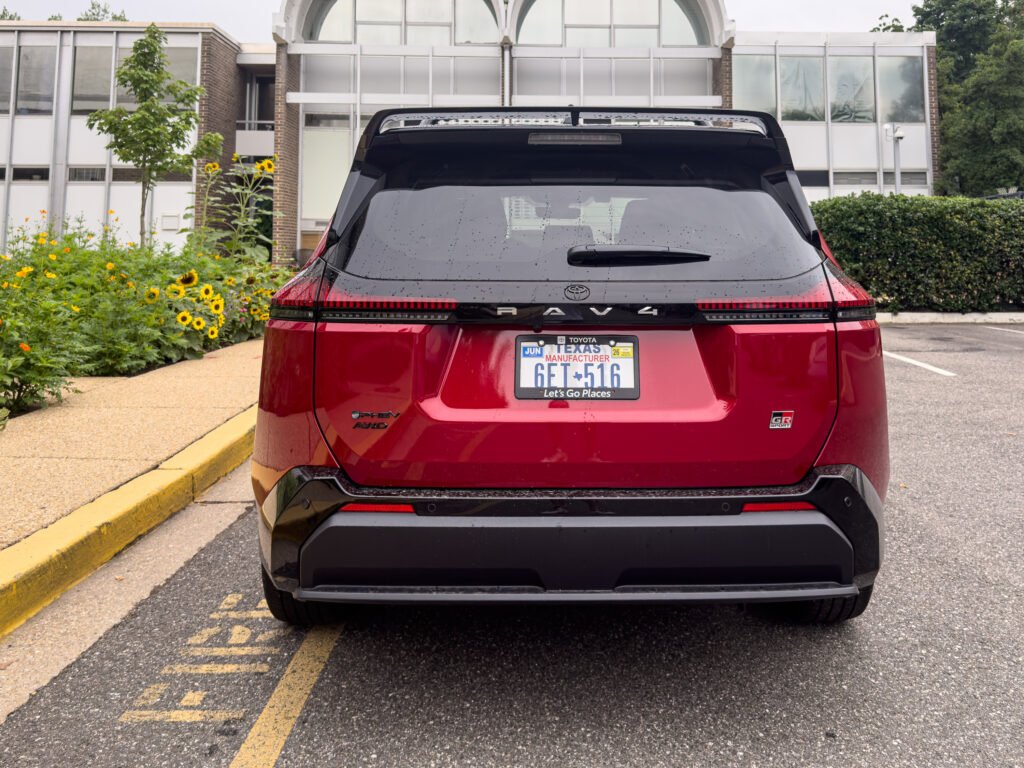
The newest addition to the family is the GR Sport trim. Priced at $48,500, it stands as the most expensive RAV4 PHEV in the catalog. While the 324-hp powertrain remains unchanged, the GR Sport receives a host of chassis upgrades, including new springs and front dampers, a reinforced rear suspension, and a ride height that is 0.6 inches lower than the SE or XSE. It rolls on larger, lighter 20-inch wheels wrapped in performance tires with more offset, giving it a wider, more planted stance.
The GR Sport also receives a unique visual treatment, including a larger grille, front and rear spoilers, and a rear diffuser. However, these performance-oriented changes have a noticeable impact on efficiency. The GR Sport is the least efficient of the bunch, returning a combined 36 mpg and a battery range of 48 miles. Furthermore, there is an editorial concern regarding the branding; some may worry this SUV devalues the GR sub-brand, which was previously reserved for dedicated performance machines like the GR Supra and GR Corolla. While the RAV4 PHEV is undeniably quick, it remains a heavy crossover, and the GR badge here feels more like a styling exercise than a fundamental transformation of the vehicle’s DNA.
Ultimately, the 2026 Toyota RAV4 PHEV remains a masterclass in hybrid engineering. Whether you choose the efficiency-first SE or the more aggressive GR Sport, the underlying technology provides a compelling bridge between the internal combustion past and the electric future.