Iran Military Chief Vows Nuclear Arms Work Will Continue, Triggering Vow of Action From Netanyahu
Tehran links nuclear weapons program to U.S. and Israeli arsenals as Persian Gulf transit negotiations progress in Oman.
Iran’s Islamic Revolutionary Guard Corps commander-in-chief Ahmad Vahidi explicitly tied Tehran’s nuclear weapons ambitions to the arms arsenals of Washington and Jerusalem on Wednesday, declaring that Iran will pursue nuclear armaments as long as the United States and Israel maintain theirs.
“As long as the United States and Israel possess nuclear weapons, we will continue working on them for our national security,” Vahidi said in translated remarks. “If they disarm, we will disarm.”
The direct statement drew an immediate pledge from Israeli Prime Minister Benjamin Netanyahu, who announced that Israel will act to prevent Tehran from acquiring a nuclear capability regardless of any diplomatic agreement reached with Washington.
Speaking at a ceremony marking the reinterment of Theodor Herzl’s grandparents, Netanyahu seized on Vahidi’s statement as explicit proof of Tehran’s ongoing weapons development. “Today, we heard the commander of the Revolutionary Guards, Vahidi, explicitly declare Iran’s intention to continue developing nuclear weapons — ‘continue,’ as he put it,” Netanyahu said. “With an agreement or without an agreement, I am determined — we are all determined — to do whatever is necessary to ensure our security and our future.” Netanyahu also praised President Donald Trump as Israel’s greatest friend in the White House.
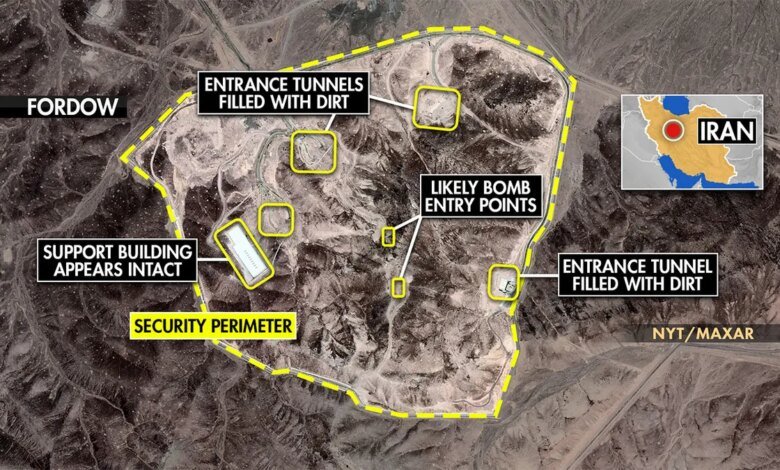
A map shows damage to Iran’s Fordow nuclear site after being struck by the United States in Operation Midnight Hammer on June 22, 2025. (Fox News)
The sharp exchange comes as Washington attempts to negotiate an end to maritime hostilities in the Persian Gulf. President Donald Trump told Fox News late Tuesday that military options remain active should diplomatic talks collapse. “If they back out again, they’re going to get hit really hard,” Trump said, describing Tuesday’s all-day sessions as “very good” while emphasizing that discussions would focus first on reopening the Strait of Hormuz before taking up the nuclear program.
Iranian President Masoud Pezeshkian previously asserted that Iran would rebuild facilities damaged in earlier strikes, including the underground Fordow enrichment facility struck during U.S. Operation Midnight Hammer in June 2025.
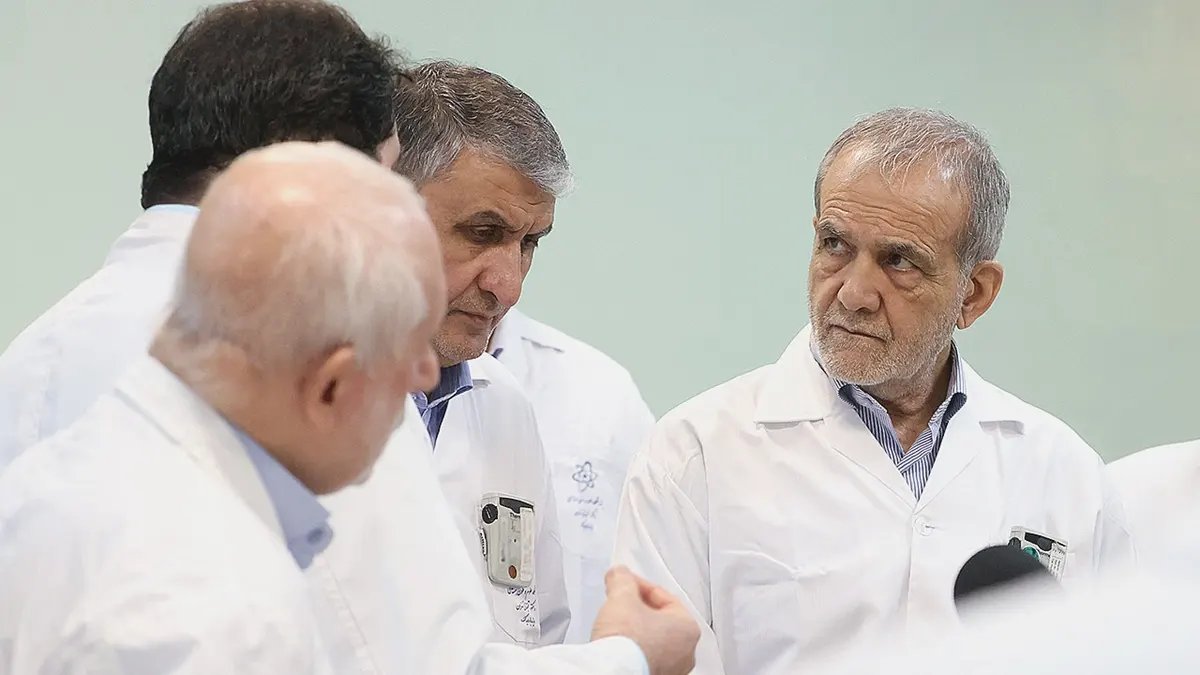
President Pezeshkian said Iran would rebuild the nuclear facilities targeted by the U.S. and make them stronger in 2025. (Iranian Presidency/Handout/Anadolu via Getty Images)
Nonproliferation analysts warned that prioritizing maritime concessions risks giving away U.S. leverage over Tehran’s atomic program. The Strait of Hormuz serves as a choke point for roughly 20% of global petroleum traffic, granting Tehran significant bargaining power over world energy markets during times of crisis.
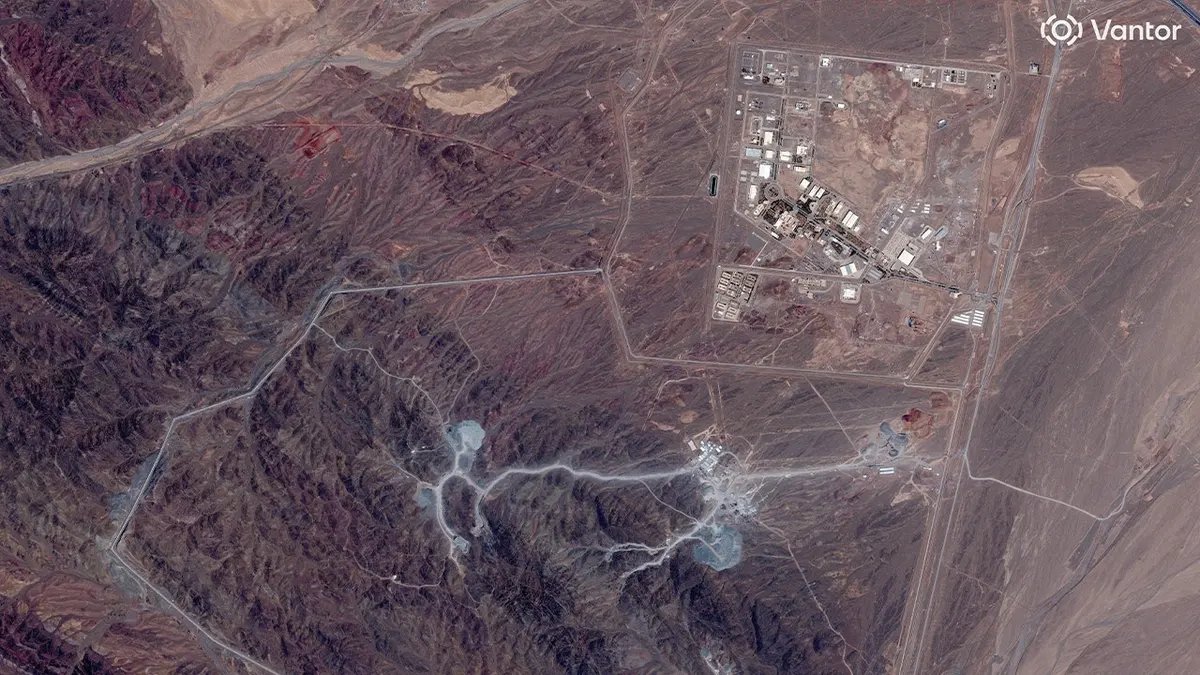
A satellite view of the Natanz nuclear facility and Pickaxe Mountain, near Natanz, Iran, June 30, 2026 (Vantor/Handout via Reuters)
Andrea Stricker, deputy director of the Nonproliferation and Biodefense Program at the Foundation for Defense of Democracies, said Tehran is seeking oil sanctions relief and economic concessions before turning to its nuclear assets. “If Tehran is able to structure the talks that way — and I’m concerned that Trump appears to be going along with that approach — there may be little left in terms of leverage to get big concessions from the Iranians on the nuclear file down the line,” Stricker said.
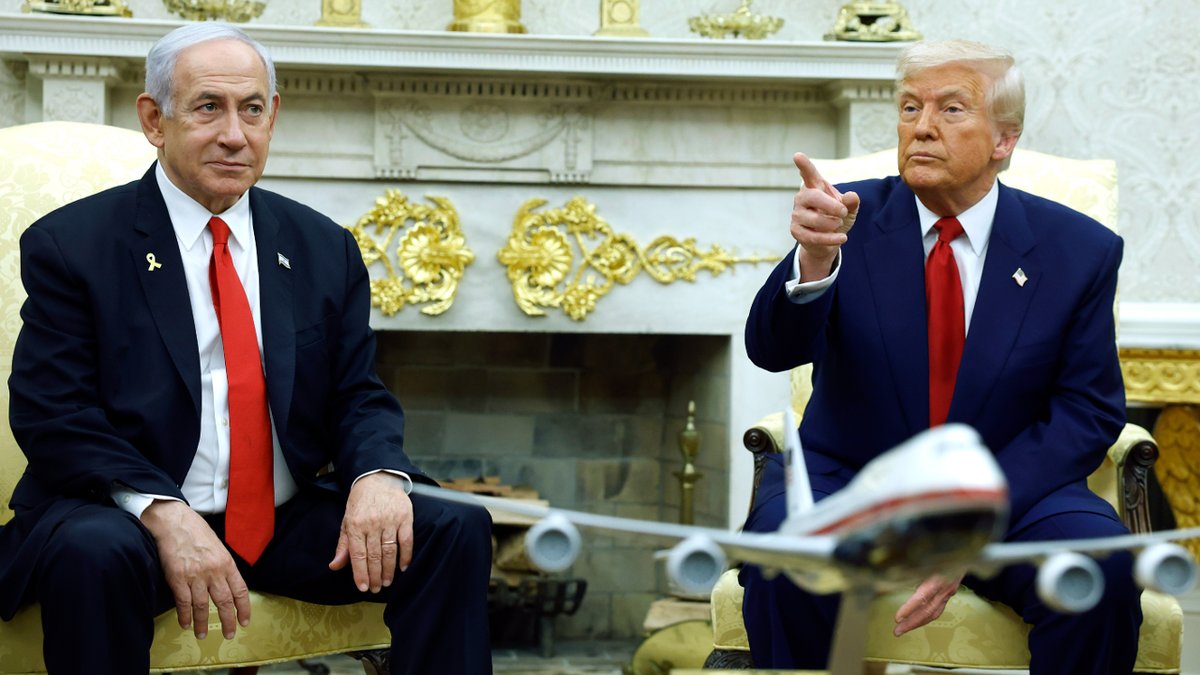
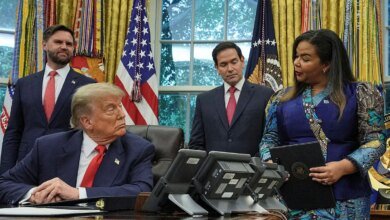
President Donald Trump, right, speaks alongside Israeli Prime Minister Benjamin Netanyahu with a model of Air Force One on the table during a meeting in the Oval Office of the White House April 7, 2025, in Washington, D.C. (Kevin Dietsch/Getty Images)
Reporting indicates Tehran has proposed decoupling Gulf maritime access from nuclear negotiations. Under a proposed framework mediated by Oman, Iran is seeking transit fees from merchant vessels and partial administrative control over Gulf shipping lanes—terms Washington opposes, though regional sources suggest preliminary concessions may already be under discussion.
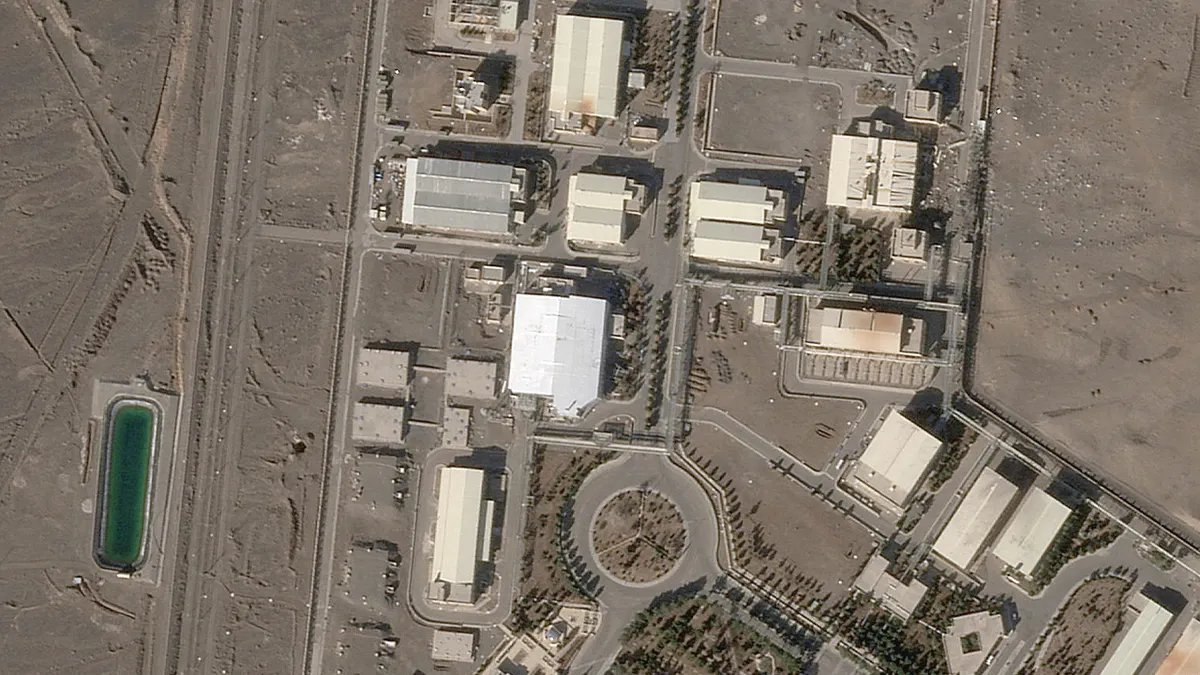
Satellite imagery taken Jan. 30, 2026, shows a new roof over a previously destroyed building at Natanz nuclear site. (2026 Planet Labs PBC/Handout via Reuters)
Recent satellite imagery shows active reconstruction across targeted nuclear sites, including new roofing over destroyed infrastructure at Natanz. Kelsey Davenport, director for nonproliferation policy at the Arms Control Association, noted that military strikes cannot destroy underlying technical knowledge. “At the end of this conflict, Iran will still possess the capabilities necessary to build a bomb,” Davenport said.
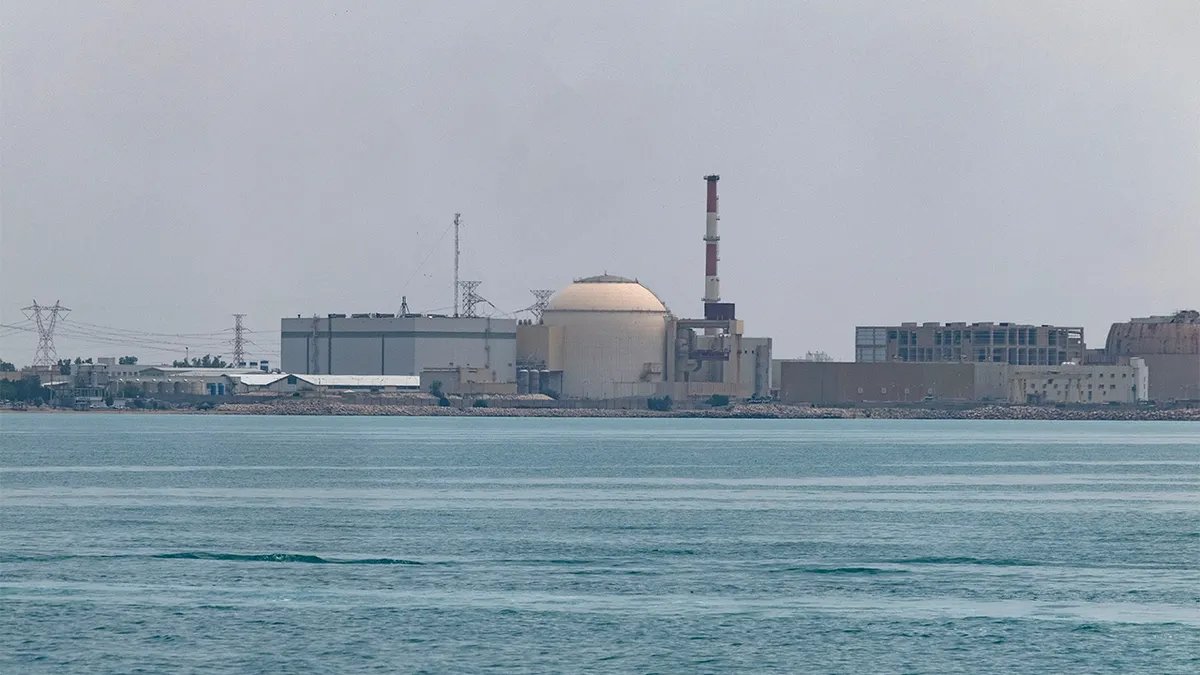
The Bushehr nuclear plant in Iran April 29, 2024 (Morteza Nikoubazl/NurPhoto via Getty Images)
International Atomic Energy Agency (IAEA) inspectors have been locked out of critical Iranian nuclear installations for over a year, leaving Western intelligence without direct verification of Iran’s enriched uranium inventory or centrifuge capacity. Davenport emphasized that restoring IAEA access must be a prerequisite for structured negotiations.
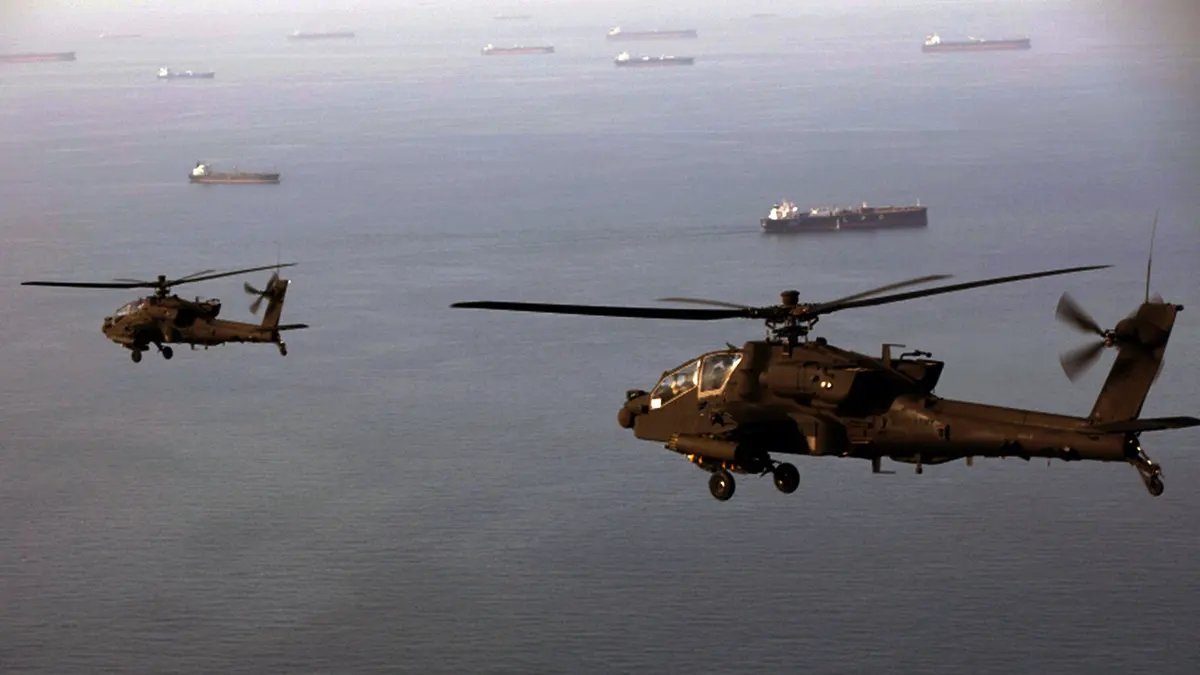
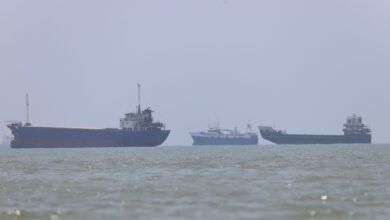
The U.S. military has been enforcing a naval blockade in the Strait of Hormuz, even during the ceasefire. (U.S. Central Command)
As U.S. forces enforce a naval presence in the Persian Gulf, nuclear policy experts urge Washington to link any easement on the naval blockade or sanctions directly to verifiable benchmarks on Tehran’s uranium enrichment and site access.